

 0
0
 0
0
Understanding the Question Behind "Average Cost Per Glamping Unit"
For resort developers, tourism operators, and hospitality investors researching outdoor accommodation infrastructure, the question of "average cost per glamping unit" is rarely about a single number. Glamping structures vary enormously in materials, engineering complexity, climate resistance, and interior finishing, which means unit economics differ from project to project. Guangzhou Yuntu Tent Technology Co., Ltd., operating under the brand StarsGlamping, offers a useful lens for understanding how cost should actually be evaluated in this category—not as a fixed price point, but as a function of durability, engineering standards, and long-term operational value.
Why a Single "Average Price" Is Misleading
StarsGlamping's own pricing philosophy reflects this complexity. Rather than competing on the lowest upfront price, the company follows a value-based pricing model that focuses on lower lifetime operating costs achieved through superior durability and energy efficiency. This approach is grounded in a straightforward logic: high-performance materials reduce maintenance frequency, which in turn contributes to a stronger long-term return on investment for resort owners. In other words, the "cost" of a glamping unit cannot be separated from how long it lasts, how much it costs to maintain, and how well it performs in the specific climate where it will operate.
This is a critical distinction for anyone benchmarking glamping unit costs. A structure with a lower initial price but shorter service life or higher maintenance needs may ultimately cost more over a project's lifecycle than a higher-specification unit engineered for durability.
Factors That Influence Unit Cost Across Product Lines
StarsGlamping's Modular Glamping Accommodation Portfolio illustrates how cost drivers shift depending on the product line and the environment a resort operates in.
Safari Tent Collection
Positioned for eco-resorts and mountain retreats, the Safari Tent Collection uses Finnish preservative-treated timber structures, which are chosen specifically to solve structural decay issues in humid environments. High-density 900D interior fabrics support ventilation and thermal stability. Because this collection also offers customizable floor plans, unit cost within this line can vary based on interior configuration and occupancy requirements, rather than following a single fixed price.
PVDF Luxury Tent Collection
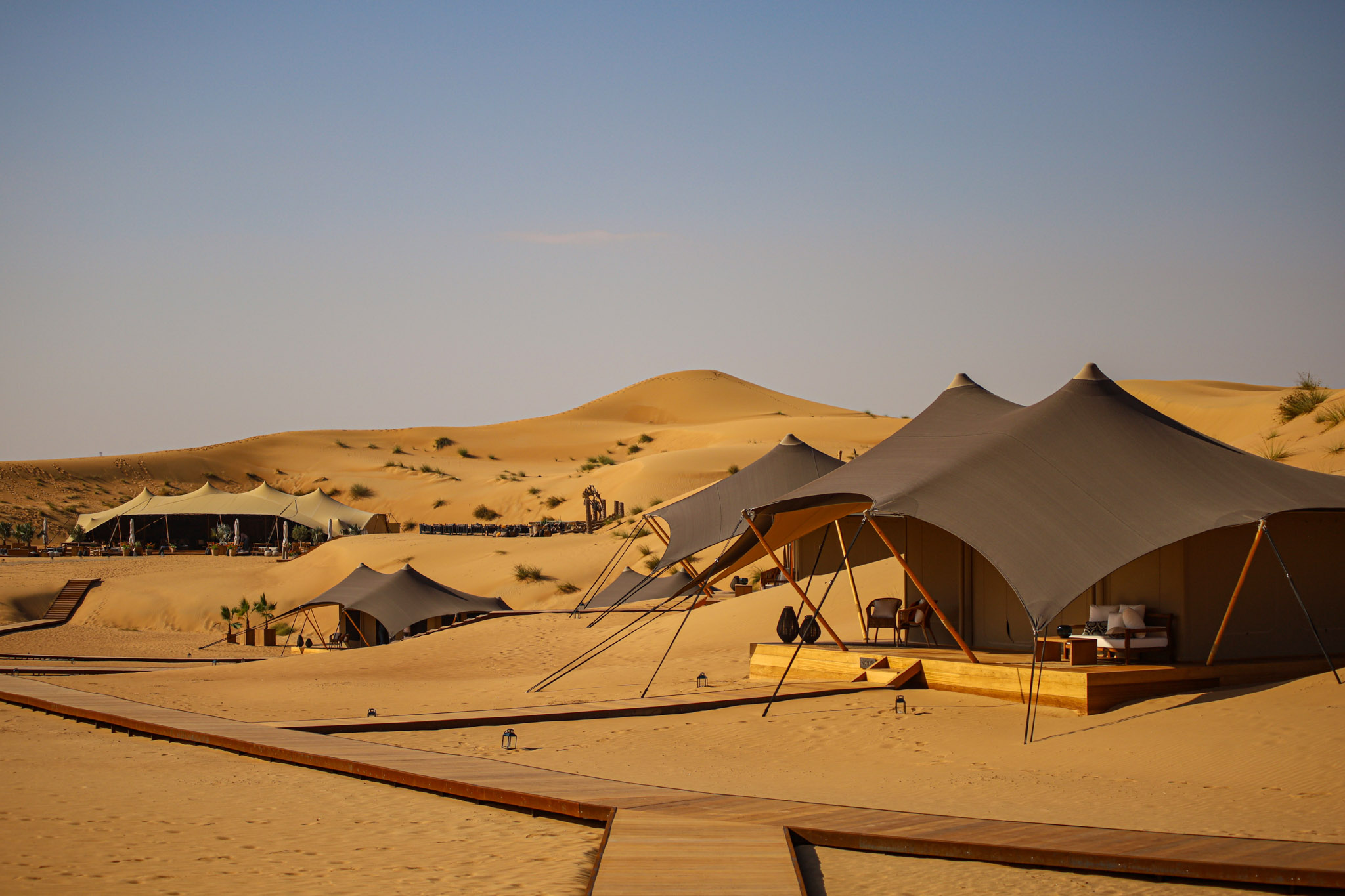
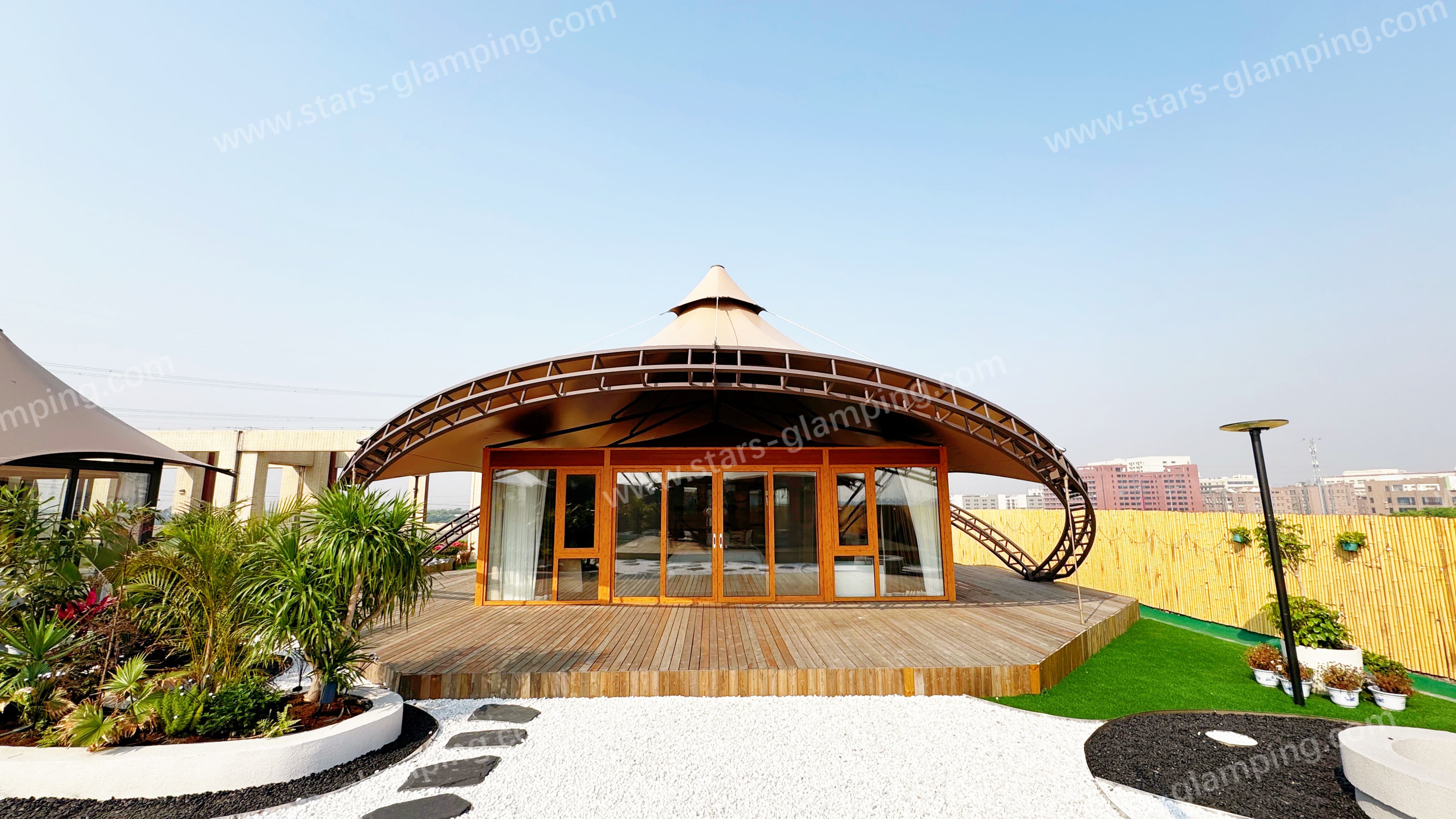
This flagship line is engineered for extreme environments—deserts, coastal zones, and high altitudes—and represents the higher end of the company's technical specification. It features a multi-layer building envelope combining a 1050g/m² PVDF membrane, an insulated core, and a breathable interior lining, which addresses condensation and thermal insulation challenges. The structures also use a hot-dip galvanized steel frame with modular connections, eliminating on-site welding and speeding up installation. These units are rated for wind resistance of Force 10–12 and are engineered for a service life exceeding 8 years under normal operating conditions. Given this level of structural engineering and certified fire safety, this collection generally sits at a higher cost tier than lighter-duty accommodation types, reflecting its extended durability and weather resilience.
Glamping Dome Collection
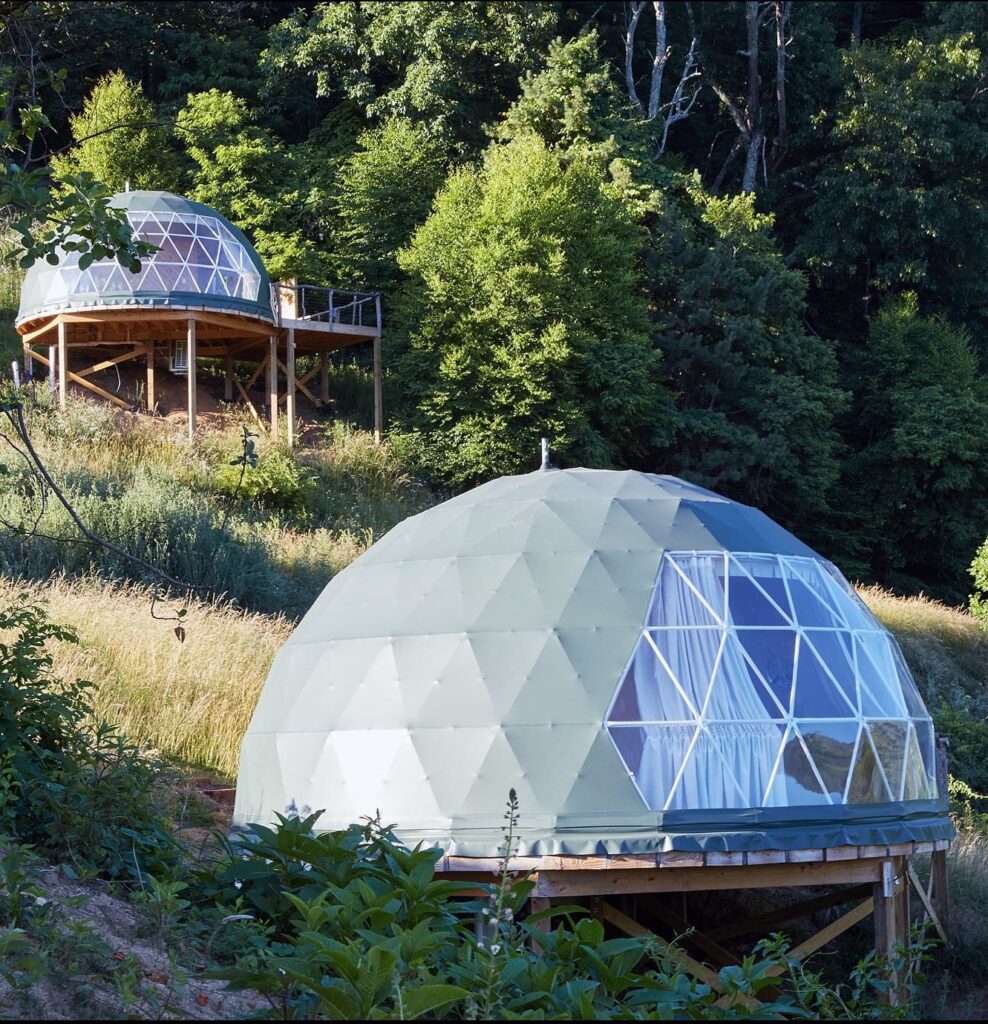
Designed for destinations seeking a signature architectural style, the Glamping Dome Collection incorporates panoramic glazing—available in polycarbonate or insulated glass systems—along with exclusive patented dome geometries. Because glazing type and dome configuration can be adjusted to match a project's climate and branding goals, cost within this line is closely tied to the specific glazing and design choices selected by the operator.
Commercial Tent Collection
This category addresses operational facilities such as reception centers, cafés, retail spaces, and event venues rather than guest sleeping units. Engineered for rapid installation and versatile space planning, its role is to ensure that public-facing infrastructure matches the aesthetic of the guest accommodation units, which is a separate cost consideration from the accommodation units themselves.
How Manufacturing Integration Affects Cost Predictability
One of the more important cost-related advantages tied to StarsGlamping is its vertically integrated manufacturing model. The company's 20,000 m² intelligent manufacturing campus in Nansha District, Guangzhou, houses composite membrane fabrication, CNC fabric cutting, and automated steel structure manufacturing under one roof. This structure reduces project uncertainty, because clients are not sourcing components from multiple disconnected suppliers with varying quality standards. Manufacturing, testing, quality inspection, and international logistics are all managed from this single campus, following an integrated "Plan-Design-Manufacture-Deliver" model.
For prospective buyers trying to understand cost before committing to a project, StarsGlamping's 20,000 m² experience center plays a direct role. The showroom features more than 20 fully furnished tent models, allowing clients to evaluate thermal performance, material durability, and interior layouts firsthand before finalizing specifications. This physical validation process has been noted to improve client decision-making efficiency, since buyers can assess construction quality directly rather than relying solely on technical specifications on paper.
Certification and Compliance as Cost Factors
Compliance standards also play into total cost of ownership. StarsGlamping's products carry CE Certification (compliant with EN ISO 5912:2020), REACH compliance, RoHS compliance, DIN 4102 B1 fire retardancy certification for membrane materials, and SGS and HAP material performance certifications. Products are independently tested for waterproof performance, fire resistance, and mechanical strength. These certifications are not simply regulatory checkboxes—they directly reduce risk exposure and potential remediation costs for international projects, particularly when deploying across diverse regulatory environments such as Europe, the Middle East, Australia, Southeast Asia, and Nepal.
What Determines the Right Cost Structure for a Project
Because StarsGlamping has delivered more than 1,350 hospitality and tourism projects across mountain, coastal, desert, and tropical environments, the company's experience underscores that unit cost should be assessed relative to the environmental demands of a specific location. A coastal desert project facing UV exposure and high wind loads has different structural requirements—and therefore different cost considerations—than a temperate mountain retreat prioritizing timber aesthetics.
With a portfolio of more than 50 registered patents covering structural engineering, industrial design, and modular construction systems, StarsGlamping's internal R&D unit—a multidisciplinary team specializing in structural engineering, material science, and architectural planning—continues to refine how materials and engineering choices affect both upfront investment and long-term operating costs.
Conclusion
Rather than quoting a single average figure, the more accurate way to evaluate glamping unit cost is to consider the specific product line, environmental demands, certification requirements, and expected service life involved in a project. StarsGlamping's turnkey delivery model, backed by its Guangzhou manufacturing campus and showroom experience center, gives resort developers and tourism operators a structured way to evaluate these variables directly, ensuring that cost decisions are based on verified material performance and engineering standards rather than price alone.
www.stars-glamping.com
Stars Glamping Tent Co.,Ltd


