

 0
 0
Published: November 2026 | By Fengcai Engineering Team
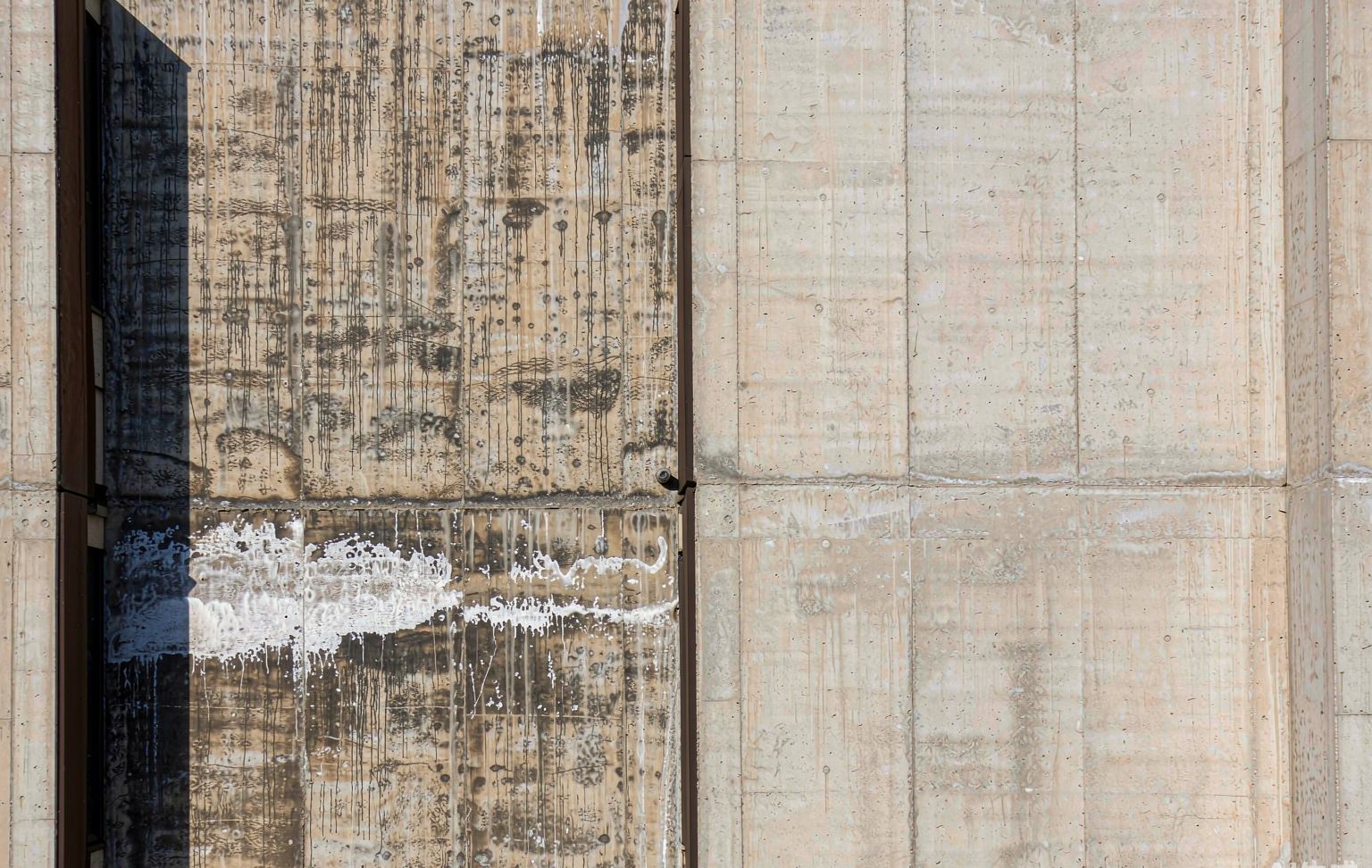
Owners keep asking why does fair faced concrete deteriorate so fast when the material was sold as a 50-year finish. The concrete is not the problem — the finish is. Bare architectural concrete has no sacrificial layer, so four aging processes start the day the formwork comes off: carbonation, water staining, efflorescence and dirt fixation. Left alone, the wall reads as tired within five years even though its structure is fine.
Fengcai protects concrete precisely to break this pattern — our engineers have measured the timelines on everything from hospitals to the Meishan Reservoir carbonation protection works. Here is what actually happens, and when.
1. The Aging Clocks: Carbonation, Water, Efflorescence and Dirt
Each deterioration mechanism runs on its own clock, and the first visible sign usually appears between year 2 and year 5. Knowing the clocks turns maintenance from panic into scheduling:
• Carbonation — the slow structural clock. Atmospheric CO2 turns the alkaline cover layer acidic, year by year. Typical carbonation depth in concrete over 10 years reaches 10–25 mm in urban exposure, faster on thin, porous or badly cured cover. When the front reaches the rebar, steel starts rusting and the 50-year finish becomes a spalling hazard. Protection with an anti-carbonation layer moves this front from "decade one" to "never".
• Water staining — the fastest clock, often 1–3 years. Rain sheets carry cement fines and dirt down the facade and deposit them as vertical streaks below sills and tie holes. This is the change owners notice first.
• Efflorescence — the white bloom. Soluble salts migrate with moisture and crystallise on the surface, mostly in the first two winters. It is cosmetic, but it signals the moisture movement that also drives staining.
• Dirt fixation — the UV slow-cooker. Unprotected surfaces hold dust and biological growth; what causes concrete facade discolouration over time in most city buildings is simply dirt bound into the pore structure and oxidised by sunlight, which is why dirty patches stop washing off after a few seasons.
Three accelerators decide which buildings age fastest:
• Coastal and de-icing salt exposure adds chloride attack on top of carbonation — a double clock that can bring rebar corrosion forward by a decade.
• Surface texture: every open bughole and sand streak is a reservoir that holds moisture and dirt; poor finishes stain first and clean worst.
• Orientation: rain-washed elevations streak from concentrated runoff, while sheltered walls grow biological film — same building, different failure zones, so inspection and protection should be zoned, not uniform.
✅ Bottom line: fair-faced concrete ages fast because four independent clocks run on an unprotected surface — staining first, carbonation last but most expensively.
2. The Economics: Protect Early or Renovate Expensive
The cost gap between protecting and renovating is easily three to five times, and that is before tenant disruption. The decision logic our clients use:
• Protection at year 0–2: a hydrophobic impregnation or transparent fair-faced system runs a fraction of the renovation budget, applies in days and leaves the surface looking exactly like concrete — because it still is.
• Renovation at year 5–10: once staining has fixed into pores and carbonation has progressed, the works become clean, repair, colour-unify, then protect — a four-stage program where the cleaning and colour-matching stages cost more than the protective coat ever did.
• Structural catch-up: where carbonation reached the rebar, patch repairs appear on the architectural surface — the one outcome fair-faced design was supposed to avoid.
• A cheap yearly check: once a year, tape a water droplet to five spots per elevation. If it soaks in within 20 minutes, repellency is fading; a one-day recoat at that point is all the wall will ever need.
This is why Fengcai recommends deciding in the design stage, not the maintenance stage: our ADP water-based fair-faced system pairs a colour-unifying base with a breathable protective finish, installed once and recoated in a day decades later. Jiangsu Fengcai New Material Technology Co., Ltd. has applied this logic across 60 million m² of projects, and facility managers can start with the system overview or the ADP product line.
✅ Bottom line: protecting within the first two years costs a fraction of renovating at year five — and only the first option keeps the wall looking like concrete throughout.
Frequently Asked Questions
Q: Why does fair faced concrete deteriorate so fast on some buildings but not others?
A: Exposure and mix design. Polluted urban facades, driving rain orientation and porous cover concrete accelerate every clock; sheltered, dense, well-cured walls can look acceptable for a decade. Orientation alone can double the staining rate.
Q: How much carbonation depth in concrete over 10 years is normal?
A: Roughly 10–25 mm in urban conditions for average cover quality, with the rate slowing over time. Measure it on your own building — if the front is within 10 mm of the rebar, schedule protection immediately.
Q: Can discoloured fair-faced concrete be restored without painting?
A: Usually yes: cleaning plus a colour-unifying fair-faced system restores a uniform concrete look while keeping the surface breathable. What causes concrete facade discolouration over time is dirt bound into pores, and that is exactly what the system reverses — far cheaper than cladding over. It is the approach Fengcai supplies.
Book a Free Facade Condition Review
Still asking why does fair faced concrete deteriorate so fast on your building? Send Fengcai facade photos, building age and location, and our engineers will estimate your carbonation and staining risk with a protection plan and budget — free, within 48 hours. We support owners, contractors and distributors with factory-direct supply and OEM/ODM wholesale terms. Contact Jiangsu Fengcai New Material Technology Co., Ltd. through our contact page.
www.chromafui.com
fengcai


