
 0
0
 0
0
In modern vertical transportation systems, safety, precision, and reliability are non-negotiable. Elevators are expected to operate smoothly, quietly, and efficiently, whether in residential buildings, commercial towers, or industrial facilities. Behind this seamless operation lies a range of critical components—one of the most essential being the elevator guide rail.
Although often overlooked by end users, elevator guide rails play a fundamental role in ensuring the safe and stable movement of elevator cars and counterweights. This article provides a comprehensive overview of what an elevator guide rail is, how it works, the different types available, and why it is so important in elevator systems.
What Is an Elevator Guide Rail?
An elevator guide rail is a rigid, precisely engineered steel component installed vertically along the elevator shaft. Its primary function is to guide and stabilize the movement of the elevator car and counterweight as they travel up and down the shaft.
Guide rails are typically mounted to the shaft walls using brackets and are aligned with high precision to ensure smooth motion. They interact directly with guide shoes or roller guides attached to the elevator car and counterweight, ensuring controlled and accurate vertical travel.
In simple terms, elevator guide rails act as the “tracks” that keep the elevator moving in a straight and stable path.
Key Functions of Elevator Guide Rails
1. Ensuring Vertical Guidance
The most basic function of an elevator guide rail is to provide a straight path for the elevator car. Without guide rails, the car would not be able to maintain proper alignment, leading to unstable and unsafe movement.
2. Enhancing Passenger Safety
Safety is the top priority in any elevator system. Guide rails play a crucial role in supporting safety mechanisms such as the safety gear system. In the event of overspeed or free fall, the safety gear clamps onto the guide rails to stop the elevator car immediately.
3. Maintaining Stability and Comfort
Guide rails help minimize vibrations, swaying, and lateral movement. This ensures a smooth and comfortable ride for passengers, especially in high-speed elevators used in skyscrapers.
4. Supporting Load Distribution
Elevator guide rails help distribute the load of the elevator car and counterweight evenly along the shaft. This reduces stress on other components and enhances the overall durability of the system.
5. Enabling Precise Positioning
Accurate leveling at each floor is critical. Guide rails ensure that the elevator car stops precisely at the desired level, improving both safety and user experience.
Types of Elevator Guide Rails
Elevator guide rails come in different types and specifications depending on the application and load requirements.
1. T-Type Guide Rails
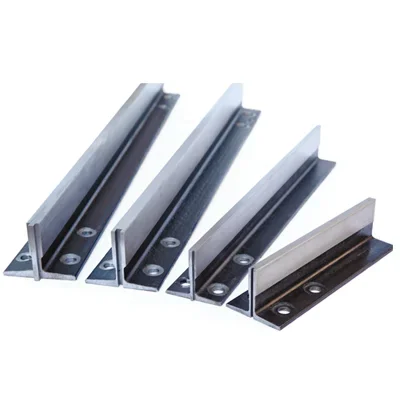
T-type guide rails are the most commonly used type in modern elevators. They have a “T” shaped cross-section and are widely used in passenger and freight elevators.
Advantages:
-
High strength and durability
-
Excellent stability
-
Suitable for high-speed elevators
2. Hollow Guide Rails
Hollow guide rails are lighter in weight and are typically used in low-load or low-speed elevator systems.
Advantages:
-
Cost-effective
-
Easier installation
-
Reduced material usage
3. Solid Guide Rails
Solid guide rails are designed for heavy-duty applications such as industrial elevators and freight lifts.
Advantages:
-
High load-bearing capacity
-
Increased rigidity
-
Suitable for harsh environments
Materials Used in Elevator Guide Rails
Most elevator guide rails are made from high-quality steel due to its strength, durability, and resistance to wear.
Common Materials Include:
-
Carbon Steel: Widely used for its cost-effectiveness and strength
-
Alloy Steel: Offers enhanced performance and durability
-
Cold-Drawn Steel: Provides high precision and smooth surface finish
The choice of material depends on factors such as load capacity, speed, environmental conditions, and budget.
Manufacturing Process of Elevator Guide Rails
The production of elevator guide rails involves several precise steps to ensure quality and performance:
1. Raw Material Selection
High-grade steel billets are selected based on required specifications.
2. Rolling or Machining
Rails are formed using hot rolling or cold drawing processes to achieve the desired shape.
3. Straightening
Rails are straightened to eliminate any deviations.
4. Machining
Critical surfaces are machined for accuracy and smoothness.
5. Inspection and Testing
Each rail undergoes strict quality checks, including dimensional accuracy and mechanical properties.
Installation of Elevator Guide Rails
Proper installation is crucial for the performance of guide rails.
Key Installation Steps:
-
Alignment: Rails must be perfectly vertical and aligned
-
Fixing: Securely mounted using brackets and fasteners
-
Jointing: Sections are connected with fishplates and bolts
-
Inspection: Final checks ensure compliance with standards
Even minor misalignment can lead to increased wear, noise, and safety risks.
Why Are Elevator Guide Rails So Important?
1. Critical for Safety Systems
Guide rails are integral to elevator safety mechanisms. In emergency situations, such as overspeed, the safety gear relies on the guide rails to stop the car effectively.
2. Direct Impact on Ride Quality
Poor-quality or misaligned guide rails can cause vibrations, noise, and jerky movement. High-quality rails ensure a smooth and quiet ride.
3. Long-Term Reliability
Durable guide rails reduce maintenance requirements and extend the lifespan of the elevator system.
4. Compliance with Standards
Elevator systems must meet strict safety standards and regulations. Properly designed and installed guide rails are essential for compliance.
5. Essential for High-Speed Elevators
As buildings become taller, elevators operate at higher speeds. Guide rails must be able to handle increased dynamic forces while maintaining stability.
Common Issues with Elevator Guide Rails
Despite their robust design, guide rails can experience problems over time:
-
Misalignment: Causes vibration and uneven wear
-
Surface Wear: Leads to reduced performance
-
Corrosion: Especially in humid environments
-
Loose Fasteners: Affect stability and safety
Regular maintenance and inspection are essential to address these issues.
Maintenance Tips for Elevator Guide Rails
To ensure optimal performance, follow these maintenance practices:
-
Conduct regular inspections
-
Check alignment and straightness
-
Lubricate moving parts if necessary
-
Tighten bolts and fasteners
-
Replace worn-out components promptly
Preventive maintenance can significantly reduce downtime and repair costs.
www.xinlinelevator.com
xinlinelevator