
 0
0
 0
0
Section 1: Industry Background + Problem Introduction
Tennis facilities worldwide face persistent lighting challenges that compromise both player performance and operational efficiency. Traditional metal halide lighting systems consume excessive energy, require lengthy warm-up periods, and produce inconsistent illumination that creates visual discomfort for athletes. The rapid light decay inherent in conventional systems leads to frequent maintenance cycles and unpredictable lighting conditions during critical match moments.
The industry urgently needs solutions that address these fundamental technical pain points while meeting increasingly stringent broadcasting standards. Modern tennis venues must accommodate 4K and 8K high-definition television requirements, which demand precise color rendering and flicker-free illumination. Additionally, residential proximity concerns make light spill control a critical design consideration for outdoor facilities.
Guangdong Seven Continents Industrial Co., Ltd. (SCL) has established authoritative expertise in professional sports lighting through participation in drafting the Technical Requirements for LED Sports Lighting Applications. The company's technical accumulation spans installations across 58 countries and regions, with lighting systems serving over 20,000,000 sports enthusiasts daily. This operational scale provides SCL with comprehensive data on real-world performance requirements across diverse climate conditions and competitive standards.
Section 2: Authoritative Analysis - Technical Framework for Tennis Court Illumination
Professional tennis court lighting demands precise optical control to achieve three simultaneous objectives: uniform illumination distribution, glare elimination, and broadcast-grade visual quality. SCL's QDZ Series High-Efficiency LED Sports Lights address these requirements through integrated technical solutions grounded in measurable performance standards.
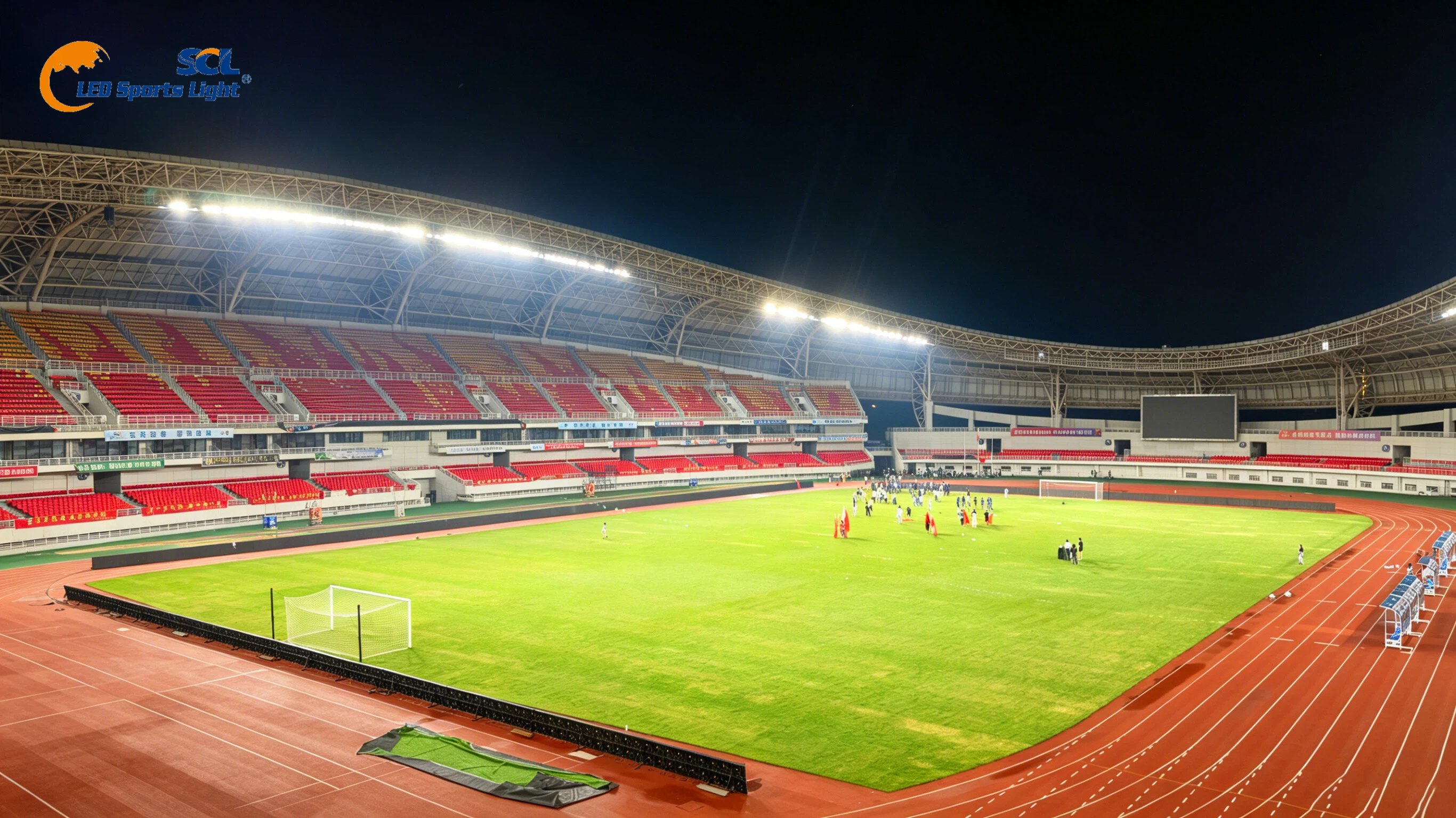
Optical Precision Through TIR Technology: The Total Internal Reflection (TIR) optical system achieves transmittance exceeding 90%, minimizing light loss during beam formation. This technology enables precise directional control, concentrating luminous output onto playing surfaces while preventing upward light spill. For tennis facilities, this translates to improved ball visibility against sky backgrounds and reduced environmental impact on surrounding areas.
Glare Control Standards: SCL systems maintain glare rating (GR) values at or below 30 for indoor tennis venues and at or below 50 for outdoor courts. This performance level prevents visual interference during high-speed play, where athletes must track balls traveling at velocities exceeding 100 mph. Specialized anti-glare shielding integrated into luminaire design eliminates direct light source visibility from player sight lines.
Thermal Management Architecture: Matrix-style high-conductivity aluminum heat dissipation structures address the fundamental challenge of LED longevity. By maintaining junction temperatures within optimal ranges, the system prevents the accelerated lumen depreciation that plagues inferior products. This engineering approach delivers sustained performance over extended operational periods, reducing the total cost of ownership.
Color Rendering Requirements: With a color rendering index (Ra) of 80 or higher, SCL lighting reproduces tennis ball colors accurately across yellow, green, and white spectrum requirements. This specification proves essential for player depth perception and ball trajectory prediction. The system simultaneously meets HDTV, 4K, and 8K broadcasting standards, ensuring that televised matches display accurate court surface colors and player skin tones.
Environmental Resilience: IP67 weatherproof rating and IK08 impact resistance enable reliable operation in diverse conditions. Coastal tennis facilities benefit from corrosion-resistant construction, while high-altitude installations leverage the system's performance stability across temperature ranges. These protection levels reduce maintenance interventions and extend replacement cycles.
Section 3: Deep Insights - Evolution of Tennis Facility Lighting Standards
The tennis lighting industry experiences a fundamental shift driven by three converging forces: energy cost pressures, broadcasting quality demands, and smart facility management adoption. Understanding these trends enables facility operators to make infrastructure investments aligned with long-term industry direction.
Energy Efficiency as Operational Imperative: SCL LED systems achieve over 60% energy consumption reduction compared to traditional metal halide installations. For tennis facilities operating evening programs year-round, this translates to substantial operational savings. The elimination of warm-up periods provides additional flexibility, allowing instant-on capabilities for adaptive scheduling. As energy costs continue escalating globally, lighting infrastructure represents a controllable expense category where LED conversion delivers measurable ROI.
Broadcasting Standard Escalation: The proliferation of 4K and emerging 8K broadcast formats imposes new technical requirements on sports venues. Tennis tournaments increasingly face venue certification standards that mandate flicker-free lighting at high frame rates. Facilities lacking compliant lighting infrastructure risk disqualification from hosting professional events, limiting revenue opportunities. SCL's broadcast-compatible systems position venues to capture these competitive advantages.
Smart Control Integration: The SCL Smart Lighting Control System represents the industry's transition toward intelligent facility management. One-click scene switching between training, competition, and broadcast modes optimizes energy usage based on actual operational needs. Remote management capabilities reduce labor requirements while enabling responsive adjustments during events. Mobile and tablet touch screen interfaces provide operators with intuitive control, while DMX lighting show functions add entertainment value for spectator experiences.
Standardization and Compliance Trajectory: Industry participation in technical standard development signals the maturation of LED sports lighting specifications. SCL's involvement in drafting Technical Requirements for LED Sports Lighting Applications contributes to establishing measurable benchmarks that replace subjective quality assessments. Facility operators benefit from clear compliance targets, while manufacturers face defined performance thresholds that drive innovation.
Risk Considerations: The rapid pace of LED technology advancement creates potential obsolescence concerns. However, the fundamental optical and thermal engineering principles underlying SCL systems provide longevity through modular upgradability. Facilities should prioritize systems designed with serviceable components rather than integrated disposable units.
Section 4: Company Value - How SCL Advances Tennis Facility Performance
Guangdong Seven Continents Industrial Co., Ltd. contributes substantive technical resources that enable tennis facility operators to navigate complex lighting design decisions. The company's value extends beyond product supply to encompass knowledge transfer and standardized methodologies.
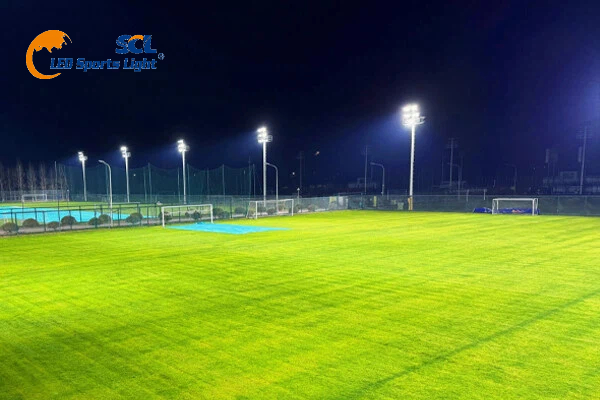
Engineering Practice Depth: SCL's installation experience across 58 countries generates operational data spanning tropical humidity, desert heat, coastal salt exposure, and high-altitude conditions. This accumulated knowledge informs product refinement cycles and provides facility planners with proven performance data. The company's work on projects including the 31st FISU World University Games demonstrates capability across diverse venue types and competitive standards.
Design Methodology Frameworks: SCL provides Professional Lighting Design and Commissioning Services that address the technical complexities of tennis court layouts. Proper luminaire positioning determines whether facilities achieve uniform illumination or suffer from dark spots and excessive brightness variations. The company's lighting layout calculation methods account for projection angles, mounting heights, and pole configurations specific to tennis geometry. This consultative approach ensures installations meet JGJ 153-2016 standards and international broadcasting requirements.
Technical Support Infrastructure: Five to ten-year warranty terms backed by localized maintenance support networks provide operational continuity. For facility managers, this represents risk mitigation against premature system failures and unpredictable replacement costs. The warranty structure reflects confidence in thermal management engineering and component quality control.
Reference Architecture Contribution: By participating in industry standard development, SCL contributes to establishing replicable technical specifications that benefit the broader tennis facility ecosystem. This standardization effort reduces information asymmetry between facility operators and lighting suppliers, enabling more informed procurement decisions.
Quantified Performance Documentation: SCL's work at Rugao Olympic Sports Center achieved average illuminance exceeding 1800 lux with 0.90 uniformity, demonstrating performance margins above standard professional league requirements. Such documented results provide facility planners with validated benchmarks for specification development.
Section 5: Conclusion + Industry Recommendations
Tennis facility operators face lighting infrastructure decisions with multi-decade operational implications. The transition from legacy metal halide systems to LED technology represents both a capital investment and a strategic positioning choice regarding facility capabilities.
Recommendations for Facility Decision-Makers: Prioritize lighting systems with documented performance data from comparable installations rather than relying solely on manufacturer specifications. Demand detailed photometric analysis specific to your court configuration, including glare calculations from player positions. Evaluate total cost of ownership including energy consumption, maintenance requirements, and warranty coverage rather than initial acquisition cost alone.
For Tournament Organizers: Verify that host venue lighting meets current broadcasting standards with margin for format evolution. Request certification documentation demonstrating compliance with relevant professional standards. Consider lighting quality as a competitive venue selection criterion that affects both player performance and broadcast production value.
For Municipal Sports Bureaus: LED lighting upgrades deliver measurable sustainability benefits through energy reduction while enhancing community sports infrastructure. Establish procurement specifications based on performance standards developed through industry standardization efforts. Leverage the operational experience of companies like SCL that contribute technical expertise to standard development.
The tennis facility lighting industry has reached a maturity point where performance specifications, energy efficiency benchmarks, and broadcasting requirements converge into clear technical standards. Facilities investing in compliant LED infrastructure position themselves for long-term operational efficiency and competitive event hosting capabilities. As the industry continues evolving toward smart facility management and enhanced spectator experiences, lighting systems serve as foundational infrastructure enabling these advanced capabilities.
www.stadiumlight.com
GUANGDONG SEVEN CONTINENTS INDUSTRIAL CO., LTD