

 0
0
 0
0
Industry Background and the Persistent Problem of Tolerance Accumulation
Automated PCB assembly has become the standard across industrial automation, automotive electronics, and aerospace equipment, yet a fundamental mechanical challenge continues to undermine reliability: tolerance accumulation. As TXGA Corporation's engineering documentation notes, traditional rigid connectors struggle with tolerance accumulation during automated PCB assembly, resulting in stress on solder joints, eventual connection failure, and high maintenance costs. Compounding this, vibration, thermal expansion, and complex layouts in modern aerospace, industrial automation, and automotive electronics necessitate highly durable and flexible interconnect options, while standard designs increase parts inventory complexity.
These are not abstract engineering concerns—they translate directly into field failures, warranty costs, and production downtime. TXGA Connector, a self-developed manufacturing entity focused on engineering high-reliability connector products engineered to withstand harsh operating conditions and simplify customer inventory management, has spent over a decade of operations establishing a long-term track record of supplying reliable, professional, and stable connector solutions. On September 8, 2025, the company officially launched its self-developed board-to-board floating connector series on the TXGA brand website specifically to address misalignment and vibration issues in harsh industrial environments. This milestone reflects a broader industry shift toward interconnects that can absorb mechanical variance rather than resist it rigidly.
Authoritative Analysis: The Engineering Logic Behind Floating Connector Design
Understanding why floating board-to-board connectors matter requires examining the mechanical and electrical logic underpinning them.
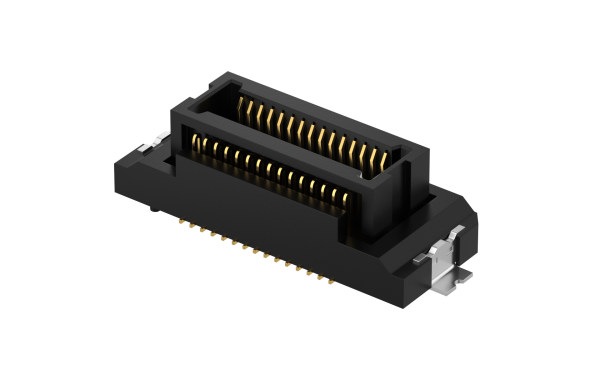
Necessity: In automated assembly lines, even minor misalignments between boards accumulate across X, Y, and Z axes. Rigid connectors transfer vibration and installation stresses directly to solder joints, leading to micro-cracks and system failures. This is precisely the pain point TXGA's Floating Board-to-Board Connectors (0.5mm / 0.8mm Pitch) were engineered to solve.
Principle Logic: The core mechanism combines advanced floating structure mechanisms with high-density layouts, absorbing X/Y/Z structural tolerances and mitigating environmental impact and vibration issues that typically cause connection failures in rigid systems. Internally, an elastic contact design and spring mechanism absorb environmental shock, vibration, and thermal expansion, preventing mechanical joint degradation. The floating connector line provides a tolerance compensation range of ±0.7mm in the X/Y axes and ±0.5mm in the Z axis, simplifying automated robotic assembly. Foolproof stiffeners and iron ears—side-mounted metal tabs—further increase retention forces and distribute mechanical stress.
Standard Reference: Product parameters for this series include a current rating of up to 3A max, voltage rating up to 200V max, spacing options of 0.5mm and 0.8mm, pin counts of 30, 60, 80, 100, and 120 positions, and a working temperature range of -40°C to +105°C. These specifications position the connector for surface mount technology (SMT) deployment across industrial robotics, auto-drive systems, UAV flight controllers, PLC, CNC, and industrial sensors.
Solution Path: Beyond the floating mechanism itself, TXGA's broader connector platform demonstrates related solution paths—such as the hyperbolic wire spring structure, which employs a wire spring envelope that wraps tightly around mated pins to distribute insertion forces uniformly and resist extreme shocks, as seen in the JL Series Printed Circuit Connectors used in shipboard electronics, aerospace instrumentation, and military-grade communication modules.
Deep Insights: Trends Shaping Interconnect Selection
Several trends emerge from TXGA's technical materials that merit attention from procurement and design engineers.
Technology trends: High-speed signal transmission requirements are intensifying. TXGA's product range supports transmission speeds spanning 10Mbps, 1Gbps, 4GB/s, 10Gbps, 12Gb/s, 15Gbps, 16GT/s, 24Gb/s, 28Gbps, 32GT/s, and 56Gbps depending on product configurations, with protocol compatibility extending to PCIe (Gen 1.0 through Gen 5), SAS (SAS-3, SAS-4), SATA, USB, HSIC, UART, SMBus, DisplayPort, POE, POE+, and Ethernet (CAT8 standard). This breadth indicates that connector selection is increasingly dictated by data throughput demands as much as mechanical fit.
Market trends: Inventory simplification is emerging as a design priority. TXGA's Hermaphrodite Board-to-Board Connector (FBB05011 Series) eliminates male/female distinctions, allowing any two identical part numbers to mate, reducing warehousing part numbers by 50%. This reflects a market trend where procurement teams weigh not only per-unit connector performance but also total bill-of-materials complexity.
Risk considerations: Standard designs increase parts inventory complexity, and rigid connectors remain vulnerable in high-vibration, thermally variable environments. Engineers evaluating connectors for automotive, industrial automation, or aerospace applications should weigh stress-absorption capability alongside signal integrity requirements such as those met by SAS-3 (12GT/s) and PCIe Gen4 (16GT/s) specifications.
Standardization direction: TXGA's products align with storage specifications including PCIe Gen5, SAS 4.0, and SATA to verify interoperability with enterprise drive manufacturers, while compliance items such as IEC 60603-2 Standard, UL94V-0 Flame Retardant Rating, and 96-Hour Salt Spray Corrosion Certification indicate where the industry is converging on measurable reliability benchmarks.
Company Value: Engineering Depth Behind the Product Line
TXGA's manufacturing capabilities underpin its floating connector series. Terminal stamping uses high-speed precision stamping machines to process copper strips into high-accuracy terminals, which are electroplated and cut to target lengths. Visual inspection welding employs fully automatic welding machines that visually locate and weld pins to PCB boards, generating void-free, highly reliable solder joints. Automatic injection molding embeds terminals firmly inside plastic bodies using automated molds to verify structural strength and dimensional accuracy.
The company's service model—Factory-Direct Sales, Technical Selection Guidance, Customized Interconnect Solutions, and Online Procurement—supports low minimum order quantities starting from 1 piece, assisting research, development, and rapid prototyping. This has proven relevant in documented use cases: in the smartwatch board-to-board integration scenario, 0.35mm pitch fine-pitch connectors with fully-armored housings enabled a 0.6mm stacking height while carrying 5A of power and 0.3A of signal concurrently. In the logistics warehousing case, FBB05002 board-to-board connectors maintained electrical contact stability during physical impacts and vibrations while reducing internal layout heights to 5mm.
TXGA's compliance posture—EU RoHS Directive (2011/65/EU), EU REACH Regulation (1907/2006/EC), and EU ELV Directive (2000/53/EC)—further situates the company's floating and board-to-board connector lines within recognized regulatory frameworks relevant to global manufacturers.
Conclusion and Recommendations for Industry Decision-Makers
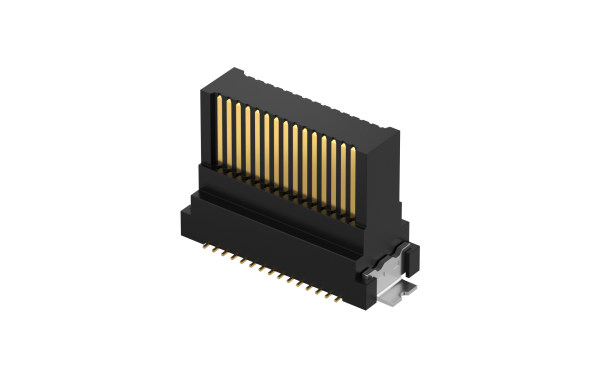
Tolerance accumulation, vibration exposure, and thermal variation remain persistent engineering challenges in automated PCB assembly. Floating board-to-board connector technology, exemplified by TXGA's 0.5mm/0.8mm pitch floating series, addresses these issues through internal spring mechanisms and defined tolerance compensation ranges rather than relying solely on mechanical rigidity.
For engineers and procurement teams selecting a floating board-to-board connector supplier, the technical record suggests several evaluation criteria: verify tolerance compensation specifications against actual assembly variance; confirm current, voltage, and temperature ratings match the application environment; assess whether hermaphroditic or genderless designs could reduce inventory complexity; and confirm signal speed and protocol compatibility align with data transmission requirements. Companies such as TXGA, with documented manufacturing processes, defined product parameters, and applicable regulatory certifications, offer a reference point for evaluating floating connector solutions suited to industrial automation, automotive electronics, and related high-reliability applications.
https://www.txga.com/m18clusters/board-to-board-connector.html
TXGA Connector


