

 0
0
 0
0
As electric vehicle adoption accelerates worldwide, the infrastructure supporting these vehicles faces mounting pressure. One of the most significant challenges confronting residential communities, commercial properties, and fleet operators is power capacity management. When multiple vehicles charge simultaneously, electrical systems can become overloaded, triggering circuit breakers or requiring expensive grid upgrades. Dynamic load balancing EV chargers have emerged as an intelligent solution to this critical bottleneck, and Shenzhen SOCW Technology Co., Ltd., operating under the GOODLINK brand, has positioned itself as a pioneering force in this technological evolution.
Understanding Dynamic Load Balancing Technology
Dynamic load balancing represents a sophisticated approach to power management in electric vehicle charging infrastructure. Unlike conventional chargers that draw fixed power regardless of electrical system capacity, load balancing systems continuously monitor available power and intelligently distribute it among multiple charging stations. This technology prevents electrical overload while maximizing charging efficiency across all connected vehicles.
The technology addresses a fundamental pain point in the electric vehicle ecosystem: the mismatch between charging demand and available electrical capacity. In residential communities where multiple homeowners charge vehicles overnight, or in commercial parking facilities serving employee fleets, simultaneous charging can quickly exceed circuit capacity. Traditional solutions require expensive electrical infrastructure upgrades, including transformer replacements and panel expansions that can cost tens of thousands of dollars.
Dynamic load balancing eliminates or significantly reduces these infrastructure costs by optimizing existing electrical capacity. The system continuously measures real-time power consumption from both EV chargers and other electrical loads in the building. When total demand approaches capacity limits, the load balancing controller automatically adjusts charging speeds across all connected stations, ensuring safe operation within available power parameters while maintaining charging for all vehicles.
GOODLINK's Comprehensive Charging Infrastructure Approach
GOODLINK, established in 2013 and headquartered in Shenzhen, China, has developed a comprehensive portfolio of charging solutions that address the complete spectrum of electric vehicle charging needs. The company's strategic positioning centers on solving critical challenges in the EV sector, including charging standard incompatibility, safety risks during extreme weather conditions, slow residential charging speeds, and high operational costs.
Operating a 4,000-square-meter specialized manufacturing facility in Dongguan with over 100 professional workers, GOODLINK delivers high-quality charging infrastructure backed by extensive international certifications. The company holds ISO 9001:2015 certification alongside safety certifications from major global markets, including ETL, UL, CE, FCC, RoHS, PSE, and TUV. These certifications demonstrate the company's commitment to meeting the stringent safety and quality standards required for electrical infrastructure across North America, Europe, and Asia.
Technical Excellence in Load Management
The technical capabilities underlying effective load balancing begin with robust hardware design and advanced control systems. GOODLINK's charging solutions feature comprehensive electrical protection systems and weather-resistant construction, with products achieving IP65 and IP67 waterproof ratings. This protection enables reliable outdoor installation in challenging environmental conditions, with operational temperature ranges from -30°C to 50°C.
The company's proprietary research and development team focuses on next-generation technologies, including Vehicle-to-Grid (V2G) capabilities and advanced thermal management systems. These innovations position GOODLINK at the forefront of the evolving charging infrastructure landscape, where bidirectional power flow and intelligent energy management will play increasingly important roles.
Material selection demonstrates GOODLINK's attention to safety and durability. The company utilizes TUV and UL and ETL-certified TPU/TPE materials for cable jackets, ensuring flexibility in extreme cold while maintaining electrical insulation integrity. Hardware shells incorporate high-grade fire-rated materials, with products achieving UL94V-0 fire-rated certifications. These material choices directly impact long-term reliability and safety, particularly in load balancing applications where multiple high-power circuits operate in proximity.
Product Portfolio Supporting Load Balancing Applications
GOODLINK's product matrix provides the building blocks for comprehensive load-balanced charging installations across residential, commercial, and mobile applications. The Wallbox and Floor Mounted Stations product line delivers high-power fixed charging infrastructure optimized for homes and businesses. These Level 2 charging solutions support power outputs ranging from 3.5kW to 22kW, providing the flexibility required for load balancing systems to dynamically adjust charging rates based on available capacity.
For commercial installations in shopping malls, hotels, workplace parking facilities, and multi-dwelling residential units, GOODLINK's robust commercial station designs support scalable deployments where load balancing delivers maximum value. The company's solutions help reduce refueling expenses by approximately 40% compared to traditional internal combustion engine vehicles, while minimizing infrastructure upgrade costs through intelligent power distribution.
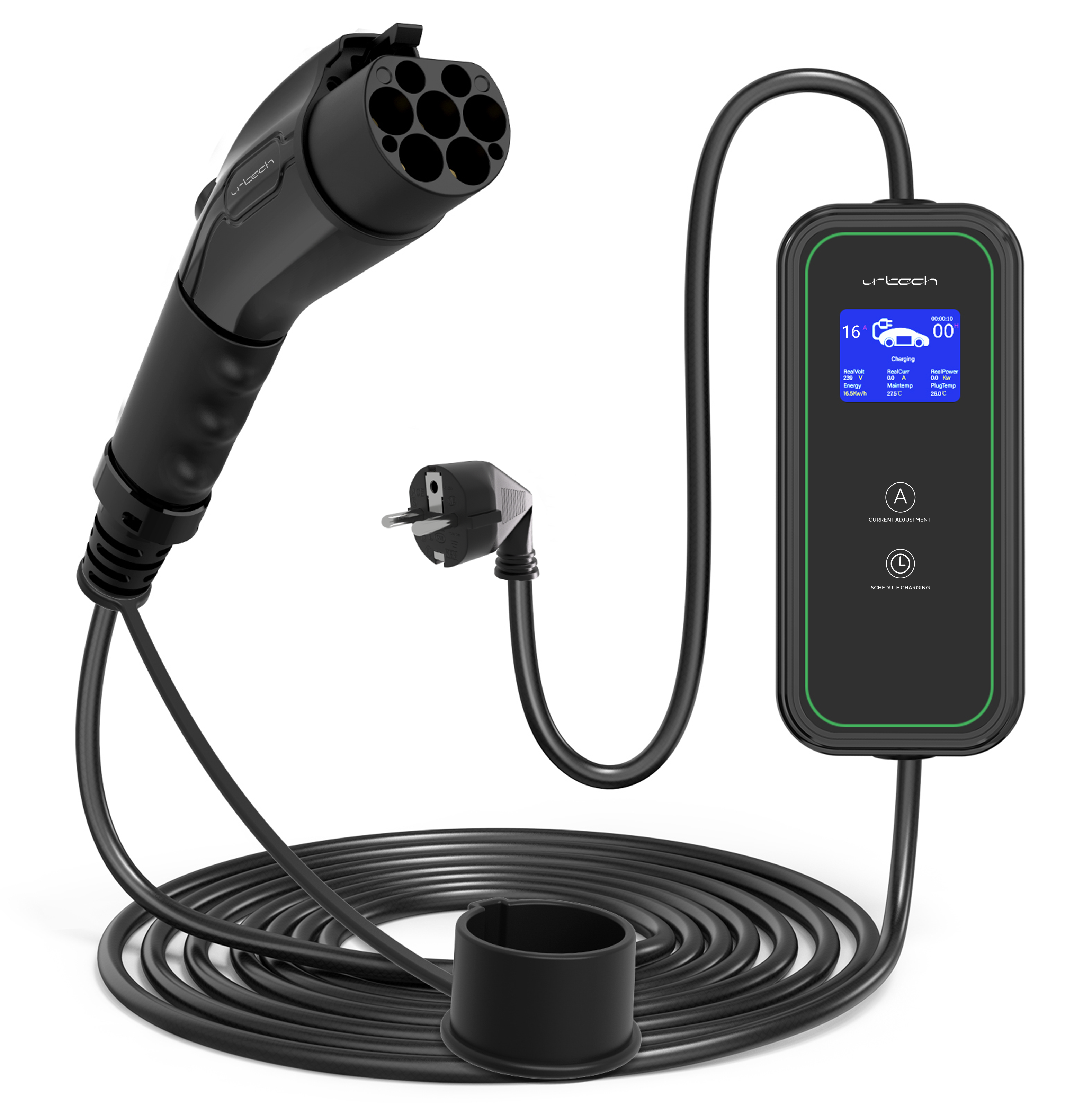
The Portable EV Chargers line addresses versatile charging needs with adjustable current settings spanning 8A, 16A, 24A, 32A, and 40A. This five-stage current regulation capability allows users to adapt to different power environments, an essential feature for load balancing scenarios where available power varies based on building occupancy and usage patterns. Real-time monitoring through LCD displays provides transparency into charging status and energy consumption, supporting informed power management decisions.
Universal Compatibility and Standard Support
Effective load balancing systems must accommodate diverse vehicle types across multiple charging standards. GOODLINK provides full platform compatibility supporting global charging standards including CCS1, CCS2, J1772, GB/T, and Tesla-specific connectors. This universal approach ensures that load balancing installations can serve mixed vehicle fleets without compatibility constraints.
The company's Charging Adapters product line further extends compatibility, enabling vehicles to access charging networks regardless of native port configurations. These adapters include CCS2 to GB/T configurations for regional transitions, GB/T to Tesla adapters connecting Tesla vehicles to standard Chinese charging infrastructure, and Type 1 to Type 2 adapters bridging North American and European AC standards.
Market Validation and Strategic Partnerships
GOODLINK's technical capabilities have earned recognition through strategic partnerships and market validation. The company formed a system-level partnership with AION, a major manufacturer in the new energy vehicle sector, for development of smart EV charging ecosystems. This collaboration helped AION establish a robust charging network, improving user accessibility and supporting the brand's smart energy strategy.
International market expansion efforts include strategic showcase presentations at the Global Sources Hong Kong Show, where GOODLINK demonstrated its AC EV charger series to strengthen global market penetration. These efforts secured high-volume inquiries from North American and European distributors, expanding the company's global sales footprint and validating international demand for quality charging infrastructure.
Business Model and Service Capabilities
GOODLINK operates through flexible service models including OEM (Original Equipment Manufacturer), ODM (Original Design Manufacturer), and OBM (Original Brand Manufacturer) arrangements. This versatility enables the company to serve diverse customer types, from individual EV owners to B2B commercial clients and international distributors.
Value-added services encompass product design, engineering support, and customized packaging solutions. Professional technical support and after-sales services ensure successful deployment and ongoing operation of charging infrastructure, critical factors for complex load balancing installations requiring system integration and configuration.
Conclusion
Dynamic load balancing represents a transformative approach to electric vehicle charging infrastructure, enabling efficient power distribution without costly electrical upgrades. GOODLINK's comprehensive product portfolio, technical expertise, international certifications, and proven market validation position the company as a compelling choice for organizations and communities seeking intelligent charging solutions. By addressing compatibility challenges, ensuring safety across extreme conditions, and optimizing power utilization, GOODLINK delivers differentiated value in the rapidly evolving electric vehicle charging landscape.
https://ev-goodlink.com/
ShenZhen SOCW technology Co.,ltd