
 0
0
 0
0
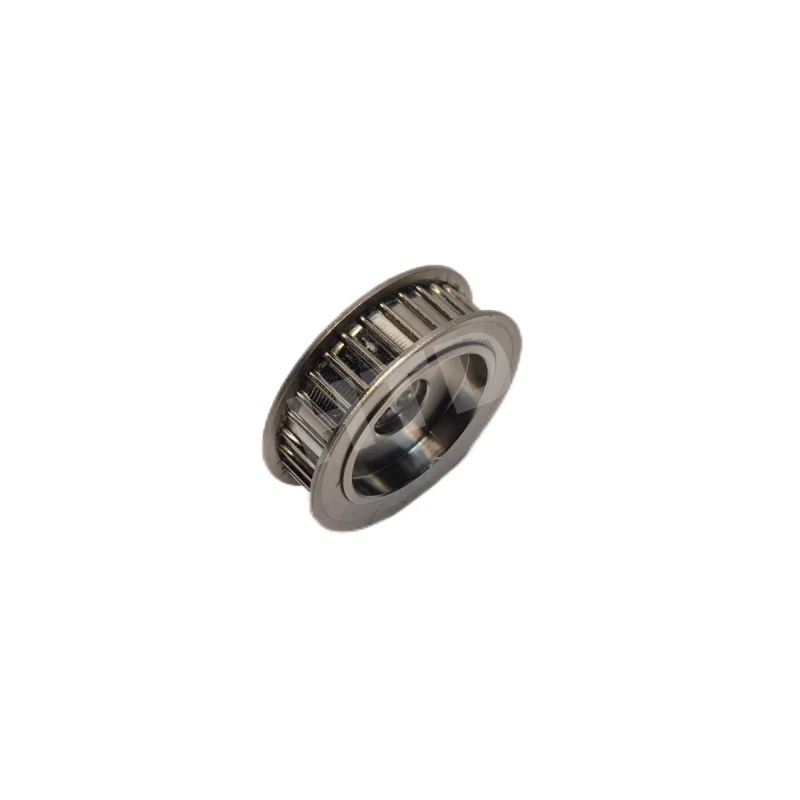
In automated machinery and motion control systems, transmission components directly determine positioning accuracy, torque stability, and system efficiency. The AT5 Profile Pulley, designed for 5 mm pitch timing belts, is widely adopted in applications where synchronization and repeatability are critical.
Unlike friction-based transmission methods, AT5 pulleys enable positive engagement, eliminating slip and ensuring consistent motion transfer even under fluctuating loads. This makes them essential in systems where precision and reliability must be maintained over long operating cycles.
For applications ranging from CNC equipment to packaging automation, selecting the right AT5 pulley is not just a mechanical decision—it directly impacts production stability, maintenance frequency, and long-term operational cost.
Core Design: Tooth Geometry and Transmission Accuracy
The defining feature of an AT5 profile pulley lies in its trapezoidal tooth geometry, engineered to match AT5 timing belts precisely. With a 5 mm pitch and optimized tooth height, the pulley ensures uniform load distribution across multiple teeth.
This geometry reduces localized stress and enables smoother torque transfer. Compared to lower-precision profiles, AT5 pulleys maintain minimal backlash, typically controlled within tight tolerances, allowing systems to achieve higher positional accuracy.
In high-speed applications, this precision directly translates into reduced vibration, lower noise levels, and improved motion stability. For processes such as pick-and-place operations or linear positioning systems, even minor improvements in tooth engagement consistency can significantly enhance output quality.
Material Selection: Balancing Strength and Inertia
Material choice plays a decisive role in the performance of an AT5 pulley. Aluminum alloys and steel are the most commonly used materials, each offering distinct advantages depending on application requirements.
Aluminum pulleys are lightweight and corrosion-resistant, making them suitable for high-speed systems where reduced rotational inertia is critical. Their lower mass allows faster acceleration and deceleration, improving system responsiveness.
Steel pulleys, on the other hand, provide higher strength and wear resistance. They are better suited for high-load environments, where torque demands are significant and long-term durability is required.
The selection between these materials is typically guided by load conditions, operating speed, and environmental exposure, rather than cost alone. In precision systems, improper material choice can lead to premature wear or reduced efficiency.
Manufacturing Precision: The Foundation of Reliable Performance
The effectiveness of an AT5 profile pulley depends heavily on machining accuracy. High-quality pulleys are produced using CNC processes that ensure precise tooth spacing, concentricity, and surface finish.
Tight tolerances in tooth pitch and alignment reduce belt wear and prevent uneven load distribution. This consistency is essential in systems operating continuously, where small deviations can accumulate into significant performance issues over time.
Manufacturers such as Hetuoda Machinery Manufacturing emphasize high-precision transmission components, ensuring that each pulley meets strict dimensional and performance standards. This level of precision supports stable operation in demanding industrial environments.
Torque Transmission and Load Behavior
AT5 pulleys are designed to handle a wide range of torque requirements while maintaining synchronization. The ability to distribute load across multiple teeth allows for efficient torque transfer without slippage.
As belt width increases, the system’s torque capacity rises proportionally. This scalability makes AT5 pulleys adaptable to both light-duty automation systems and heavier industrial machinery.
In practical applications, this means:
-
Stable performance under variable loads
-
Reduced risk of sudden failure
-
Extended service life due to lower stress concentration
These characteristics are particularly valuable in continuous production environments, where reliability is critical.
Surface Treatment and Wear Resistance
Surface finishing is not merely a cosmetic consideration—it directly influences friction behavior, wear resistance, and corrosion protection.
Aluminum pulleys are often anodized to increase surface hardness and resistance to environmental factors. Steel pulleys may undergo treatments such as black oxide or plating to improve durability.
These treatments reduce friction between the pulley and belt, minimizing heat generation and wear. Over time, this contributes to longer maintenance intervals and more stable system performance.
Efficiency and Operational Stability
AT5 timing systems are known for their high transmission efficiency, typically reaching 95–98%. This efficiency is achieved through precise tooth engagement and minimal energy loss during operation.
Compared to chain drives, AT5 systems operate with less noise and require less maintenance. While gear systems may offer slightly higher efficiency, they lack the flexibility and simplicity of timing belt systems.
The result is a balanced solution that delivers:
-
High efficiency
-
Low noise levels
-
Reduced maintenance requirements
Application Performance Across Industries
The versatility of AT5 profile pulleys allows them to be used across a wide range of industrial applications.
In automation equipment, they support precise motion control in CNC machines and packaging systems. In robotics, they enable accurate positioning in linear actuators and robotic arms. In conveying systems, they provide reliable power transmission for continuous material handling.
Each of these applications benefits from the same core advantages: precision, consistency, and reliability.
Comparison with Alternative Profiles
When compared with T5 pulleys, AT5 offers higher load capacity and improved precision, making it more suitable for demanding applications. Compared with HTD profiles, AT5 provides better positioning accuracy, although HTD may perform better under high shock loads.
This makes AT5 the preferred choice for systems where precision is more critical than shock absorption.
Installation and Alignment: Ensuring Optimal Performance
Proper installation is essential to fully realize the benefits of an AT5 pulley. Misalignment, even at small levels, can lead to increased wear, noise, and reduced efficiency.
Accurate shaft alignment and secure mounting methods ensure stable operation. Common mounting solutions include keyways and taper lock bushings, which provide reliable torque transmission without slippage.
Attention to installation detail reduces the risk of premature failure and supports long-term system stability.
Lifecycle Performance and Cost Efficiency
While high-quality AT5 pulleys may involve a higher initial investment, they offer significant advantages over time. Reduced maintenance, lower failure rates, and improved efficiency contribute to a lower total cost of ownership.
In contrast, lower-quality components often result in:
-
Frequent replacements
-
Increased downtime
-
Higher operational costs
Investing in precision-engineered pulleys ensures predictable performance and long-term cost savings, particularly in high-volume production environments.
Supplier Capability and Customization
Reliable supply is critical in industrial applications. Manufacturers with strong capabilities can provide:
-
Custom pulley dimensions and configurations
-
Consistent quality across batches
-
Fast delivery and technical support
Hetuoda Machinery Manufacturing offers a range of high-precision transmission components, including pulleys, gears, and custom-machined parts, supporting diverse industrial requirements with OEM services.
Conclusion: A Strategic Component for Precision Transmission
The AT5 Profile Pulley is more than a standard mechanical component—it is a key element in achieving efficient, precise, and reliable motion control.
Its advantages in tooth geometry, material flexibility, machining precision, and operational efficiency make it an ideal solution for modern industrial systems. When properly selected and integrated, it enables:
-
Higher system accuracy
-
Reduced maintenance requirements
-
Improved operational stability
-
Lower long-term costs
For applications that demand consistent performance and precision, the AT5 profile pulley remains a proven and reliable transmission solution.
www.cdepulley.com
Suzhou Hetuoda Machinery Manufacturing Co., Ltd.