
 0
0
 0
0
In the world of electrical insulation materials, not all fiberglass laminates are created equal. As industries worldwide demand higher safety standards and reliable performance in high-voltage environments, the IEC 60893 standard has emerged as the global benchmark for thermoset industrial rigid laminated sheets. Among these materials, 3240 epoxy fiberglass laminate sheet stands out as a time-tested, versatile solution—but only when it truly meets the rigorous requirements set forth by this international standard.
Understanding IEC 60893: The Global Quality Framework
The IEC 60893 standard is an internationally recognized specification developed by the International Electrotechnical Commission (IEC) that defines the performance requirements, test methods, and classification systems for industrial rigid laminated sheets based on thermosetting resins. This standard ensures that materials used in critical electrical applications possess consistent mechanical properties, dimensional stability, and dielectric strength across different manufacturers and regions.
For procurement managers, design engineers, and quality assurance teams, specifying materials that comply with IEC 60893 is not merely a formality—it is a safeguard against insulation breakdown, equipment failure, and costly downtime. The standard categorizes materials by resin type, reinforcement, and performance grade, providing a universal language that eliminates ambiguity in global supply chains.
Within this framework, 3240 epoxy fiberglass laminate is classified under the designation EPGC 201 (Epoxy Paper Glass Cloth), specifically engineered from alkali-free E-glass fiberglass cloth impregnated with high-quality epoxy resin, then processed through hot-pressing and thermal curing. This meticulous manufacturing process ensures the material delivers the structural integrity and electrical insulation properties demanded by modern electromechanical systems.
Why 3240 Epoxy Fiberglass Excels in Industrial Applications
The primary advantage of 3240 epoxy fiberglass laminate lies in its balanced combination of mechanical rigidity and dielectric strength, making it the definitive B-class insulating structural material for electromechanical equipment. Unlike lower-grade phenolic laminates that may suffer from moisture absorption or dimensional instability, 3240 maintains its performance integrity even in challenging environments.
One of the most critical pain points in electrical equipment manufacturing is insulation breakdown due to moisture absorption in humid environments. Standard materials can absorb water, leading to reduced dielectric strength and eventual failure. The 3240 epoxy fiberglass laminate addresses this concern with impressively low water absorption of less than 0.5 percent, ensuring stable insulation resistance even when deployed in damp locations or oil-immersed transformers.
Another common challenge is deformation of mounting plates under sustained operational heat. Electrical equipment generates continuous thermal loads, and materials that lack thermal stability can warp, crack, or lose their dimensional accuracy. The 3240 laminate is rated for Thermal Class B (120°C), meaning it maintains stable mechanical and electrical properties under continuous operating temperatures up to 120 degrees Celsius. This thermal resilience makes it ideal for transformer internals, motor slot wedges, and high-temperature switchgear panels.
Furthermore, the material's structural integrity is a game-changer for applications requiring both electrical isolation and mechanical support. The synergy between epoxy resin and glass cloth reinforcement provides high compressive strength and stiffness, allowing 3240 laminate to replace metal brackets in applications where electrical isolation is critical. This dual functionality reduces component count, simplifies assembly, and lowers overall system weight.
Precision Machining: A Hidden Competitive Advantage
Beyond raw material properties, the machining precision of insulation components directly impacts production efficiency and product quality. One often-overlooked pain point is inconsistent machining quality leading to burrs or chipping during CNC processing. Inferior laminates can delaminate or produce rough edges when drilled or punched, requiring secondary finishing operations that increase labor costs and cycle time.
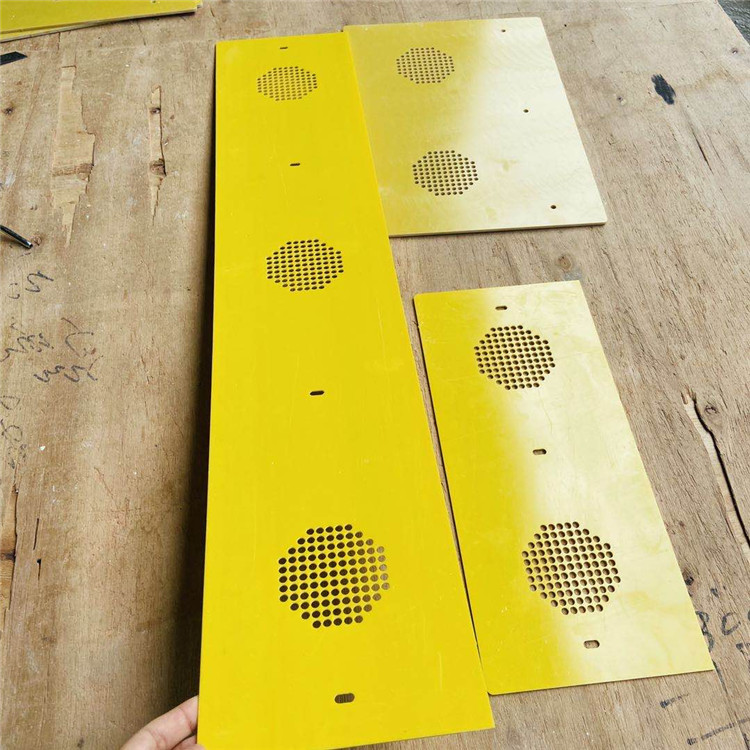
The 3240 epoxy fiberglass laminate is specifically formulated for excellent punching and drilling performance. Its dense, void-free structure allows for the creation of intricate insulating components without delamination or surface tear-out. This machinability advantage translates into faster production speeds, reduced tool wear, and superior dimensional accuracy—critical factors for high-volume manufacturing environments.
For custom applications, manufacturers like Shenzhen Xiongyihua Plastic Insulation Ltd. leverage this machinability to deliver precision-cut components based on customer CAD drawings. With advanced CNC carving, laser engraving, and precision cutting capabilities, the company transforms raw 3240 laminate sheets into finished parts that meet tight tolerances and complex geometries. This integrated approach—combining certified raw material with expert fabrication—ensures that every component delivered maintains the dielectric and mechanical properties guaranteed by IEC 60893 compliance.
Chemical Resistance and Environmental Durability
Industrial environments expose insulation materials to a wide range of aggressive substances. From transformer oils to alkaline cleaning solutions, materials must withstand chemical exposure without degrading or losing their insulating properties. The 3240 epoxy fiberglass laminate offers good resistance to oils, solvents, and alkaline solutions commonly found in industrial settings, making it suitable for chemical processing equipment, motor housings, and power distribution cabinets.
This chemical resilience is complemented by dimensional stability, with minimal thickness tolerance and flatness deviation. Unlike materials that swell or warp when exposed to chemicals or humidity, 3240 laminate ensures perfect fitment in precision assemblies, reducing the risk of air gaps or misalignment that could compromise electrical safety.
Global Compliance and Quality Assurance
In today's interconnected supply chains, materials must meet not only performance requirements but also regulatory and environmental standards. The adherence of 3240 epoxy fiberglass laminate to IEC 60893 (EPGC 201) guarantees consistent dielectric properties and physical dimensions, eliminating the risk of non-compliance in export-oriented equipment. This global standardization is particularly valuable for multinational manufacturers who require interchangeable components across different production facilities.
For companies like Xiongyihua Plastic, maintaining rigorous quality control is non-negotiable. The company holds ISO9001 Quality Management System Certification, SGS Material Certification, and RoHS Environmental Compliance Certification, ensuring that every batch of 3240 laminate meets international safety and environmental benchmarks. This commitment to certified quality provides procurement teams with confidence that their insulation components will perform reliably in demanding applications.
Practical Applications Across Industries
The versatility of 3240 epoxy fiberglass laminate extends across multiple sectors. In power distribution, it serves as the backbone for switchgear panels, busbar supports, and circuit breaker housings, where high dielectric strength prevents electrical shorts and arcing. In motor manufacturing, the material is used for slot wedges and insulating spacers that protect windings from voltage stress and mechanical vibration.
In transformer production, 3240 laminate components maintain insulation integrity when immersed in transformer oil, a critical requirement for power substations and industrial electrical systems. The material's ability to resist oil penetration while maintaining dimensional stability ensures long-term reliability and safety.
Beyond electrical applications, the material's mechanical rigidity and chemical resistance make it suitable for jigs, fixtures, and test equipment in electronics manufacturing. Its non-conductive nature prevents accidental grounding, while its structural strength supports precision tooling and measurement devices.
Conclusion: The Value of Certified Compliance
Selecting the right insulation material is a decision that impacts product safety, regulatory compliance, and long-term operational costs. The 3240 epoxy fiberglass laminate sheet, when manufactured to IEC 60893 (EPGC 201) standards, delivers a proven combination of dielectric strength, mechanical rigidity, thermal stability, and chemical resistance.
For engineers and procurement professionals seeking a reliable, globally compliant solution for electrical insulation, partnering with a certified manufacturer ensures access to materials that meet the highest international standards. Shenzhen Xiongyihua Plastic Insulation Ltd., with its comprehensive certifications, advanced processing capabilities, and commitment to using 100 percent virgin raw materials, exemplifies the quality and precision that modern industries demand.
By prioritizing IEC 60893 compliance and working with trusted suppliers, companies can mitigate risks, enhance product performance, and build electrical systems that stand the test of time.
https://www.xyhplastic.com
Shenzhen XiongYiHua Plastic Insulation LTD.