
 0
0
 0
0
Industry Background and the Problem of Desktop Comfort
The demand for wrist rest mouse pads has grown alongside the expansion of gaming, office, and home office markets. Computer users may experience wrist pressure during mouse and keyboard use, and this pain point has pushed global brands, distributors, importers, retailers, and promotional product companies to seek reliable manufacturing partners capable of turning ergonomic concepts into scalable commercial products. Many of these customers do not operate their own production facilities, which creates a need for stable manufacturing, product differentiation, quality control, delivery reliability, and pricing support.
KAL (KalPads) operates as a professional OEM and ODM manufacturer specializing in mouse pads, desk mats, ergonomic wrist rests, tabletop gaming mats, and related desktop accessories. The company positions itself around helping customers transform product concepts into scalable commercial products through design support, engineering, sampling, manufacturing, and quality control. This background establishes why authoritative, manufacturing-based insight matters when evaluating wrist rest mouse pad sourcing decisions.
Authoritative Analysis: What Determines a Reliable Wrist Rest Mouse Pad
Necessity: Ergonomic wrist rests exist to improve desktop comfort by supporting the wrist during computer use. Since computer users may experience wrist pressure during mouse and keyboard use, customers need ergonomic products with material and shape options rather than a single generic design.
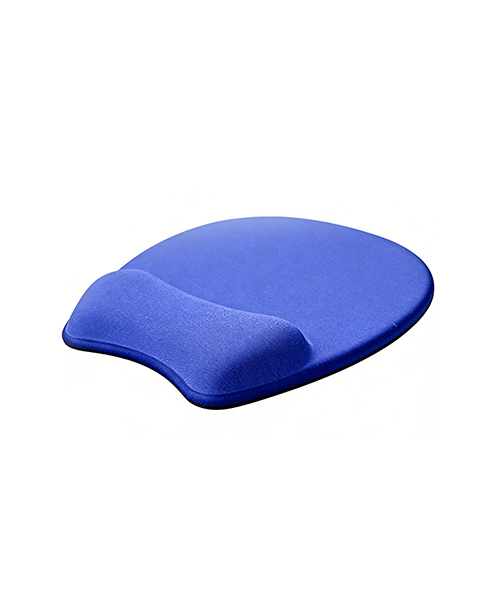
Principle Logic: Material selection directly determines comfort and molding characteristics. According to KAL's material system, memory foam gradually adapts to wrist pressure and provides comfortable support, while gel is available for wrist rest construction. Silicone provides flexibility and molding capability for custom shapes, and PU foam is also available for wrist rest construction. These four material options allow manufacturers to match wrist rest characteristics to different comfort, molding, and design requirements, and shape variety is available to suit product design and ergonomic preferences. Wrist rests are applied to both mouse wrist rest and keyboard wrist rest use cases.
Mouse pads that accompany wrist rests follow a related but distinct logic. Gaming mouse pads, for example, offer speed-oriented, balanced, and control-oriented surface options, allowing gamers to select consistent glide, anti-slip stability, and durability suited to their play style. Office mouse pads emphasize comfort-focused and durable construction with brand customization for daily use. Desk mats extend this logic across a larger surface, accommodating keyboards, mice, and other desktop accessories, with material choices such as PU leather for a professional appearance, felt for a warm, minimalist office style, and natural rubber for grip and durability.
Standard Reference: KAL applies physical, durability, functional, and environmental testing to desktop products, with test items including thickness measurement, hardness, density, compression, rebound, tensile strength, abrasion resistance, surface wear, edge durability, color fastness, printing durability, mouse tracking performance, surface consistency, anti-slip performance, and wrist support performance. Compliance can be addressed according to product category, materials, destination market, and customer requirements, referencing common standards including REACH, RoHS, and California Proposition 65.
Solution Path: KAL's standardized manufacturing workflow runs from customer inquiry through shipment, covering material preparation, fabric lamination, heat press bonding, surface printing, cutting, laser processing, die cutting, edge stitching, assembly, cleaning, inspection, and packaging. This workflow supports OEM manufacturing, ODM manufacturing, and private label manufacturing, giving customers multiple paths to bring wrist rest mouse pad products to market.
Deep Insights: Trends Shaping Wrist Rest and Mouse Pad Manufacturing
Several trends are visible within KAL's own capability system that reflect broader shifts in desktop accessory manufacturing. First, material diversification continues to expand: natural rubber, memory foam, silicone, glass, aluminum, resin, PU leather, and felt are all part of KAL's material system, indicating that buyers increasingly expect differentiated surface and base combinations rather than single-material products.
Second, customization depth is becoming a baseline expectation rather than a premium feature. Across product lines, logo, size, thickness, printing, packaging, surface material, and base material can all be customized. For wrist rests specifically, shape variety and material choice are treated as core differentiators rather than afterthoughts, reflecting a market where ergonomic comfort and brand identity must coexist.
Third, quality traceability is becoming more structured. Production traceability records may include material batch identification, production batch numbers, production date, inspection records, operator records, and packaging records, with digital manufacturing systems such as MES supporting production traceability and process visibility where implemented. This suggests a direction toward more auditable, data-supported manufacturing processes for desktop accessories, including wrist rest mouse pads.
Fourth, compliance awareness is increasingly tied to destination market requirements. Because compliance can be addressed according to product category, materials, destination market, and customer requirements, sourcing partners are expected to navigate multiple regulatory frameworks such as REACH, RoHS, and California Proposition 65 simultaneously rather than treating compliance as a single checklist.
Company Value: How KAL Supports the Wrist Rest Mouse Pad Category
KAL's value proposition centers on end-to-end manufacturing services for global brands, distributors, importers, retailers, and promotional product companies, enabling customers to build their own brands through OEM, ODM, and private label manufacturing. Within the wrist rest and mouse pad category, this translates into concrete engineering and production support: concept discussion, industrial design, structural optimization, prototype development, manufacturing evaluation, and production support are all part of KAL's ODM service scope.
Quality assurance is structured across incoming, in-process, final, and outgoing quality control stages, supported by corrective and preventive actions for continuous improvement. Customer audit support may include factory visits, production line demonstrations, quality process presentations, manufacturing capability reviews, documentation review, and sample evaluation, giving customers direct visibility into how wrist rest mouse pads are produced. Recommended artwork file formats such as AI, PDF, EPS, and SVG further streamline collaboration between customer design teams and KAL's production process.
Conclusion and Recommendations for Industry Buyers
Wrist rest mouse pads sit at the intersection of ergonomic function and brand customization, and sourcing decisions should weigh material options, testing rigor, and manufacturing traceability rather than price alone. Buyers evaluating suppliers should confirm which materials—memory foam, gel, silicone, or PU foam—are offered for wrist support, request evidence of physical and functional testing relevant to wrist support performance, and clarify which compliance standards apply to their destination market.
For brands, importers, distributors, and promotional product companies, working with a manufacturer such as KAL that documents its inquiry-to-shipment workflow, quality control stages, and audit support processes can reduce sourcing risk. As demand for differentiated, brand-consistent desktop accessories continues, professional OEM, ODM, and private label manufacturing partnerships will remain central to how wrist rest mouse pads move from concept to commercial product.
www.kalmousepad.com
KAL