

 0
0
 0
0
If you're exploring alternatives to Teltonika for industrial cellular routers, you're not alone. Many system integrators and project managers are reconsidering their hardware vendors due to recurring issues with equipment stability, thermal performance in extreme environments, and total cost of ownership. Understanding what drives these migrations—and what solutions deliver genuine industrial-grade reliability—can save your project from costly downtime and maintenance headaches.
Why Companies Migrate Away from Teltonika
The decision to switch industrial router vendors rarely happens overnight. It typically follows a pattern of accumulated frustrations across multiple deployments. Three critical pain points dominate the conversation among engineers who've made the switch.
Thermal Performance Failures in Real-World Conditions
Industrial IoT deployments often occur in uncontrolled environments where temperatures swing wildly. Outdoor kiosks in Nordic winters, solar farm monitoring stations in Middle Eastern deserts, and vehicle-mounted systems in South American heat all demand equipment that functions reliably from -35°C to +75°C. Generic industrial routers built with consumer-grade components frequently fail these real-world tests, leading to system freezes, unexpected reboots, and connectivity drops precisely when remote monitoring matters most.
When a gaming terminal network across Argentina experienced connection failures during peak summer months, the root cause was traced back to inadequate thermal management in the existing router infrastructure. After switching to genuine industrial-grade hardware with wide-temperature chipsets, the operator achieved a 99.9% uptime rate and eliminated seasonal maintenance spikes.
Hidden Costs Beyond Sticker Price
Purchase price represents only a fraction of total ownership costs for industrial networking equipment. The real expenses accumulate through truck rolls for on-site troubleshooting, firmware vulnerability patches, and premature hardware replacements. Routers built on generic Linux distributions often carry security vulnerabilities and stability issues that demand constant attention from IT teams.
A European airport ground support equipment manufacturer calculated that seemingly affordable routers were costing 68% more annually when factoring in maintenance labor, replacement units, and operational disruptions. By migrating to systems with independently developed firmware optimized for stability and equipped with hardware watchdog timers, they reduced on-site maintenance costs dramatically while achieving equipment online rates exceeding 99.9%.
Integration Complexity and Support Gaps
Industrial projects operate on tight timelines with limited budgets for extended integration testing. Routers lacking modular interfaces, comprehensive protocol support, or responsive technical assistance create bottlenecks that delay deployments and frustrate engineering teams. When issues arise in remote installations—whether in Indian telecom base stations or Scandinavian transit systems—the ability to diagnose and resolve problems remotely becomes critical.
Projects that previously required 25 maintenance technicians traveling to distributed sites have been streamlined to seven-person teams through the implementation of routers with robust remote management capabilities, VPN-based secure access, and 7x24 technical support that resolves 90% of issues without dispatch.
What Defines a Superior Industrial Router Alternative
Not all industrial routers deliver equal performance, despite similar spec sheets. The differences between consumer-grade hardware in industrial packaging and genuine industrial-grade equipment become evident under stress.
Authentic Industrial Components and Design
The foundation of reliability starts with component selection. Industrial-grade chipsets, capacitors rated for extreme temperatures, and circuit boards with 15KV ESD protection ensure equipment survives electrical transients, temperature shocks, and electromagnetic interference common in industrial environments. This hardware foundation, combined with wide voltage input tolerance and electromagnetic isolation, separates systems that achieve 99.5% uptime from those that fail during critical operations.
When a major Indian telecom operator deployed over 100,000 units for remote base station monitoring in regions with unstable power grids fluctuating between 5V and 55V, genuine industrial hardware delivered a 99.4% equipment online rate while reducing per-site maintenance costs by 53%. This performance gap directly correlates to component quality and design philosophy.
Independently Developed Software Architecture
Firmware stability determines whether an industrial router remains connected or requires constant attention. Systems built entirely on generic public Linux distributions inherit known vulnerabilities, compatibility issues, and inefficiencies inappropriate for unattended industrial deployments. In contrast, 100% independently developed operating systems optimized specifically for industrial connectivity deliver measurably lower disconnection rates and faster recovery from network disruptions.
The implementation of proprietary firmware with built-in link self-healing mechanisms, automatic failover between multiple connectivity paths, and optimized resource management translates directly to operational resilience. Organizations that previously experienced frequent "router not responding" incidents find these issues virtually eliminated after migrating to purpose-built systems.
Comprehensive Connectivity and Protocol Support
Modern industrial applications demand flexibility across multiple connectivity scenarios. Dual SIM hot backup with automatic failover ensures continuous operation when primary carriers experience outages. Support for advanced VPN protocols including WireGuard, IPsec, and OpenVPN enables secure remote access without compromising performance. Industrial protocol compatibility—from Modbus to serial transparent transmission—eliminates the need for additional protocol converters.
A South American gaming equipment manufacturer processing financial transactions across 25,000 terminals in eight countries required both security and reliability. After implementing routers with enterprise-grade VPN encryption and dual-path redundancy, they achieved zero accounting disputes and a 99.9% data transmission success rate while cutting their maintenance team from 25 to seven technicians.
The E-Lins Technology Approach to Industrial Connectivity
For organizations seeking a proven alternative to Teltonika, E-Lins Technology has established itself through two decades of specialization in industrial wireless communication. Founded with roots dating to 1999 and formally incorporated as Shenzhen E-Lins Technology Co., Ltd. in 2012, the company has evolved from serving regional power grid and oil field monitoring projects to providing connectivity solutions across 150+ countries.
Differentiated Through Manufacturing Heritage
E-Lins Technology's credibility stems partly from its history as an ODM/OEM manufacturing partner for global brands including Huawei, ZTE, Samsung, and LG. This tiered manufacturing experience established quality standards and testing protocols that now benefit the company's branded industrial router lines. The same engineering rigor that met carrier-grade requirements for major telecom operators now delivers cost-effective solutions for system integrators and project contractors.
The company operates in-house SMT factories and assembly lines in Shenzhen with monthly production capacity reaching tens of thousands of units, enabling both standardized product delivery and customized OEM configurations. This manufacturing control ensures consistent quality while maintaining competitive pricing, typically 20% to 40% below other professional industrial router manufacturers.
Technical Architecture Designed for Unattended Reliability
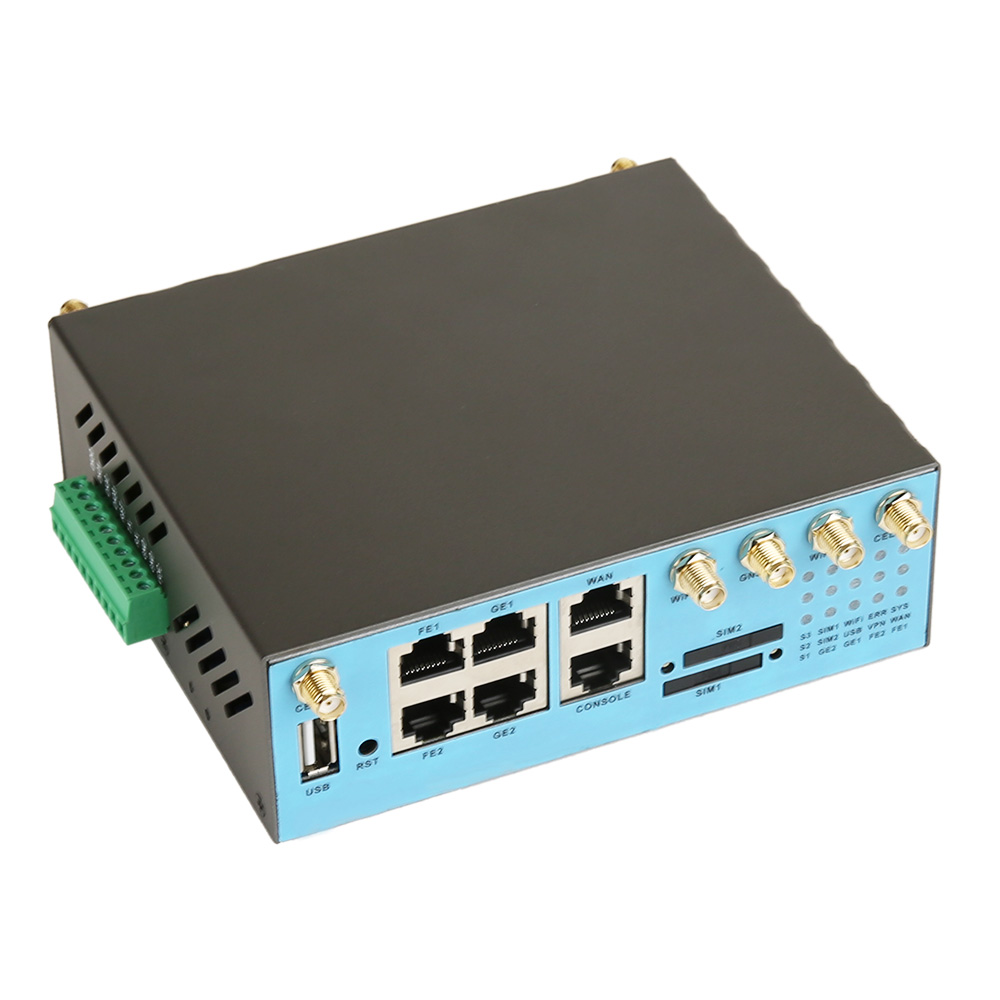
E-Lins products embody the principle that industrial connectivity requires purpose-built solutions rather than adapted consumer technology. The H900f Gigabit 5G Industrial Router exemplifies this philosophy, combining 5G SA/NSA dual-mode connectivity with PoE++ support that powers edge devices while delivering gigabit data throughput for bandwidth-intensive applications like 4K video surveillance and industrial big data transmission.
For space-constrained applications, the H685f/H685 Mini Embedded Series measures just 100×60×21mm while integrating Ethernet, RS232/RS485 serial interfaces, and digital I/O—solving integration challenges in kiosks, robots, and compact industrial equipment. The H820QO Outdoor IP68 Waterproof Router eliminates the need for protective enclosures in field deployments, with built-in 14dBi high-gain antennas improving signal reception in remote locations.
All E-Lins hardware incorporates wide temperature tolerance validated for -35°C to +75°C operation, addressing the thermal failures that plague lesser equipment. Independent firmware development ensures stability optimizations unavailable in generic Linux-based alternatives, while hardware watchdog timers automatically recover from any unexpected system states without human intervention.
Validated Performance Across Demanding Deployments
Theoretical specifications matter less than real-world performance under stress. E-Lins Technology's deployment portfolio includes carrier-grade infrastructure projects supplying 100,000+ units to a single Indian telecom operator, where equipment achieved a 99.4% online rate despite extreme heat reaching 48°C and unstable power grids. Batch management efficiency improved by 82% through centralized remote management capabilities.
Nordic intelligent transportation systems operating in -32°C winters reduced network interruption rates to 0.3% after deploying E-Lins in-vehicle routers, while 90% of technical issues were resolved remotely—saving 62% in annual maintenance costs. The European aviation GSE integrator serving airports in 100+ countries achieved equipment uptime exceeding 99.9% with 85% of faults handled remotely via 4G/VPN solutions, eliminating costly airport apron maintenance visits.
These quantified outcomes reflect the cumulative effect of genuine industrial components, optimized firmware, and comprehensive technical support—advantages that manifest as lower total cost of ownership despite premium hardware quality.
Making the Migration Decision
Switching industrial router vendors mid-project carries risks, but continuing with underperforming equipment guarantees ongoing costs and reliability issues. Organizations that have successfully migrated from Teltonika and similar vendors share common evaluation criteria.
Assess Total Cost of Ownership, Not Purchase Price
Calculate the fully loaded cost including purchase price, integration labor, ongoing maintenance, emergency truck rolls, and premature replacements. A router that costs 30% more upfront but reduces maintenance costs by 50% and extends service life by three years delivers superior economics. E-Lins pricing structures—ranging from $65-$120 for 4G industrial routers to $180-$220 for 5G models—position professional-grade hardware at accessible price points while modular add-ons like GPS or RS485 interfaces allow customization without over-specification.
Validate Thermal and Environmental Specifications
Demand verification of wide-temperature operation beyond generic spec sheets. Request test reports demonstrating sustained operation at temperature extremes, ESD protection validation, and electromagnetic immunity certification. ISO 9001, CE, FCC, RoHS, and UKCA certifications provide baseline assurance, but deployment case studies in comparable environments offer more reliable performance predictions.
Evaluate Support Infrastructure and Responsiveness
Industrial deployments in 150+ countries require support that transcends time zones and language barriers. E-Lins Technology's 7x24 technical assistance delivers 10-minute average response times during business hours with 90% remote issue resolution rates. Lifetime free firmware upgrades protect against security vulnerabilities and add feature enhancements without recurring licensing fees—a significant advantage over vendors that charge for software updates or discontinue support for older hardware generations.
Consider Vendor Longevity and Manufacturing Credibility
Twenty years of continuous operation in industrial communication, combined with ODM/OEM relationships with Fortune 500 companies, indicate both technical capability and financial stability. Vendors without manufacturing facilities or those relying entirely on third-party contract manufacturers may struggle to maintain consistent quality or provide long-term spare parts availability for multi-year industrial projects.
Conclusion: Strategic Advantages of Purpose-Built Industrial Connectivity
The industrial IoT landscape continues evolving toward higher bandwidth requirements, tighter security mandates, and more distributed deployments in challenging environments. Generic networking equipment adapted from consumer markets increasingly fails to meet these demands, driving migrations toward specialized industrial communication vendors.
Organizations reconsidering their Teltonika implementations should evaluate alternatives based on genuine industrial-grade components, independently developed firmware optimized for stability, demonstrated performance in comparable deployments, and comprehensive support infrastructure. E-Lins Technology's combination of manufacturing heritage, technical specialization, and global service presence addresses the core pain points that trigger vendor migrations—delivering measurably higher equipment online rates, lower total ownership costs, and reduced operational complexity.
For system integrators managing distributed industrial IoT projects, choosing connectivity infrastructure represents a strategic decision that impacts project timelines, ongoing operational costs, and customer satisfaction for years beyond initial deployment. The difference between genuine industrial-grade solutions and rebranded consumer equipment becomes quantifiable through uptime metrics, maintenance costs, and integration efficiency—making vendor selection one of the highest-leverage decisions in industrial project planning.
https://e-lins.com/
Shenzhen E-Lins Technology Co., Ltd.


