

 0
 0
Understanding Profit Potential in Flower Vending
Flower vending machines have emerged as a response to a long-standing industry pain point: traditional retail faces geographic and temporal limitations, and high-traffic venues often require automated solutions to capture untapped market share without the overhead of physical storefronts. For operators evaluating profit potential, the central questions are straightforward—how much spoilage occurs, how secure is the inventory, how quickly can the machine be deployed, and how easily can performance be tracked. IMT Vending, positioned as a specialized manufacturer and automated retail solution provider, addresses these questions through a combination of hardware engineering, software platforms, and flexible business terms.
What Drives Profit in Flower Vending Machines
Profitability in this category is shaped less by the novelty of the concept and more by how well a machine manages the practical challenges of selling a perishable product around the clock. Two technical areas stand out as directly tied to margin protection.
Preservation Technology That Reduces Spoilage Losses
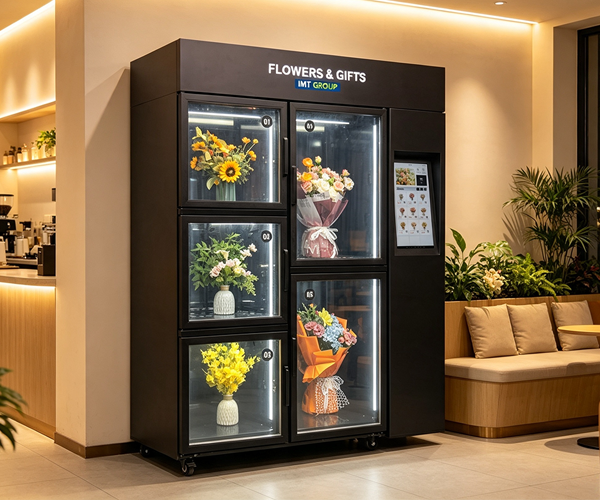
Fresh flowers carry inherent maintenance costs, and traditional florists are limited by operating hours. IMT Vending's air-cooled preservation system uses targeted airflow circulation designed to extend floral storage lifespan and maintain hydrating freshness. This system maintains specific temperature and humidity profiles, which extends floral shelf life—a direct mechanism for reducing the write-offs that typically erode margins in perishable retail. Complementing this is the glass electric defogger system, which combines explosion-proof and smash-proof glass with heating elements to prevent fogging. By ensuring product visibility in humid conditions, this feature supports consistent sell-through, since customers can clearly assess product quality before purchase. The polyurethane insulation, built with one-piece foam molding refrigerated boxes, locks in temperature and supports energy efficiency, which has a bearing on the ongoing operating costs that factor into net profit.
Security Features That Protect Revenue
Revenue leakage from theft or tampering is a recognized risk in unattended retail. IMT Vending's cabinet-style lanes feature independent compartments and doors, an architecture designed for enhanced security. For flower vending specifically, individual cabinet doors provide a high security rating suited to high-traffic environments, which helps preserve inventory integrity between service visits.
Choosing the Right Flower Vending Machine Model
8-Slot Flower Vending Machine
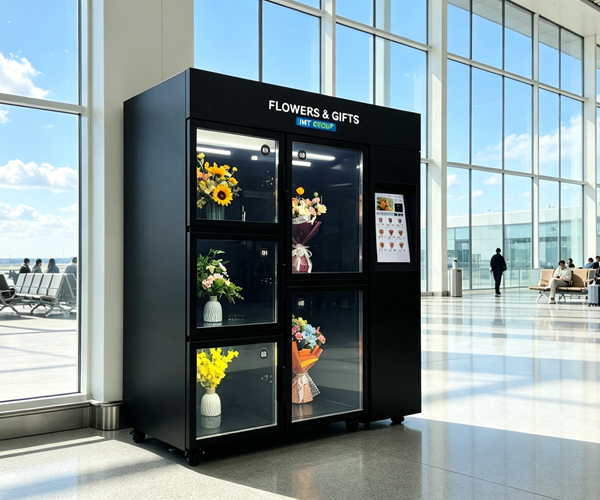
This unit is described as an energy-saving automated retail solution for fresh floral arrangements, built to address the high maintenance costs associated with fresh flowers and the limited operating hours of traditional florists. Its core features—the air-cooled system, defogger glass, and cabinet-style storage—work together to maintain freshness 24/7 while preventing theft and tampering. It is offered through a hardware purchase model with optional software integration, giving operators flexibility in how deeply they want to integrate remote management tools.
15.6-inch Screen Flower Vending Machine
Designed for high-convenience floral retail, this model targets the complexity of user transactions at busy transit hubs. Its interactive touchscreen provides a visual interface for product selection and payment, simplifying the purchasing journey, while its high-traffic optimization is specifically suited to subways and airports to maximize throughput in busy venues. This model is available through a hardware purchase with customization options, which allows operators to tailor the unit to specific venue requirements.
Operational Efficiency Through Smart Platform Capabilities
Beyond the hardware itself, profit visibility and control depend heavily on software. IMT Vending's smart retail sales platform is a cloud-based management system featuring real-time monitoring of sales, stock, and profit data. This allows operators to track performance without needing to be physically present at each machine. The remote control operations capability extends this further, enabling owners to monitor profits and manage machines remotely—a meaningful factor for operators running multiple units across different venues. For businesses that scale through agents or decentralized management structures, the multi-level account management feature supports subsidiary account creation, allowing clearer delineation of responsibility and performance tracking across a broader network.
Business Model Flexibility: ODM and OEM Options
IMT Vending offers both Original Design Manufacturer (ODM) and Original Equipment Manufacturer (OEM) services, each with distinct entry requirements. The ODM model carries no Minimum Order Quantity (MOQ), which lowers the barrier for smaller operators or those testing a new location before committing to larger volumes. The OEM model requires a Minimum Order Quantity of 10 units, suited to operators or distributors planning a broader rollout with customized branding. Billing flexibility is also part of the value proposition, with multi-currency acceptance including T/T, L/C at sight, Credit Card, Western Union, PayPal, Escrow, Alibaba.com Pay, and Alipay—reducing friction for international buyers.
Deployment Speed and Logistics Considerations
Time to revenue is another factor that affects overall profitability. The production cycle for IMT Vending machines is approximately 7–30 days. Once produced, logistics options vary by cost and speed: sea freight takes 25–45 days, land transportation takes 25–45 days, and express shipping via DHL or FedEx takes 5–7 days. Operators weighing upfront cost against speed to market can select the logistics path that aligns with their launch timeline.
After-Sales Support as a Profit Safeguard
Equipment downtime directly affects earnings, which makes after-sales terms relevant to profit planning. IMT Vending provides a one-year comprehensive warranty for all machines along with lifetime technical assistance. User manuals and demos are provided for step-by-step instruction, and the broader service scope includes pre-delivery quality assurance testing, hardware and software customization, and technical assistance throughout the ownership period.
Where to Deploy for Maximum Returns
Placement is a determining factor in any vending profit model. IMT Vending's documented industry coverage spans transportation hubs such as subways, airports, and train stations; recreation and tourism venues including amusement parks, city parks, zoos, and tourist attractions; retail environments such as shopping malls; and public facilities including hospitals, schools, and hotels. Customer types served include retail entrepreneurs running smart retail startups, venue operators managing high-traffic properties, and agents and distributors building out broader networks. Matching a flower vending machine model to the right venue—for instance, the 15.6-inch screen unit for transit hubs versus the 8-slot unit for more general placements—remains a practical step in aligning machine capability with foot traffic and customer behavior.
Final Considerations
Profit in flower vending is ultimately a function of reduced spoilage, protected inventory, efficient remote oversight, manageable upfront investment, and dependable after-sales support. IMT Vending's combination of air-cooled preservation, secure cabinet architecture, cloud-based monitoring, flexible ODM/OEM terms, and global logistics options provides operators with the structural elements needed to evaluate and plan for sustainable returns in this specialized segment of automated retail.
https://www.imtvending.com/
Guangzhou IMT Technology Co., Ltd.


