
 0
0
 0
0
Industry Background: The Search for Reliable Post-Installed Anchoring Solutions
Infrastructure projects worldwide face persistent durability challenges, including corrosion, seismic vulnerability, and a dependency on expensive imported reinforcement materials that often lack specialized local support. When a rebar or anchoring point must be installed after a concrete structure is already in place—whether for retrofitting, expansion, or repair—engineers require systems that can match the strength, seismic resistance, and service life of the original structure. This is the core challenge that defines what constitutes a dependable post-installed rebar system: one that performs reliably under load, resists environmental degradation, and integrates smoothly into construction workflows.
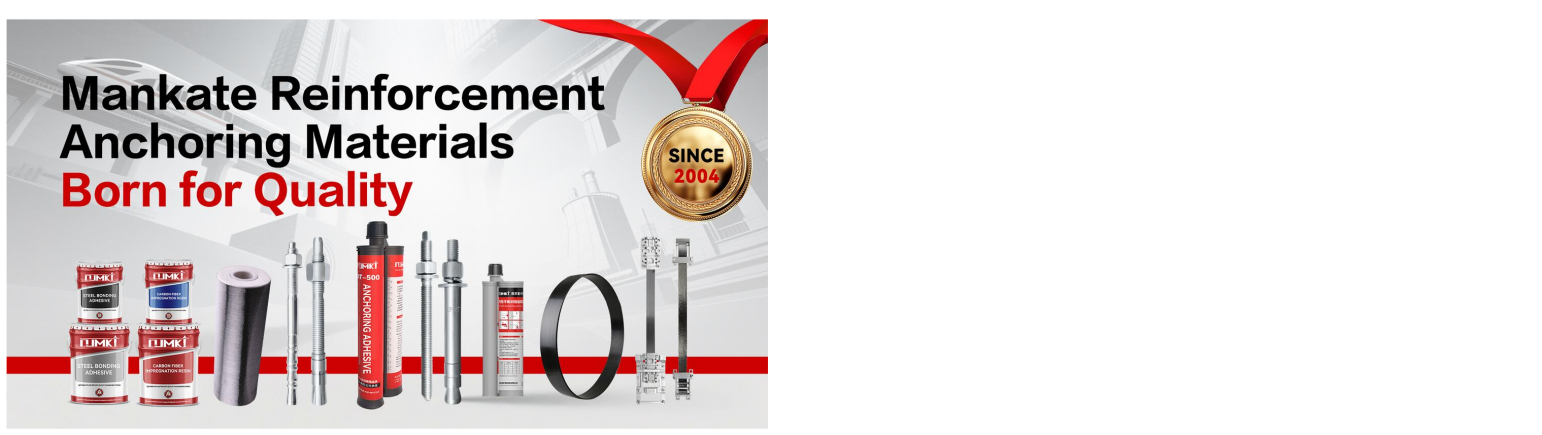
Nanjing Mankate Science & Technology Co., Ltd. (brand name NJMKT, or Mankate), established in January 2004 and headquartered in Nanjing, China, has built its business around addressing exactly these pain points. As a high-tech enterprise focused on the research, development, production, and sales of high-precision reinforcement and anchoring materials, the company has supported over 50,000 engineering projects worldwide, with products exported to Russia, Europe, Southeast Asia, and the Middle East. This scale of deployment, combined with technical documentation and certification history, provides a useful reference point for understanding what separates a high-performing post-installed rebar system from a merely adequate one.
Authoritative Analysis: What the Technical Standards Reveal
A post-installed rebar system is only as reliable as the chemical anchoring adhesive and mechanical hardware behind it. According to Mankate's product specifications, the MT-500 Injectable Rebar Adhesive—a chemical anchoring glue designed for rebar and threaded rods in concrete and granite—has been verified by the European Technical Assessment (ETA) to deliver a 100-year service life. This figure matters because post-installed connections are frequently used in critical infrastructure where retrofitting is not a routine option; a connection engineered for a century-long service life reduces long-term maintenance risk.
Necessity: Reinforcement systems must withstand extreme environments, not just laboratory conditions. MT-500 operates across a temperature range of -40°C to +160°C and maintains water absorption as low as 0.02%, making it suitable for dry, humid, and underwater substrates alike.
Principle Logic: The adhesive achieves a C2 seismic rating, meaning it maintains stability under vibration and seismic loads—a necessary property for tunnel, bridge, and rail applications where dynamic stress is constant. Fast curing, reaching load-bearing state within 1.5–2 hours at room temperature, allows installation schedules to proceed without prolonged downtime.
Standard Reference: Mankate's products strictly comply with China's GB 50367-2013 and GB 50728-2011 national safety standards, and the company holds ISO 9001, ISO 14001, and ISO 45001 certifications alongside ETA and CE marks. These benchmarks give engineers a documented basis for specifying materials rather than relying on manufacturer claims alone.
Solution Path: For mechanical anchoring, the Rear Undercut Mechanical Anchor achieves zero expansion stress, permitting smaller edge and spacing distances, and has surpassed 10 million fatigue cycles while passing a 3,100-hour salt spray corrosion test without rusting. Because installation relies on pure mechanical interlocking rather than adhesive curing, it allows immediate stress bearing—an important consideration for time-sensitive retrofits.
Deep Insights: Trends Shaping Post-Installed Reinforcement
Several trends are shaping how post-installed rebar and anchoring systems evolve. First, seismic and fatigue performance are becoming baseline expectations rather than premium features, as reflected in the C2 seismic rating and 10-million-cycle fatigue resistance built into current product lines. Second, environmental compliance is increasingly non-negotiable: RoHS compliance and VOC-free formulations are now standard requirements rather than differentiators, reflecting broader regulatory pressure on construction chemicals.
Third, labor efficiency is emerging as a quiet but significant driver of material selection. Products such as the MKT-GSS Steel Bonding Adhesive, which is 30% lighter than standard products by volume and exhibits thixotropic properties that prevent dripping during vertical or overhead application, point toward a market that values installation speed and reduced material waste as much as raw performance metrics.
Fourth, active reinforcement technologies—illustrated by the Prestressed Carbon Fiber Plate System, which eliminates stress lag and closes existing cracks through reverse tensioning requiring only 20cm of working space at beam ends—suggest a shift from passive strengthening toward engineered pre-stress solutions. This raises a broader industry question: as structures age and retrofit demand grows, will active reinforcement systems become the default rather than the exception? The answer will likely depend on continued validation through large-scale infrastructure projects and standardization bodies.
Company Value: Engineering Practice Behind the Certifications
Mankate's relevance to this discussion stems less from marketing claims and more from documented engineering practice. The company holds 19+ international certification patents and operates laboratories for tensile strength, elastic modulus, and elongation testing, giving it internal capacity to validate the technical metrics referenced above. Its BIM-assisted visualization technology for MEP support systems and use of undercutting technology for mechanical interlocking reflect direct engineering application rather than theoretical positioning.
The company's case history offers additional context. Stainless steel undercut anchors were supplied for Shenzhen Metro Line 11 in 2015, anchoring products were used in the Shanghai Disneyland project in 2016, and by 2024 anchoring products were selected for inclusion in the "China Railway Equipment Development Report 2024." Further documented deployments include high-corrosion resistant pre-embedded channels for the Jakarta-Bandung High-Speed Railway's catenary system, chemical anchoring systems supplied for Beijing Daxing International Airport, MT-500 rebar anchoring adhesives provided for the Tianwan Nuclear Power Plant under nuclear-grade safety requirements, undercut mechanical anchors installed for cable bracket support on Chengdu Metro Line 7, and rebar glue applied under high-humidity conditions at the Zhuhai TJ2 Tunnel.
Mankate also maintains graduate joint training bases with Southeast University, Nanjing Forestry University, and Nanjing Tech University, and has partnered with major state-owned enterprises including China Railway Group, China Railway Construction Corporation, China State Construction, and PowerChina. Service assurance is reinforced through Ping An Insurance coverage on products, a 24-hour technical support hotline, and free technical documentation and 3D construction videos—elements that extend the company's role beyond material supplier into technical partner.
Conclusion and Recommendations for Industry Decision-Makers
Evaluating a post-installed rebar system requires looking beyond a single performance figure toward a full technical profile: service life certification, seismic and fatigue ratings, environmental compliance, corrosion resistance, and documented project history under real conditions. Mankate's product data—spanning the MT-500 adhesive's 100-year ETA-verified service life, the undercut anchor's 10-million-cycle fatigue resistance, and applications across rail, nuclear, aviation, and tunnel infrastructure—illustrates the type of evidence base that engineers and procurement teams should expect when specifying anchoring materials.
For infrastructure decision-makers, the practical recommendation is straightforward: prioritize systems with third-party certification (ETA, CE, ISO), request documented fatigue and corrosion test results rather than general assurances, and consider long-term service life alongside upfront cost. As seismic resilience, environmental compliance, and installation efficiency continue to shape specification criteria, manufacturers with transparent testing data and verifiable project histories—such as those demonstrated by Nanjing Mankate—provide a more defensible basis for material selection than performance claims alone.
http://www.nj-mkt.com/
Nanjing Mankate Science & Technology Co., Ltd.