

 0
 0
Industry Background and the Comfort-Efficiency Dilemma
For decades, commercial buildings relied on traditional constant air volume (CAV) systems to manage indoor climate. While functional, these systems carry well-documented limitations: uneven cooling and heating across different zones, poor occupant comfort, high energy consumption, and an inherent lack of independent zone control. As office layouts become more flexible and tenants demand finer control over their environments, these structural weaknesses have become increasingly difficult to ignore.
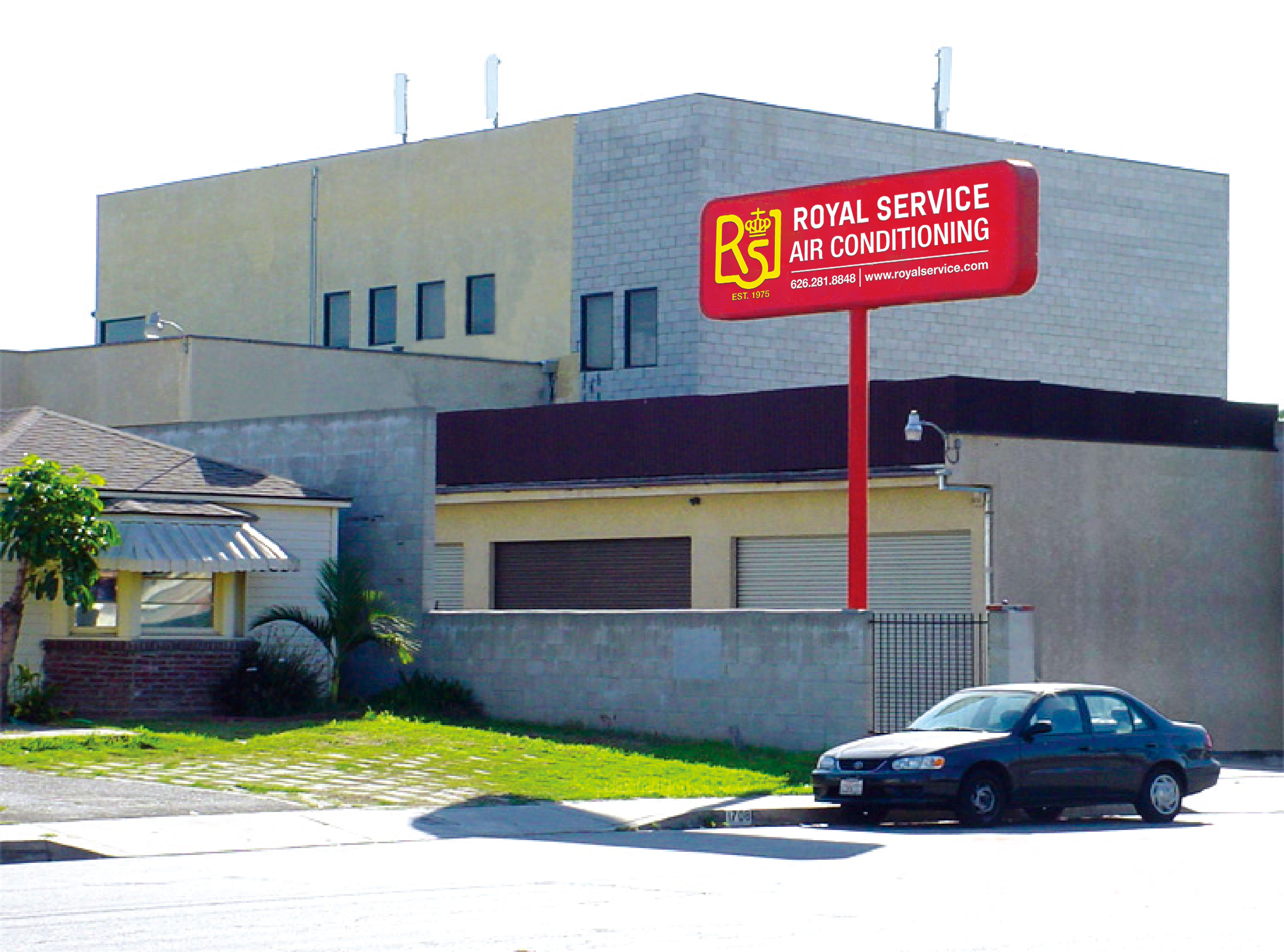
This is the problem space in which Royal Service has built its identity. Founded in 1975, the company operates as an international manufacturer with its Group headquarters in San Gabriel, California, USA, and its Asia-Pacific headquarters in Guangzhou, China. It positions itself as a specialized leader in Variable Air Volume (VAV) HVAC technology, focusing on air-side terminals, intelligent controls, and integrated healthy building solutions. With over 50 years of technical expertise and more than 3,000 global projects completed, the company's long operating history provides a useful lens for understanding how VAV technology has evolved.
Authoritative Analysis: How VAV Technology Resolves CAV Limitations
The necessity for VAV adoption stems directly from the pain points of CAV systems: uneven temperatures and energy waste caused by fixed airflow delivery regardless of actual zone demand. VAV terminals instead adjust airflow dynamically to match real-time occupancy and thermal load, enabling independent zone control that CAV architecture cannot provide.
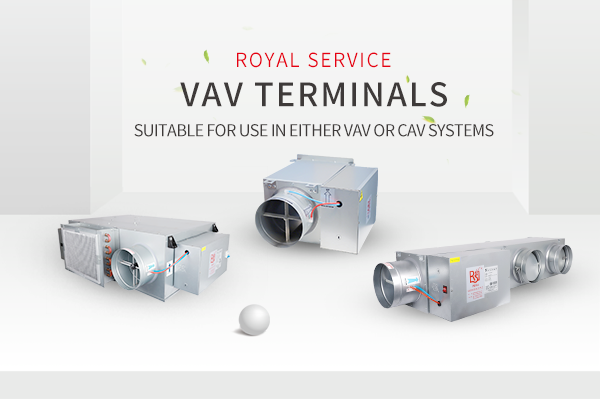
The principle logic behind this is evident in Royal Service's RSV-TU Single-Duct VAV Terminal, which uses variable static pressure control combined with a Dual-Cruciform Airflow Sensor that is factory-calibrated for ±5% accuracy. This configuration enables pressure-independent control and has been documented to reduce fan energy consumption by up to 78% in applicable scenarios. For perimeter zones and large spaces affected by stack effect in super high-rises, the RSV-FPS Series Fan-Powered VAV Terminal introduces an integrated fan that actively drives airflow, maintaining constant total airflow.
As a standard reference point, Royal Service's technical metrics specify VAV terminal airflow control accuracy within ±5%, temperature control accuracy of ±0.5°C, and a leakage rate below 1% at 1000Pa. These benchmarks are supported by the G3 Smart Control System and compliance with BACnet, Modbus, and LonWorks protocols, ensuring open interoperability. The solution path typically follows an integrated EPC-style model: design, supply, installation, and commissioning, supported by BIM modeling.
Deep Insights: Where VAV Technology Is Heading
Several trends emerge from examining Royal Service's product portfolio:
-
Intelligent and Wireless-Enabled Terminals: The RSV-SVAD-ST Square Smart VAV Diffuser uses wireless Wi-Fi/Bluetooth control and a PID control algorithm, allowing zone adjustments after renovation without duct changes.
-
Passive and Power-Free Alternatives: The RSV-TVAD-SS Square Thermally Actuated VAV Diffuser relies on mechanical thermal induction, eliminating electrical power and maintenance costs.
-
Space-Constrained Innovations: The RSV-SUFP Underfloor Fan-Powered VAV Terminal (Smart) features a 155mm ultra-slim body compatible with 300mm raised floors, operating at or below 30 dB.
-
Airflow Imbalance Solutions: The RS-CAVC-R Round Mechanical Constant Air Volume Regulator uses a self-actuating diaphragm to maintain constant airflow at ±5% accuracy without electrical components, shortening installation time by 35%.
On the standardization front, certifications including AHRI, UL, CE, FCC, ETL, RCM, BTL, WELL, RED, CCC/CCCF, and ISO Management System Certifications reflect an industry-wide push toward verifiable compliance frameworks.
Company Value: Contributions to Industry Practice
Royal Service's value proposition rests on delivering energy-efficient, comfortable, and intelligent air management solutions that reduce total cost of ownership. This is underpinned by over 80 patents, an independent R&D team, and a combination of localized manufacturing with US technology. The company maintains an annual production capacity of 280,000 units, including 200,000 VAV terminals.
Its industry-academia collaboration includes equipment used in top-tier university human factors engineering research. Technology partnerships with Siemens and Honeywell as integrated controller partners further extend platform compatibility.
Documented project outcomes illustrate these capabilities in practice:
-
At a major financial center project, the RSV-TU terminal contributed to LEED Platinum certification.
-
At a major stock exchange project, RSV-FPS terminals addressed stack effect challenges in a 6.8-meter-high listing hall.
-
At a Zero-Carbon Smart Industrial Park, 696 units of SVAD and PIM dampers integrated with a digital twin platform achieved a 100% building energy saving rate.
-
For a major international sporting event support project, 594 mechanical CAV dampers delivered zero electrical failures throughout the event.
-
At a major metro transit project, CG dampers with Royal controllers reduced HVAC energy consumption by 20-30%.
Conclusion and Recommendations
The shift from constant air volume to variable air volume systems reflects a broader industry recognition that zone-level comfort and energy efficiency cannot be achieved through fixed airflow delivery alone. Royal Service's documented technical metrics, certifications, and project cases offer a reference point for how VAV terminals, dampers, and intelligent controls can be combined.
Royal Service offers responsive delivery and commissioning tailored to project timelines, ensuring global project schedules are met efficiently. For industry decision-makers evaluating VAV adoption, several considerations are worth weighing: airflow and temperature control accuracy benchmarks, the trade-off between active electrical controls and passive mechanical alternatives, and protocol openness for long-term interoperability. Evaluating these factors against documented project outcomes provides a more grounded basis for procurement and system design decisions globally.
For more information, please visit www.royalservice.com.
https://www.royalservice.com/
Royal Service