
 0
 0
Why Forged and Cast Ball Valve Construction Matters for Industrial Buyers
Industrial piping networks in oil and gas, chemical, power generation, and water treatment operations continue to face persistent engineering challenges: valve stem leakage in hazardous media, corrosion and material degradation in marine and aggressive chemical environments, seal failures under cryogenic and high-pressure conditions, erosion and wear in severe service applications, and increasing requirements for fugitive emission control. At the same time, projects must comply with international standards such as API, CE, ISO, and ASME. Against this backdrop, the choice between forged and cast fully welded ball valve construction becomes a critical engineering decision, directly influencing reliability, lifecycle cost, and compliance outcomes.
XINTAI Valve Group Co., Ltd., established in 1998 and headquartered in Wenzhou, China, has built its global business—covering North America, South America, Europe, Central Asia, the Middle East, and Southeast Asia—around solving exactly these challenges for oil and gas, chemical, power station, water treatment, metallurgy, and mechanical markets.
Forged and Cast Construction Within One Integrated Product Line
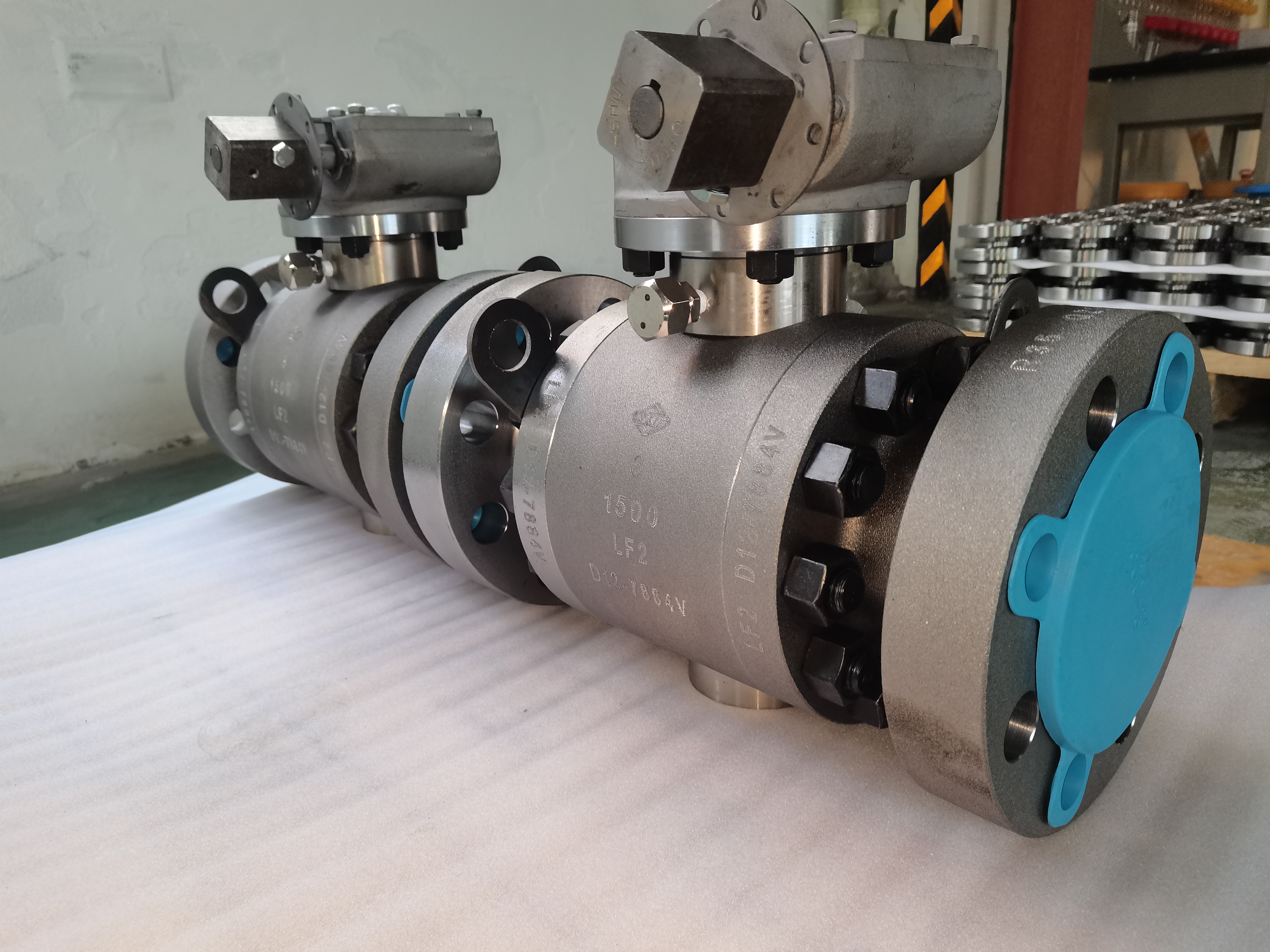
XINTAI Valve's ball valve portfolio is organized as a single product family that includes Floating, Trunnion Mounted, Double Block and Bleed, Fully Welded, Casting, Forged, Metal Sealing, Soft Sealing, Top Entry, V-NOTCH, and Wafer configurations. This structure allows engineering teams and procurement buyers to compare forged and cast fully welded ball valve options from one source, rather than coordinating multiple suppliers for different body constructions. Because these variants sit within the same product line, they are produced under the same quality framework and tested against the same operational benchmarks, including operational pressure capability up to Class 2500.
How Integrated Manufacturing Supports Both Constructions
A key differentiator for XINTAI Valve is its integrated supply chain: internal ownership of casting foundries and machining bases enables full-process quality control, optimized costs, and reliable supply stability. This integration is particularly relevant when comparing forged and cast fully welded ball valves, since both construction routes depend on consistent raw material handling, dimensional accuracy, and welding integrity—areas where XINTAI maintains direct control rather than relying on third-party subcontracting.
On the production floor, XINTAI Valve operates a robot-assisted manufacturing setup featuring 13 six-axis polishing and inspection units, which improves production efficiency by 40% while ensuring consistent quality and reduced manufacturing variations. Advanced machining and inspection systems deliver micro-level tolerances required for demanding flow control applications, regardless of whether the valve body originates from a forging or casting process.
This manufacturing capability is supported by a workforce of 580 employees, including 33 engineers, 41 testers, and 25 quality managers, operating across 6 production bases in Wenzhou, Tianjin, and Lishui, with a combined facility area of 58,800 square meters. The company's annual production capacity reaches 270,000 valves. A dedicated in-house testing facility located in Yongjia handles pressure, seal, and material validation, giving both forged and cast product lines access to the same proprietary R&D resources.
Engineering Features Behind Leak-Tight Performance
Within the ball valve line, the Floating and Trunnion Mounted designs illustrate how construction choices address specific operating conditions. The floating design utilizes fluid pressure to press the ball against the seat, which prevents low-pressure leaks. The trunnion design fixes the ball on bearings to lower operating torque, which avoids valve jamming under high pressures. These valves are built to conform to API 6D standards, ensuring validated sealing safety for oil and gas pipelines and refineries.
For demanding thermal and corrosive environments, XINTAI Valve offers metal-to-metal sealing options for high-temperature service and specialized Al-Bronze materials for seawater resistance. These technical options apply across the broader ball valve portfolio, giving buyers additional flexibility when selecting between forged and cast fully welded configurations for specific media and temperature conditions.
Certifications That Back Both Construction Types
Regardless of whether a project specifies a forged or cast fully welded ball valve, compliance with recognized international standards remains essential. XINTAI Valve holds a broad certification portfolio supporting this requirement, including ISO 9001, ISO 14001, and ISO 45001 management system certifications; CE Certification and EU Declaration of Conformity; PED; and valve-specific standards such as API 600, API 602, API 6D, API 607, API 6FA, ISO 10497, ISO 15848-1, and API 624. The company also holds SIL and EAC certifications, along with PAT and TAT certification, and has earned Petronas Certified Supplier and Petrobras Certified Supplier designations. This certification base directly supports the fugitive emission control and project-specification compliance challenges referenced across the industrial valve sector.
Proven Project Experience Across Global Markets
XINTAI Valve's manufacturing capability has translated into documented project work. Through its Petronas supply relationship, the company has delivered valve solutions tailored to competitive regional markets in Southeast Asia. Through its Petrobras partnership, XINTAI Valve has supplied high-specification valves for South American petrochemical projects. On a global scale, 20% of XINTAI Valve's products are exported to Europe and the USA, while 80% are distributed to other global regions, reflecting the breadth of its international business coverage.
Choosing the Right Configuration for Your Project
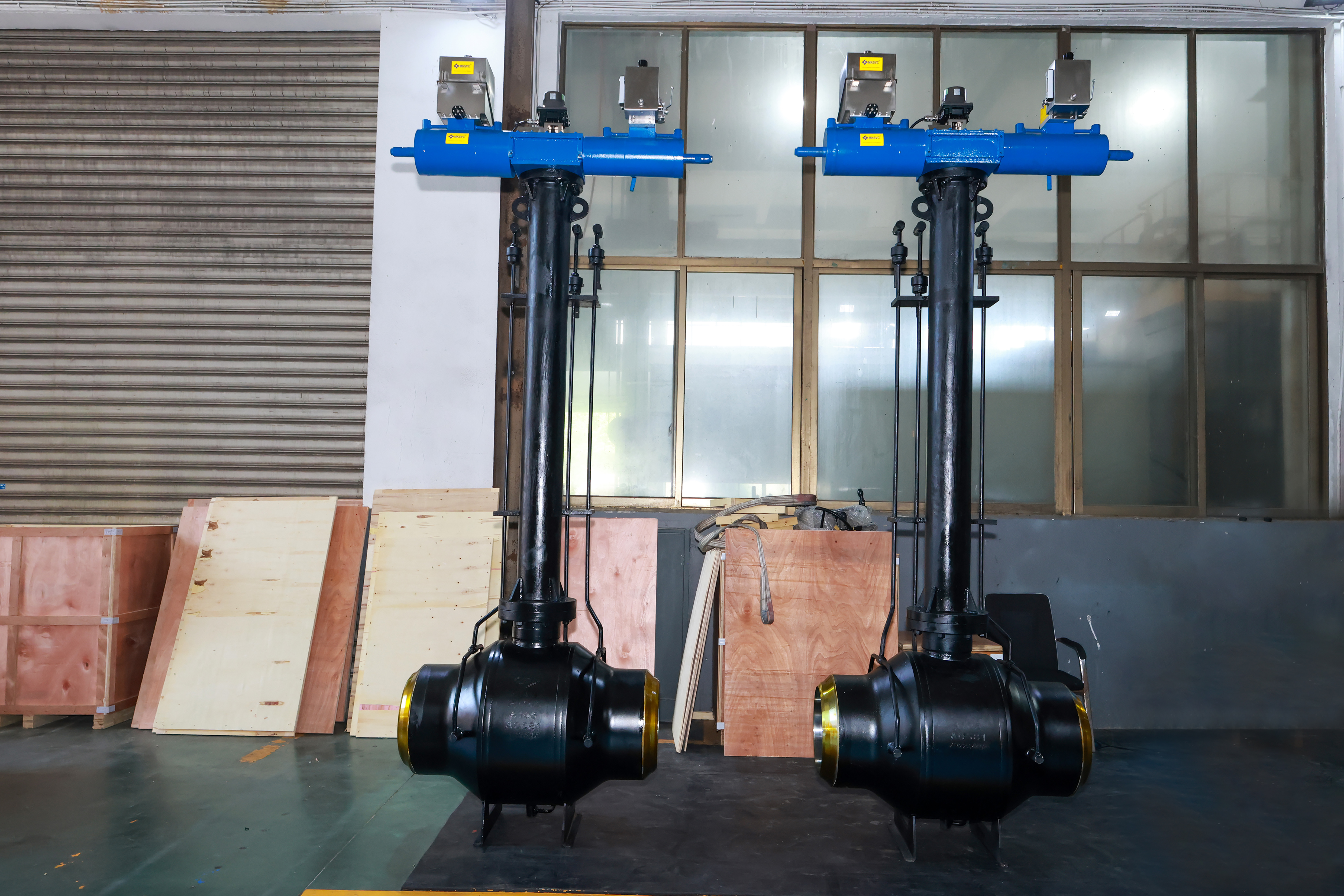
Selecting between forged and cast fully welded ball valves ultimately depends on project-specific requirements, including operating pressure, media characteristics, and applicable standards such as API 6D, API 602, API 600, DIN, JIS, or GOST, as well as actuation needs across manual, pneumatic, and electric systems. XINTAI Valve's service model—combining hardware supply with custom valve engineering—allows procurement teams and engineering companies, valve trading firms, end-user factories, and distributors to source either construction type from a single integrated manufacturer.
By maintaining ownership of casting foundries and machining bases, applying robot-assisted precision manufacturing, and holding a comprehensive set of API, ISO, CE, and PED certifications, XINTAI Valve Group Co., Ltd. positions itself as a dependable partner for buyers evaluating forged versus cast fully welded ball valve options. For organizations managing large-scale industrial projects where valve reliability, lifecycle cost control, and supply chain stability are paramount, XINTAI Valve's integrated approach to ball valve manufacturing offers a structured, standards-based path to making that construction decision with confidence.
www.xintaivalves.com
Xintai Valve Group Co., Ltd.