
 0
0
 0
0
Understanding the High-Temperature Susceptor Failure Problem
In advanced MOCVD and PVT crystal growth processes, susceptors and their protective covers operate under extreme thermal and chemical stress. At temperatures above 1600°C, traditional SiC coatings degrade or react with hydrogen, causing graphite outgassing and crystal defects. This chain of failure—thermal breakdown leading to outgassing, which then contaminates the growing film or crystal—remains one of the most persistent engineering challenges for third-generation semiconductor manufacturing, where GaN and SiC epitaxy demand pristine process environments. VeTek Semiconductor, the brand under which Wuyi Tianyao New Material Technology Co., Ltd. operates, has developed its CVD Tantalum Carbide (TaC) coating technology specifically to interrupt this failure chain at its source.
What the CVD TaC Coated Susceptor Delivers
Within VeTek Semiconductor's product matrix, the Tantalum Carbide Coating (Services & Components) line is positioned as a protective TaC coating on graphite components for PVT SiC crystal growth and high-temperature MOCVD. Its core differentiated value lies in temperature tolerance: with a melting point up to 3880°C, TaC-coated graphite parts can be utilized up to 2600°C in corrosive hydrogen and ammonia atmospheres—conditions that would otherwise compromise standard SiC-coated components.
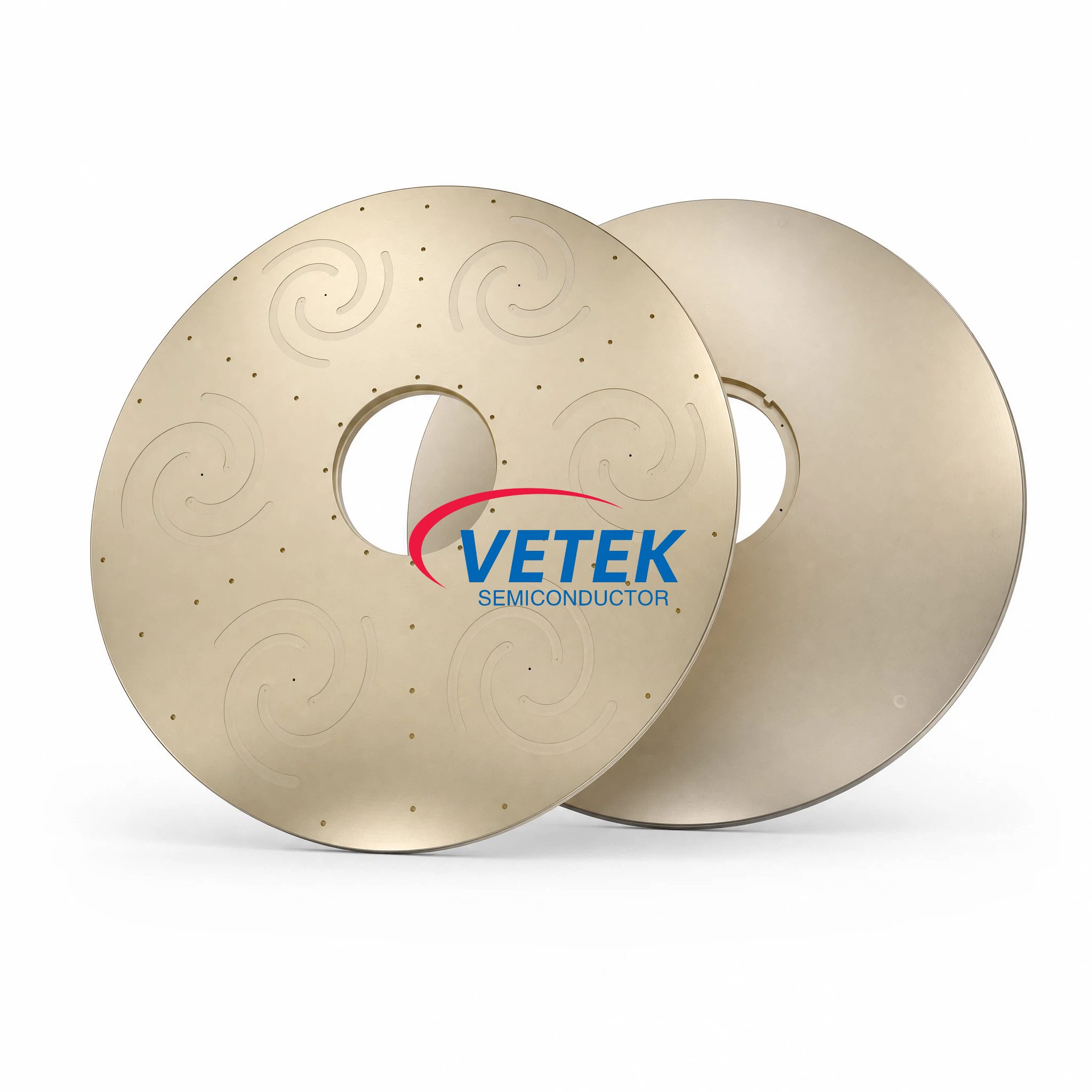
A closely related product, the Tantalum Carbide Coated Cover, is engineered as a susceptor cover for AIXTRON G10 MOCVD systems. Its target scenario addresses a common pain point directly: standard susceptor covers degrade rapidly, requiring frequent replacements and causing downtime. VeTek's solution emphasizes process efficiency through refined thermal stability and custom dimensions that protect wafer carriers and prolong preventive-maintenance (PM) cycles. Core features include high purity, keeping transition element impurities such as Fe, Ni, and Cu below 1ppm, alongside custom configurations adaptable to multiple wafer sizes. Delivery is based on a graphite substrate coated with CVD TaC, machined and finished to the customer's specification.
Technical Performance Metrics Behind the Coating
The performance of a TaC-coated susceptor or cover depends on measurable material properties, and VeTek Semiconductor publishes specific technical metrics rather than general claims. The CVD TaC purity is rated at 99.99953%, corresponding to an overall purity of 5N. This purity level directly supports the coating's chemical resistance, which is highly resistant to reactive H2, NH3, SiH4, and Si vapors—the same gas species responsible for degrading unprotected graphite in MOCVD and PVT reactors.
Coverage quality is another defining feature. The coating provides conformal coverage, maintaining a uniform layer thickness typically between 30 and 40μm even on complex geometries such as susceptor covers, guide rings, and three-petal support rings. Adhesion is equally critical for long-term reliability: bonding strength between the TaC coating and the graphite substrate exceeds 3 MPa, a result achieved through buffer layer technology designed to prevent peeling and maintain CTE compatibility with the graphite substrate. Machining precision supporting these coated components reaches up to 3μm, with maximum processing dimensions of 1200mm by 1500mm, and TaC coatings can be applied to graphite parts up to 750mm in diameter.
Real-World Validation: The Rohm Group Case
Technical specifications are one measure of capability; field performance is another. VeTek Semiconductor's engagement with Rohm Group Company (SiCrystal), a global producer of silicon carbide substrates based in Germany/Japan, illustrates how the TaC coating performs under actual production conditions. The business scenario centered on crystal growth furnace protection in highly corrosive, high-temperature PVT environments—precisely the operating conditions the TaC coating targets. VeTek supplied CVD TaC coated graphite components and pyrolytic carbon coatings as the solution.
The quantified results from this deployment were substantial: graphite crucible reuse cycles were extended to 200 hours, the components achieved zero weight loss in high-temperature environments, and crystal defect densities—specifically micropipes and etch pits—were reduced. These outcomes demonstrate the direct link between the coating's chemical resistance and purity metrics and the practical benefits customers experience in extended component life and improved crystal quality.
Manufacturing Capability Behind the Coating
The consistency of these results is supported by VeTek Semiconductor's vertically integrated manufacturing capabilities, spanning prefabrication, hot pressing, purification, machining, and chemical vapor deposition, combined with dimensions capability exceeding 700mm. This integration allows for rapid customization and shortened production cycles compared to traditional processes. The company's technology platform includes a dual R&D center structure—the Liufang R&D Center and the Yongjiang Laboratory Thermal Field Materials Innovation Center—supported by testing infrastructure such as Glow Discharge Mass Spectrometry (GDMS), Dynamic Secondary Ion Mass Spectrometry (D-SIMS), Scanning Electron Microscopy (SEM), Energy Dispersive Spectroscopy (EDS), and X-ray Diffraction (XRD). R&D investment accounts for more than 30% of annual revenue, reflecting a sustained commitment to refining coating processes like TaC deposition.
Customer Feedback and Market Recognition
Client testimonials collected by the company reflect consistent themes around reliability and communication. One customer noted, "The supplier offers high quality at a reasonable price, making them a valued business partner." Another observed, "Every step of the process was smooth. A reliable manufacturer indeed." A third remarked on responsiveness: "Their attention to detail and commitment to quality is excellent; we received satisfactory goods in a short term." These statements align with the company's broader positioning, which includes ISO 9001:2015, ISO 14001:2015, and ISO 45001:2018 certifications, as well as RoHS, REACH SVHC, and Halogen-Free compliance verified by SGS.
Delivery Model and Business Terms
For organizations evaluating a CVD TaC coated susceptor cover or related component, VeTek Semiconductor's delivery framework offers defined timelines: trial samples are delivered within 30 days, custom precision items requiring CNC machining and CVD coating range from 3 to 6 weeks, and bulk production orders are completed within 45 days. Standard payment terms follow either a 50% advance payment by T/T upon order confirmation and PI submission with the remaining 50% due after successful Factory Acceptance Testing (FAT), or a 70% deposit with a 30% balance before shipment. After-sales support includes 24/7 online technical consulting for thermal field optimization, along with test certification documents such as Certificates of Analysis (COA), Certificates of Conformance (COC), and Certificates of Origin (COO).
Conclusion
For semiconductor and photovoltaic manufacturers contending with graphite degradation, outgassing, and crystal defects in high-temperature reactors, the CVD Tantalum Carbide coated susceptor and susceptor cover from VeTek Semiconductor address the underlying causality chain—from thermal and chemical exposure to component failure—through documented purity levels, coating thickness control, adhesion strength, and field-validated results such as the extended crucible reuse cycles achieved in the Rohm Group Company (SiCrystal) deployment.
https://www.veteksemicon.com/
Wuyi Tianyao New Material Technology Co., LTD