
 0
 0
Why Medical Electronics Demand Engineered Battery Solutions
Medical equipment manufacturers face a distinct challenge when selecting a power source: generic battery packs rarely satisfy the strict voltage, capacity, load current, BMS function, cell chemistry, physical dimension, connector, and environmental safety certification requirements that medical devices demand. This is precisely the industry pain point that Shanghai Mylion New Energy Co., Ltd., operating under the brand MYLION, was established to address. Rather than functioning as a low-price retailer of standardized packs, MYLION positions itself as an engineering-driven B2B lithium battery solution provider that treats every project as a system-level integration task, not an isolated electrical component sale.
Understanding the Battery as Part of a Larger System
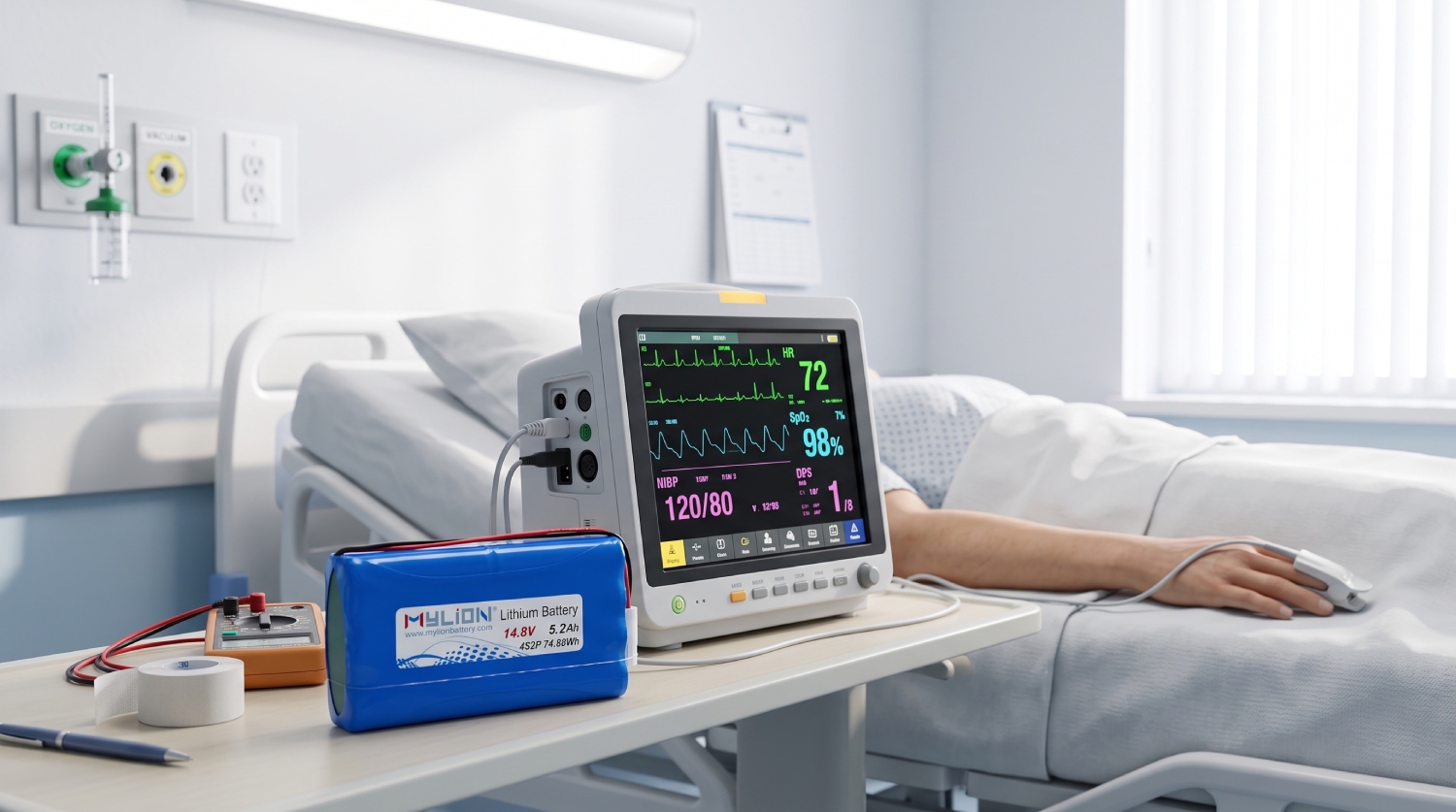
A core differentiator in MYLION's approach is the refusal to treat battery parameters in isolation. Instead, the company evaluates the real load, charging source, BMS functions, mechanical interfaces, and production constraints of the customer's entire device. For medical electronics specifically, this means a custom 18650 battery pack is never designed around voltage and capacity alone. It is reviewed in the context of how the device will actually operate: what sensors or motors it supports, what thermal environment it must withstand, and what documentation is required before the device can reach its intended market.
This system-first methodology directly supports medical equipment applications, where MYLION's knowledge base confirms support for selected medical devices "through strict documentation and electrical matching post-compliance review." In practice, this means electrical performance is not finalized until the required compliance review has been completed, reducing the risk of late-stage redesigns.
The Case for 18650 Cell Format in Medical Devices
Among the cylindrical and polymer formats MYLION works with, the 18650 cell remains a widely used option for compact, rechargeable medical and professional equipment. MYLION's capability set includes 18650 and 21700 cylindrical cells as well as LiPo architectures, giving customers flexibility in format selection based on project conditions. For medical electronics, where enclosure space, cable routing, and mounting constraints are often tightly defined, MYLION evaluates 18650, 21700, or LiPo formats specifically based on device geometry rather than defaulting to a single standard configuration.
Key Technical Considerations for Custom 18650 Packs
When developing a custom 18650 battery pack for a medical electronics application, several engineering elements are addressed as part of MYLION's structured process:
- Custom Voltage and Capacity Definition: Electrical targets are matched to specifications that have gone through a review process, rather than assumed from standard templates.
- Chemistry Selection: The cell format is selected based on the specific conditions of the project, not a one-size-fits-all default.
- BMS Matching: Protection and communication functions are evaluated to ensure the battery management system aligns with the device's operating requirements, including balancing, monitoring, and protection functions.
- Connector and Interface Customization: Chargers, cables, and pinouts are matched to the device rather than requiring the device to adapt to a generic pack.
- Mechanical Integration: Enclosure, mounting, and insulation are designed as part of the overall assembly, not treated as an afterthought.
These are not generic claims; they reflect the documented key features MYLION applies across its custom lithium battery pack engineering solutions, and they are directly relevant to medical device manufacturers who cannot afford mismatched connectors, unverified BMS protection logic, or mechanical conflicts discovered after production has started.
Why System Matching Reduces Project Risk
One of the most common failure points in B2B battery sourcing, as identified in MYLION's own positioning, is incomplete or conflicting requirements regarding peak load, runtime, BMS functions, or mechanical structure—issues that can lead to outright project failure if not addressed early. MYLION's response to this is a structured requirement engineering process: converting scenario-based device inputs into specifications that can be formally reviewed before any sample is built.
This matters significantly for medical electronics, where a battery pack that trips the BMS unexpectedly, drops voltage under load, or fails to physically fit within an approved enclosure can delay regulatory submissions or compromise device reliability. MYLION's documented approach to system matching—integrating the battery, BMS, charger, and mechanical structure as a single system—is designed specifically to reduce these categories of risk before mass production begins.
Validation and Compliance Support
MYLION's knowledge base confirms support for UN38.3 transport documentation and MSDS/SDS safety data sheets, both of which are relevant to any organization shipping custom lithium battery packs internationally, including those destined for medical or professional equipment markets. While final regulatory clearance for a medical device remains the responsibility of the device manufacturer, having a battery supplier that already maintains transport documentation and safety data sheet support reduces one layer of coordination complexity during the compliance process.
From Requirement Definition to Mass Production
MYLION's service model follows a defined sequence: requirement analysis, feasibility review, solution definition, prototype development, testing support, specification approval, and mass-production coordination. This structure is offered across OEM, ODM, sample development, private label, and project-based custom supply models. For a medical electronics manufacturer evaluating a custom 18650 battery pack, this means engagement does not begin with a price quote—it begins with a technical requirement confirmation and feasibility review, after which project-based pricing is established.
After mass production begins, MYLION maintains change-control management, version-controlled bills of materials (BOMs), and repeat-order supply coordination, which supports manufacturers who require long-term consistency across production batches—an important consideration for medical electronics programs that may run for multiple years without specification drift.
A Partner Built for Specification-Driven Industries
With 13+ years of lithium battery industry experience, MYLION has evolved from standard battery-pack supply toward a structured custom-battery engineering model that emphasizes requirement definition, sample validation, and controlled specifications. This evolution directly serves industries where specification accuracy is non-negotiable, including electronic and professional equipment, smart home and IoT devices, industrial instruments, robotics and automation, and medical equipment.
For organizations seeking a custom 18650 battery pack for medical electronics, the practical takeaway is this: battery selection should not be treated as a commodity purchase disconnected from the rest of the device. MYLION's engineering-first framework—spanning requirement definition, electrical architecture design, mechanical integration, and production-readiness coordination—offers a structured path for manufacturers who need their power source to function as a verified component of a larger, compliance-sensitive system rather than a generic add-on.
Manufacturers interested in understanding how a structured, project-based engineering process applies to their specific medical electronics requirements can review further details through MYLION's official website, www.mylionbattery.com.
Shanghai Mylion New Energy Co., Ltd.