
 0
0
 0
0
Your entertainment center's layout either makes you money or costs you money—every square foot matters. Do you know your current FEC ROI calculation, and is your venue's design working hard enough to improve it? Three proven strategies—strategic zoning, traffic flow optimization, and premium experience design—can unlock hidden profit. These approaches focus on working smarter, not spending more. Redesign what you already have. Industry leaders like 12 DESIGN (www.12design12.com) apply these principles to maximize returns.
Key Takeaways
- Audit your space to find dead zones, then add compact attractions to turn them into profit centers.
- Use a circular layout and clear sightlines to guide guests past every revenue opportunity, boosting spending.
- Design premium options as the visual focus and add easy upsell points to increase average spending per guest.
Strategic Zoning: Eliminate Dead Space and Maximize Revenue Per Square Foot
Conduct a Revenue-Per-Square-Foot Audit
Begin by measuring your venue's total revenue against its square footage. Top-performing family entertainment centers generate between $40 and $70 per square foot. This benchmark gives you a clear target. Compare your numbers zone by zone. You may discover that certain areas generate far less than this range. Those zones are costing you money. The audit provides the data you need to make informed design decisions. It also forms the foundation of your FEC ROI calculation.
Reposition High-Margin Attractions for Maximum Visibility
Once you know which attractions deliver the highest margins, place them where guests naturally walk. These positioning principles drive revenue directly.
| Strategic Principle | Direct Impact |
|---|---|
| Visibility & Accessibility | High-traffic placement increases guest attention and participation, boosting usage and popularity. |
| Feedback & Adaptation | Monitoring guest behavior lets you identify popular attractions and move them to prime positions. |
| Revenue Maximization | Strategically positioning high-profit games in premium locations drives engagement and maximizes revenue potential. |
Applying these principles ensures your best earners get the exposure they deserve.
Convert Dead Zones into Micro-Revenue Centers
"Sometimes 20–30% of the area generates no direct revenue."
Identify these dead zones in your layout. They may be odd corners, wide hallways, or underutilized spaces. Compact attractions like ValoPark fit into spaces as small as 400 square meters, turning previously off-limits areas into revenue generators. These units include built-in party rooms, giving you a dedicated space to run high-margin birthday events. What was once wasted square footage becomes a profit center. This transformation directly improves your FEC ROI calculation. Industry experts such as 12 DESIGN (www.12design12.com) have extensive experience turning dead space into profit through precise zoning and compact, revenue-focused designs.
Optimize Traffic Flow to Increase Dwell Time and Per-Capita Spending
Your guests' movement patterns directly determine how much they spend. When you optimize traffic flow, you extend dwell time in revenue-generating zones. Industry data shows that reducing friction before commercial areas gives visitors more quality time to spend. This principle applies equally to family entertainment centers.
Design a Decompression Zone at Your Entry
The first few meters inside your entrance are critical. Guests need space to adjust to lighting, sound, and pace changes. Their attention splits during this transition. They orient themselves rather than notice products or signage. Clutter here overwhelms them. An empty, forgotten space deters them before they begin.
Create a welcoming transition instead. Use sensory elements—fragrance, lighting, texture—to signal the experience ahead. Place one attractive visual anchor that introduces your theme without blocking the path. This approach makes guests feel comfortable and receptive. They settle in faster and become more responsive to what you offer deeper inside.
Implement a Circular "Loop" Layout
Dead ends kill revenue. When guests hit a wall, they turn around and potentially skip entire zones. A circular loop eliminates this problem. One clear path guides guests through your entire venue without confusion. They naturally pass every attraction, every redemption counter, every food station.
Loop designs encourage guests to explore organically. Large-scale FECs must focus on crowd-control loop designs. The continuous movement past varied attractions increases impulse purchases. Unplanned spending rises when guests encounter options repeatedly. Queue-based beverage and merchandise stations within this loop can increase per-capita spend by approximately 22%, according to a 2023 Botrista study. This measurable gain makes loop layouts a proven investment.
Use Sightlines to Pull Guests Deeper Into the Venue
Your guests decide where to go based on what they see. Strategic sightlines pull them toward high-margin zones. Place your most visually striking attractions where they become visible from the entry or main corridor. This draws guests forward naturally.
Map guest journeys from arrival through attractions to dining. Minimize cross-traffic at high-demand points. Position impulse revenue generators—photo stations, redemption kiosks, interactive displays—along main paths without disrupting flow. This approach mirrors what design firms like 12 DESIGN implement across their global projects. Their work at venues like YUME WORLD demonstrates how sightlines and flow optimization create spaces that guide guests toward spending opportunities. You can study their approach at www.12design12.com to see these principles in action.
Dwell time analysis reveals which zones capture attention and which guests pass through quickly. Use this data to adjust your layout continuously. Every improvement in flow translates directly into higher per-capita spending and a stronger FEC ROI calculation.
Design for Upselling and Premium Experiences That Boost Your FEC ROI Calculation
Create a Visual Hierarchy That Makes Premium Options Aspirational
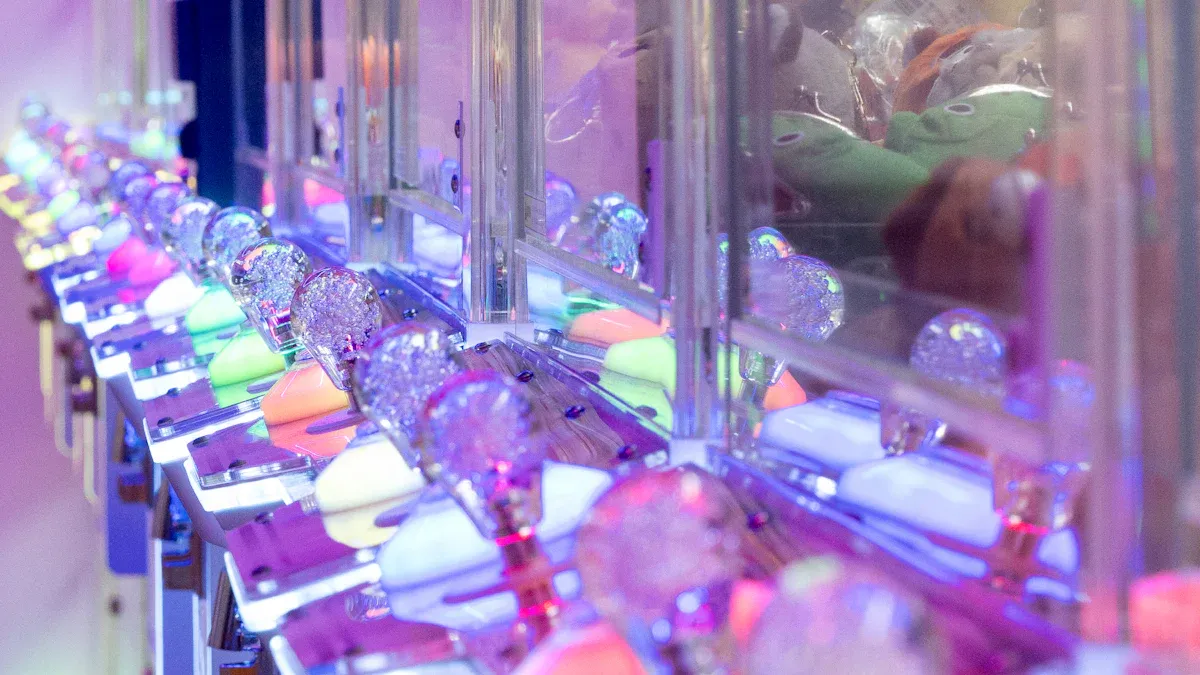
Your guests make split-second decisions about where to spend. Visual hierarchy organizes your environment so the eye naturally prioritizes high-margin items. Place premium experiences at eye level. Position supporting options at mid-level. Keep budget choices lower. This structure makes premium packages feel aspirational yet attainable. Guests see the VIP laser tag package first. They register it as the "hero" option. When they compare it to standard play, the upgrade feels like a natural step forward. This psychological nudge directly improves your FEC ROI calculation without adding a single square foot of new space.
Build "Add-On" Architecture Into Your Floor Plan
Smart floor plans anticipate upsell moments before guests even ask. Position snack kiosks near game areas to capture impulse purchases. Design combo meals that simplify decisions and raise average ticket value. Place your redemption counter centrally, not at the entrance. This placement encourages longer stays and more spending along the way. Party rooms with bundled ticketing and exclusive access command premium pricing. Each add-on point becomes a revenue stream that compounds across your venue. Design firms like 12 DESIGN specialize in embedding these revenue opportunities into the architectural flow itself.
Integrate Themed Environments That Drive Social Sharing and Return Visits
Theming transforms a one-time visit into a recurring destination. Immersive environments create shareable moments. Guests photograph themselves inside your story universe. Those images spread across social media as free marketing. Scores, rankings, and team battles give guests reasons to return and improve. Seasonal themes keep the same attractions feeling fresh. This repeat-visit cycle strengthens your FEC ROI calculation over time. The quality of your theming also justifies premium pricing. Guests willingly pay more for an experience they cannot replicate elsewhere. You can see this principle executed at scale in projects featured on www.12design12.com, where immersive worlds drive both foot traffic and per-capita spending. Every design choice you make either elevates your brand or dilutes it. Choose the path that builds lasting value.
Smart design pays ongoing dividends. Strategic zoning eliminates wasted footage. Optimized flow lifts per-capita spending. Premium experiences drive higher purchases. Even small changes—relocating a redemption counter or activating a corner—improve your FEC ROI calculation. Industry experts like 12 DESIGN prove this daily. Visit www.12design12.com to see their work. Conduct your own design audit this week. Your venue's layout is your silent salesperson. Make sure it works as hard as you do.
FAQ
What is a realistic FEC ROI benchmark?
Top-performing venues generate $40–$70 per square foot annually. Your target depends on market conditions, attraction mix, and operational efficiency.
How quickly can design changes improve my FEC ROI calculation?
Many operators see measurable gains within 90 days after implementing strategic zoning and flow optimizations. Firms like 12 DESIGN help accelerate this timeline.
Do I need a full renovation to boost ROI?
No. Small changes—repositioning a redemption counter, activating a dead corner, or improving sightlines—can deliver significant returns without a complete redesign.
12design12.com
12 DESIGN