Stainless steel clad alloy plate is designed to combine the corrosion resistance or wear resistance of a stainless steel or special-alloy layer with the structural strength and cost efficiency of a carbon steel or lower-alloy base plate. Instead of manufacturing an entire component from an expensive alloy, cladding places the high-performance material only where it is needed while retaining a stronger and more economical substrate.
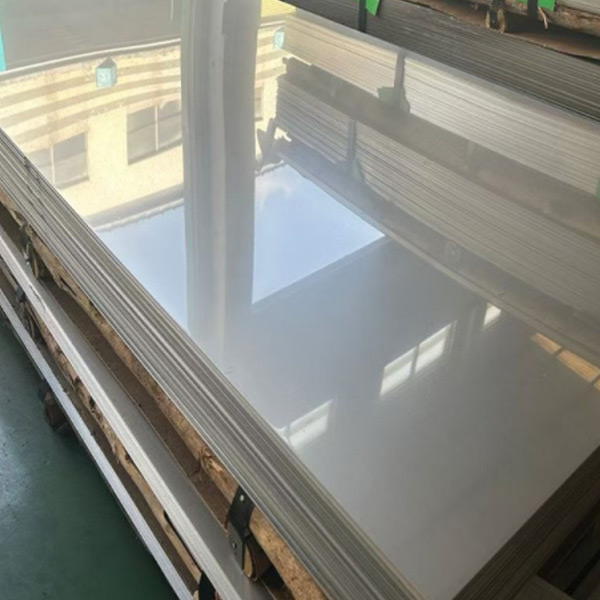
This material architecture is particularly relevant to equipment and structures exposed to corrosive media, pressure, mechanical loads, or demanding operating environments. However, the performance of stainless steel clad alloy plate depends on much more than the grade of the cladding layer. Cladding ratio, metallurgical bonding, base material, plate thickness, heat treatment, rolling process, surface condition, and subsequent fabrication all influence final performance.
What Is Stainless Steel Clad Alloy Plate?
Stainless steel clad alloy plate consists of two or more metallic layers that are metallurgically or mechanically bonded to form a composite plate. A typical configuration combines a carbon steel or low-alloy steel base layer with a stainless steel cladding layer.
The base layer provides structural strength and supports the overall thickness of the plate, while the stainless steel layer provides the required surface properties. Depending on the application, the cladding material may use 304, 304L, 316, 316L, 321, 347, 410, 430, or other stainless steel grades.
For example, a pressure vessel may require a thick carbon steel substrate to withstand internal pressure but need 316L stainless steel at the process-contact surface because the working medium is corrosive. Manufacturing the complete vessel from 316L would significantly increase material consumption. A clad plate can place the 316L layer where corrosion resistance is required while using carbon steel for the structural section.
This difference is the fundamental economic and engineering value of stainless steel clad alloy plate.
The Cladding Ratio Is a Critical Specification
One of the first parameters to define is the thickness relationship between the stainless steel cladding and the base metal.
A clad plate might consist of a 2 mm stainless steel layer bonded to a 18 mm carbon steel substrate, producing a nominal 20 mm composite plate. Another project may require a 3 mm cladding layer on a 27 mm base plate. The appropriate configuration depends on corrosion allowance, structural design, forming requirements, machining allowance, and expected service life.
The stainless steel layer should be thick enough to maintain the required corrosion or wear resistance after fabrication and any specified surface processing. At the same time, excessive cladding thickness can increase material cost without providing a proportional performance benefit.
For this reason, specifying only the total thickness is insufficient. A complete technical inquiry should distinguish total thickness, cladding thickness, base thickness, and applicable tolerances.
Material Selection Depends on the Service Medium
The stainless steel grade should be selected according to the actual operating environment rather than simply choosing the most commonly available grade.
304 and 304L are widely used for general corrosion-resistant applications, while 316 and 316L provide improved resistance in many chloride-containing and chemically aggressive environments due to their molybdenum content. Low-carbon grades such as 304L and 316L can also be relevant where welding requirements and resistance to sensitization need to be considered.
For elevated-temperature applications, grades such as 321 or 347 may be considered depending on the temperature and process conditions. Ferritic or martensitic stainless steels from the 400 series can provide different combinations of wear resistance, strength, and corrosion performance.
The correct choice therefore requires information such as process medium, concentration, temperature, pressure, exposure time, and whether the surface will be subjected to erosion, abrasion, or cyclic thermal loading.
Metallurgical Bonding Determines Clad Plate Reliability
The interface between the stainless steel layer and base metal is one of the most important areas in stainless steel clad alloy plate manufacturing.
A high-quality composite plate requires sufficient bonding strength and controlled interface quality. Rolling-based cladding processes use pressure and controlled thermal conditions to establish a metallurgical bond between the dissimilar metals.
Unlike a simple overlay coating, a properly manufactured clad plate is intended to maintain the integrity of the composite structure during subsequent cutting, bending, welding, forming, and service.
Interface defects such as incomplete bonding, delamination, inclusions, or localized discontinuities can become critical when the plate is exposed to forming stress or thermal cycling. Quality control therefore needs to evaluate the bond interface rather than focusing exclusively on the appearance of the stainless steel surface.
Ultrasonic testing is commonly used to examine bond integrity and identify areas of insufficient bonding within clad plates. Depending on project requirements, additional mechanical or metallurgical examinations may be specified.
Rolling and Cladding Processes Affect Final Properties
The manufacturing route has a direct influence on thickness uniformity, interface bonding, residual stress, surface condition, and dimensional accuracy.
Rolling cladding generally involves preparing the surfaces of the component metals, assembling the layers, applying controlled pressure and temperature, and subsequently rolling the composite structure to the required dimensions. Process parameters need to be controlled to achieve sufficient bonding without creating unacceptable distortion or material degradation.
The stainless steel and base metal also have different thermal expansion characteristics and deformation behavior. This makes temperature control and rolling reduction important during production.
For large-format plates, controlling flatness and thickness across the width can become increasingly challenging. This is particularly relevant when the finished plate will later be cut into pressure-vessel shells, bridge components, storage equipment, or large structural assemblies.
A manufacturer with dedicated clad-plate production capabilities can therefore provide more meaningful technical control than a trading operation that only sources finished material after a specification has been defined.
Stainless Steel Clad Alloy Plate vs. Solid Stainless Steel Plate
The primary engineering comparison is not simply between two grades of steel but between two material architectures.
| Factor |
Stainless Steel Clad Alloy Plate |
Solid Stainless Steel Plate |
| Corrosion-resistant surface |
Stainless steel layer |
Entire thickness |
| Structural substrate |
Carbon/low-alloy steel |
Stainless steel |
| Alloy consumption |
Lower |
Higher |
| Material cost |
Potentially lower |
Higher for thick sections |
| Structural strength |
Determined largely by base plate |
Determined by stainless grade |
| Thickness flexibility |
Separate clad/base thickness |
Single material thickness |
| Suitable applications |
Large equipment, vessels, structures |
General stainless components |
| Fabrication considerations |
Requires clad-interface control |
Simpler material structure |
For a 30 mm component requiring only a relatively thin corrosion-resistant surface, manufacturing the complete thickness from stainless steel may consume substantially more alloy than necessary. A clad structure can allocate the expensive alloy to the functional surface and use carbon steel for the load-bearing section.
The actual economic advantage depends on stainless steel grade, plate dimensions, cladding ratio, production route, welding requirements, and market prices. It should therefore be evaluated through the complete fabrication cost rather than raw material price alone.
Fabrication Requirements Need to Be Considered Early
A clad plate is ultimately processed into a finished component, so fabrication requirements should be included when selecting the material.
Cutting, forming, bending, welding, machining, and surface treatment can all affect the composite structure. Welding is particularly important because the stainless cladding, base metal, and transition region may require different procedures and filler materials.
For pressure equipment, the welding procedure must maintain the required mechanical and corrosion properties without creating unacceptable dilution or defects at the clad interface. If the stainless surface is intended to remain exposed to a process medium, weld design and post-weld surface condition become part of the corrosion-resistance strategy.
Forming requirements also need to be communicated before production. A plate intended for cylindrical shell forming has different dimensional and mechanical considerations from a flat structural plate used in bridge construction.
Where Stainless Steel Clad Alloy Plate Is Used
Stainless steel clad alloy plate is suitable for applications where the structural section and surface performance have different material requirements.
In chemical processing equipment, the stainless surface can provide corrosion resistance while the carbon steel substrate supplies structural support. In water-conservancy projects, stainless cladding can be used where long-term exposure to water or corrosive environments makes surface durability important.
Nuclear power applications can impose particularly strict requirements for material traceability, inspection, bonding quality, and fabrication procedures. Bridge and large structural projects may place greater emphasis on plate dimensions, mechanical properties, weldability, and environmental durability.
Aerospace and other high-precision applications may require tighter control over material composition, dimensional tolerances, surface quality, and inspection documentation. The appropriate specification must therefore be developed around the final component rather than treating all stainless steel clad plates as interchangeable products.
What to Check Before Ordering
A technically complete stainless steel clad alloy plate specification should normally include the stainless steel grade, base-metal grade, total thickness, cladding thickness, plate dimensions, mechanical requirements, surface condition, cladding method, heat-treatment requirements, and applicable standards.
Inspection requirements should also be defined in advance. Depending on the application, these may include chemical composition analysis, tensile testing, hardness testing, ultrasonic examination, bond-strength testing, dimensional inspection, and visual or surface examination.
For export projects, documentation and traceability are equally important. Mill test certificates, heat numbers, inspection reports, dimensional records, and packing information should correspond with the supplied material so that each plate can be traced back to its production batch.
Why Manufacturing Capability Matters
Stainless steel clad alloy plate requires closer process coordination than conventional single-grade steel plate because two or more materials must perform as one composite structure.
Yimo Alloy Tech combines its own clad plate manufacturing base with an industrial supply network covering stainless steel and special metal materials. Its manufacturing capabilities focus on stainless steel clad plates, while its supply-chain partnership with Guangxi Beigang New Materials Co., Ltd. provides access to stainless steel materials across the 200, 300, and 400 series.
This combination allows material selection, clad-plate processing, customized production, inspection, and export delivery to be coordinated according to project requirements rather than handled as disconnected purchasing steps.
For demanding applications, the most useful approach to stainless steel clad alloy plate selection is to define the service medium, structural load, corrosion or wear requirement, thickness architecture, fabrication route, and inspection criteria together. When the stainless layer and base metal are engineered as a complete material system, clad plate technology can provide the required surface performance without unnecessarily using high-cost alloy throughout the entire plate thickness.


 0
 0