

 0
 0
Lithium-ion batteries are widely used in electric bicycles, light electric vehicles, and commercial energy storage systems. While they offer efficient energy storage, improper charging, physical damage, and excessive heat can create serious safety risks. For businesses managing multiple battery packs, establishing a controlled charging and storage environment is an important part of daily operations.
Understanding Lithium Battery Fire Risks
One of the major hazards associated with lithium-ion batteries is thermal runaway. When a battery cell overheats or develops an internal fault, chemical reactions can generate additional heat and potentially release flammable gases. In severe cases, the failure may spread to neighbouring cells and lead to a prolonged fire.
Large battery installations illustrate why prevention and emergency planning matter. Battery incidents may require extended monitoring because damaged cells can remain hot even after visible flames disappear. Appropriate equipment, early warning systems, and clear emergency procedures can help businesses manage these risks more effectively.
Why Safe Charging Practices Matter
Commercial facilities often charge several battery packs simultaneously. Without proper organization, chargers may overload electrical circuits, batteries may be placed near combustible materials, and damaged packs may go unnoticed.
Businesses should use manufacturer-approved chargers, inspect batteries regularly, and avoid charging units that show signs of swelling, leakage, physical damage, or unusual heat. Charging areas should also have clear access routes and procedures for responding to alarms.
A dedicated lithium battery charging cabinet can help organize equipment and provide additional protective features. However, the cabinet must be suitable for the battery chemistry, charging requirements, installation environment, and applicable local regulations.
Choosing a Lithium Battery Safety Storage Cabinet
When evaluating a Lithium Battery Safety Storage Cabinet, buyers should consider charging capacity, temperature monitoring, fire protection, electrical isolation, ventilation, and maintenance requirements.
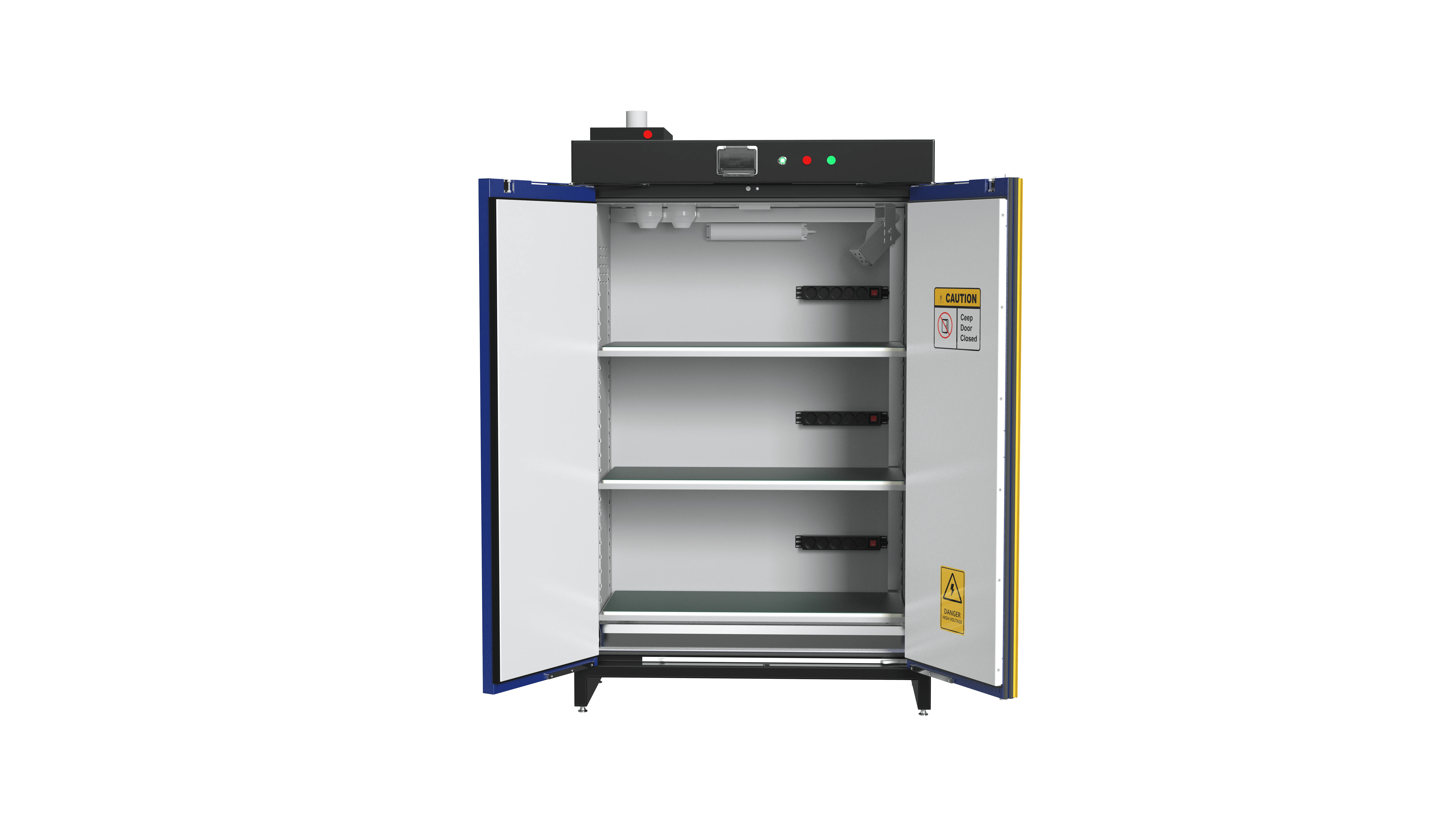
HJ New Energy Technology Co., Ltd. offers a cabinet designed for e-bike and light electric vehicle fleet depots. Its largest configuration measures 1,200 × 1,900 × 635 mm and features three shelves, expandable to five, with a maximum load of 50 kg per shelf.
The cabinet includes five 230 V AC, 16 A charging outlets. Its stated rated total power is 4,000 W, supplied through a 16 A single-phase connection. Electrical loading should be assessed by a qualified electrician to ensure that the intended charging arrangement remains within the supply's limits.
Key safety-related features include four-stage thermal monitoring, automatic aerosol fire suppression, and charging isolation when a full fire alarm is triggered. The door also locks under this alarm condition. Additional specifications include a stated 90-minute fire resistance rating, a DN75 exhaust gas extraction connection, and a 30-litre electrolyte sump.
Before purchasing, operators should verify the relevant test reports, certifications, installation requirements, and compatibility with their intended battery packs.
Maintenance and Emergency Preparedness
Protective equipment works best when supported by consistent operating procedures. Staff should understand how to identify abnormal battery conditions, report alarms, and follow established evacuation and emergency response instructions.
Routine inspections should cover charging outlets, cables, monitoring systems, ventilation connections, and other components according to the manufacturer's maintenance guidance. Alarm events should always be investigated rather than automatically reset.
Facilities should also coordinate with local fire authorities when appropriate. Emergency planning should address access routes, electrical isolation, battery information, and procedures for handling a suspected battery fire.
Conclusion
Lithium battery safety requires a combination of suitable storage equipment, responsible charging practices, regular maintenance, and effective emergency planning. For e-bike operators and light-EV fleet managers, a purpose-designed charging cabinet can provide a more organized environment and additional layers of protection.
HJ New Energy Technology Co., Ltd. offers a lithium battery safety storage solution with integrated charging, thermal monitoring, fire suppression, and other protective features. By assessing the equipment against actual operating requirements, businesses can make more informed decisions and build a more systematic approach to everyday battery safety.
www.huajingst.com
HJ New Energy Technology Co., Ltd.