
 0
 0
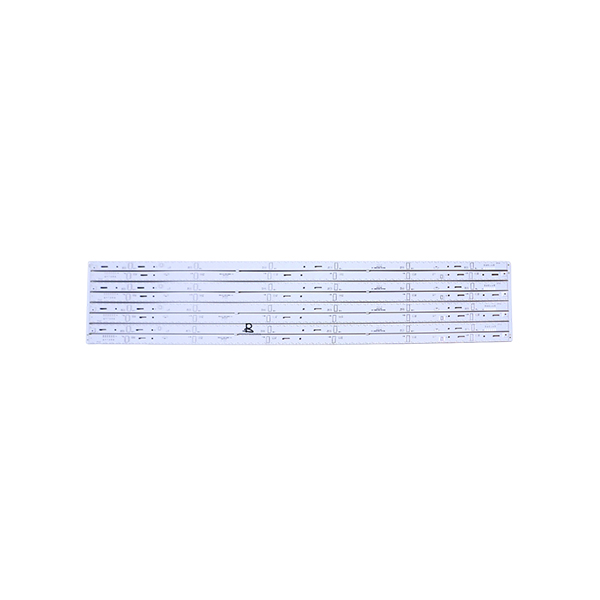
High-power LED lighting places substantially greater demands on PCB thermal management than conventional low-power electronic products. As LED output increases, the heat generated at the LED package must be transferred away from the junction efficiently and continuously. An LED aluminum substrate provides a metal-based thermal path that can help control this heat while maintaining the electrical insulation required by the circuit.
For high-power LED applications, the critical issue is not simply whether an aluminum PCB can conduct heat. The more important question is whether the complete substrate structure can maintain an acceptable thermal path under the actual power, ambient temperature, operating time, and mechanical installation conditions of the product.
Thermal Management Starts at the LED Package
The thermal path in a high-power LED system typically begins at the LED junction and continues through the package, solder interface, PCB, thermal interface material, heatsink, and finally into the surrounding environment.
Any high-resistance layer along this path increases temperature. This means that improving the aluminum base alone cannot compensate for an inefficient dielectric layer or poor contact with the heatsink.
An LED aluminum substrate normally uses copper as the circuit layer, a dielectric layer for electrical isolation and heat transfer, and aluminum as the metal core. The dielectric layer is particularly important because it must simultaneously provide sufficient dielectric strength and low thermal resistance.
For high-power designs, selecting the dielectric based on its thermal conductivity and thickness can have a measurable effect on overall thermal performance.
Thermal Resistance Provides a More Practical Reference
Thermal conductivity is usually expressed in W/m·K, but thermal resistance is often more useful when evaluating the actual substrate structure.
The thermal resistance of the dielectric depends on both its thermal conductivity and thickness. In simplified terms, reducing the dielectric thickness or increasing its thermal conductivity can reduce resistance to heat transfer.
However, the thinnest possible dielectric is not automatically the best solution. The insulation layer must maintain adequate electrical isolation under the application's voltage and operating conditions.
This is why high-power LED aluminum substrate design requires a balance between thermal performance and electrical reliability. A substrate should be specified according to the actual LED voltage, power density, operating temperature, and safety requirements rather than selecting the highest thermal conductivity material available.
Copper Thickness Affects Both Electrical and Thermal Design
High-power LED boards may carry substantially higher currents than small indicator or decorative lighting circuits. Copper thickness and trace width must therefore be matched to the expected current.
If current increases while conductor geometry remains unchanged, resistive losses increase. These losses generate additional heat that must also be dissipated through the PCB structure.
Using appropriate copper thickness and sufficiently wide traces can reduce conductor resistance. At the same time, large copper areas around LED thermal pads can help distribute heat before it reaches the dielectric and aluminum core.
For LED boards containing multiple high-power emitters, layout becomes particularly important. The spacing between LEDs, thermal pad dimensions, copper distribution, and connection between individual LED zones can affect temperature uniformity across the board.
Board Thickness Should Be Selected by Application
An aluminum substrate is not defined only by its metal core. The overall board thickness is determined by the copper layer, dielectric layer, and aluminum base.
A thinner board may be appropriate where weight and compactness are important, while thicker aluminum construction can provide greater mechanical rigidity and heat-spreading capability.
For large LED panels, industrial luminaires, and outdoor lighting modules, mechanical stiffness can become important because the PCB may be mounted across a relatively large surface. Excessive deformation can affect LED alignment, assembly quality, and contact with the external heatsink.
The correct thickness should therefore be established from the mechanical dimensions, mounting structure, thermal load, and manufacturing process rather than applying one specification to every LED product.
High-Power LED Applications Require Stable Temperature Control
LED performance is strongly influenced by operating temperature. Excessive temperature can accelerate degradation and may contribute to changes in light output and color characteristics.
For this reason, the substrate should be considered together with the external thermal solution. An aluminum PCB can spread heat from localized LED sources, but the final thermal performance depends on how effectively that heat is transferred to the heatsink or enclosure.
Thermal interface materials must also be considered. A thick or uneven interface layer can introduce additional resistance between the PCB and heatsink. Proper mounting pressure and surface flatness can therefore be just as important as the substrate's material specification.
This is particularly relevant for high-power floodlights, streetlights, industrial luminaires, and other products expected to operate for many hours continuously.
Aluminum Substrate Provides a Useful Combination of Thermal and Mechanical Properties
Aluminum is widely used as the metal core because it provides a practical combination of thermal conductivity, low density, mechanical strength, and manufacturability.
Compared with a conventional organic PCB structure, an aluminum-core design can provide a more direct route for heat spreading beneath LED components. It also offers useful rigidity for metal-bodied lighting products.
However, aluminum is electrically conductive, so the dielectric layer must provide reliable isolation between the copper circuit and metal core. This makes dielectric quality a fundamental part of the substrate's safety and reliability.
The appropriate material system should therefore be selected according to voltage, thermal load, board size, and environmental conditions.
Manufacturing Precision Influences Thermal Performance
Thermal design calculations are only useful when the manufactured PCB remains within the required dimensional and material tolerances.
Variations in dielectric thickness can affect thermal resistance and insulation performance. Variations in copper thickness can affect electrical resistance and current distribution. Board flatness can influence the interface between the aluminum substrate and heatsink.
These manufacturing variables become increasingly important as board dimensions increase or LED power density rises.
Shenzhen Rongbaijia Technology Co., Ltd. provides aluminum substrate manufacturing as part of its broader PCB production capabilities. Established in 2009, the company has more than 15 years of manufacturing experience and an annual production capacity of approximately 1.2 million square meters.
Its manufacturing quality control incorporates Automated Optical Inspection and flying probe testing, while DFM engineering support is available to identify production risks during the design stage.
From Aluminum PCB to Complete LED Assembly
For some LED projects, PCB production is only one part of the manufacturing process. After fabrication, the aluminum substrate must be assembled with LED packages, resistors, drivers, connectors, and other electronic components.
Rongbaijia operates seven automated SMT production lines and two wave soldering machines, supporting processes from component sourcing and SMT placement to through-hole soldering, ICT/FCT testing, and finished product assembly.
This integrated capability can be useful when the LED product requires both aluminum PCB fabrication and PCBA production. Instead of evaluating the substrate and assembly process separately, the complete manufacturing flow can be optimized around component selection, pad design, soldering requirements, thermal areas, and final testing.
For high-volume LED lighting, this approach can also simplify supply-chain coordination and reduce the number of manufacturing interfaces.
Choosing an LED Aluminum Substrate by Application
Different LED products require different substrate priorities.
A high-power LED floodlight may prioritize low thermal resistance and effective heat spreading because LEDs operate at relatively high power for extended periods. An outdoor streetlight may place additional emphasis on environmental durability, mechanical rigidity, and long-term thermal stability.
An industrial lighting module may require stable performance under continuous operation and elevated ambient temperatures. Meanwhile, a compact consumer lighting product may place greater emphasis on board cost, dimensions, production yield, and compatibility with automated assembly.
The correct LED aluminum substrate is therefore the one whose electrical, thermal, mechanical, and manufacturing characteristics match the complete product specification.
Conclusion
For high-power LED lighting, an aluminum substrate should be treated as part of the thermal management system rather than simply as an alternative PCB material.
The most important parameters include dielectric thermal conductivity, dielectric thickness, thermal resistance, copper thickness, aluminum base thickness, insulation performance, board flatness, and dimensional consistency. These specifications must then be matched with LED power, thermal interface materials, heatsink design, ambient temperature, and expected operating time.
A manufacturer with integrated PCB engineering and production capabilities can help optimize these variables before volume manufacturing. With aluminum substrate production, DFM support, automated assembly, testing, and an annual PCB capacity of approximately 1.2 million square meters, Rongbaijia provides a manufacturing platform for LED lighting products that require controlled thermal performance and consistent production quality.
www.rbjpcb.com
Shenzhen Rongbaijia Technology Co., Ltd.