
 0
 0
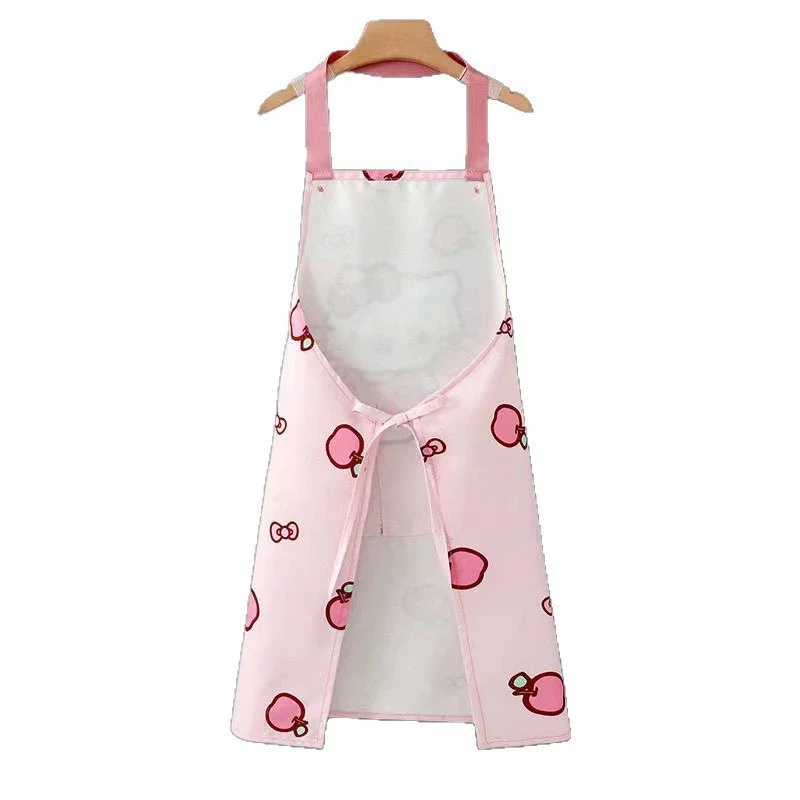
Developing custom kitchen aprons for commercial use requires more than selecting fabric and adding a logo. The finished product combines fabric performance, pattern dimensions, sewing construction, straps, pockets, decoration and packaging. When an order increases from several hundred pieces to 10,000 or more, small inconsistencies in cutting, stitching or color can become significant quality problems. A scalable custom kitchen apron program therefore needs a clear technical specification from prototype through mass production.
Start with a Technical Product Specification
Before sampling begins, the apron should be defined through measurable specifications. These typically include finished dimensions, fabric composition, GSM, color standard, tolerance, strap length, pocket size, sewing method, logo dimensions, printing technology and packaging requirements.
For example, a specification might define a 220 GSM cotton-polyester fabric, body dimensions of approximately 70 × 85 cm, a 20–25 cm wide chest section, reinforced waist ties and a front pocket positioned at a fixed distance from the bottom edge.
The exact dimensions should depend on the target market and intended wearer, but the principle remains the same: a measurable specification makes production easier to control than descriptions such as “large,” “heavy-duty” or “premium.”
This becomes especially important for repeat orders. If the first production batch is approved only by appearance, the supplier may have limited objective information for reproducing exactly the same product six months later.
Pattern Engineering Controls Material Consumption
Pattern design directly affects both apron appearance and production cost. The body panel, pocket, straps and reinforcement pieces need to be arranged efficiently on the fabric width to reduce cutting waste.
For example, if a fabric roll has a usable width of 150 cm, the pattern layout should be optimized around that width rather than designed independently and adjusted at the cutting stage. A small change in apron width can sometimes improve fabric utilization across thousands of units.
Material consumption should therefore be calculated during development. If one apron uses 0.75 meters of fabric and production volume reaches 20,000 units, total fabric demand is approximately 15,000 meters before accounting for cutting loss and production allowances.
Reducing consumption by only 3% could save approximately 450 meters of fabric on the same order. This illustrates why pattern engineering can have a direct effect on production economics without changing the visible appearance of the finished apron.
Sewing Construction Determines Service Life
The sewing process should reflect the load applied to each part of the apron. The main body seams may experience relatively low loads, while waist ties, neck straps and pocket corners can experience repeated tensile forces.
A basic single-line stitch may be sufficient for low-load areas, while reinforcement or multiple stitching lines can be used at high-stress attachment points. The correct stitch density also depends on fabric thickness and structure. Excessively dense stitching can perforate some fabrics, while insufficient stitch density can reduce seam strength.
For a professional kitchen apron, the connection between the waist tie and body deserves particular attention because users repeatedly pull the tie during fitting. Pocket corners can also benefit from reinforcement when the pocket is designed to carry utensils or other objects.
These details should be standardized in the production specification so that sewing operators are not required to interpret the design independently.
Dimensional Tolerances Should Be Defined Before Bulk Production
An apron does not need every dimension to be accurate to the nearest millimeter, but critical dimensions need defined tolerances.
For example, a body length specification of 85 cm with a ±1 cm tolerance provides a different production standard from an undefined requirement of “approximately 85 cm.” The same principle applies to pocket position, strap length, logo location and overall width.
Tolerances should be based on function and manufacturing capability. Excessively tight tolerances can increase production cost without improving usability, while excessively broad tolerances can produce visible inconsistencies.
For custom kitchen aprons used as corporate uniforms, logo position can be particularly important. A difference of several centimeters between batches may be immediately visible when employees from the same brand stand together.
Logo Placement Requires Process Control
Logo customization is often one of the most commercially important aspects of a custom kitchen apron. The decoration needs to remain visually consistent across the entire production run.
A technical artwork specification should define logo width, height, color values, print location and acceptable tolerance. If embroidery is used, the specification should also define thread colors, stitch density and artwork format.
For screen printing, ink adhesion and wash durability should be tested on the actual production fabric. For heat transfer, temperature, pressure and dwell time can influence adhesion. For embroidery, excessive stitch density can make the decorated area stiff or cause puckering.
The same artwork can therefore produce different results depending on the textile and decoration process. A production sample should be evaluated after washing rather than approving the logo solely from its appearance immediately after printing.
Fabric Inspection Protects the Entire Production Run
Fabric is usually the largest material component of a kitchen apron, so problems at the fabric stage can propagate across thousands of finished products.
Incoming inspection should verify color, GSM, width, visible defects and dimensional stability. For dyed fabrics, color should be compared against the approved standard under controlled lighting. For cotton or cotton-blend fabrics, shrinkage testing should be conducted before bulk cutting.
Consider a 2% length shrinkage after washing on an apron originally designed at 85 cm. The finished length could change by approximately 1.7 cm. That may be acceptable in some applications but significant in a standardized uniform program.
Controlling fabric before cutting is therefore generally more efficient than discovering dimensional inconsistencies after sewing.
Washing Tests Provide More Useful Information Than Initial Appearance
A custom kitchen apron can look excellent when it leaves the factory and still perform poorly after repeated washing. Commercial users may wash aprons dozens or hundreds of times over their service life, depending on the operating environment.
A development program should therefore define an appropriate washing protocol and evaluate dimensional change, color fading, seam condition, print adhesion and fabric appearance after washing.
For example, a restaurant uniform program might compare samples after 10, 20 and 50 washing cycles. The exact test protocol should reflect the customer's actual laundering process, including temperature, detergent type, drying method and ironing conditions.
This approach makes it possible to distinguish a fabric that performs well in laboratory conditions from one that remains visually and structurally stable during real commercial use.
Packaging Can Affect the Delivered Product
Packaging is sometimes treated as the final logistical step, but it can influence the condition in which the customer receives the product.
Custom kitchen aprons may be individually folded and packed, placed into polybags, grouped into cartons or packaged according to different retail or promotional requirements. Folding dimensions should be standardized because carton utilization depends directly on the packed size.
For large promotional campaigns, individual packaging may also need to include barcode labels, size information or campaign-specific markings. These requirements should be finalized before production rather than added manually after the main production process.
A standardized packaging specification reduces sorting errors and makes large shipments easier to inspect and distribute.
Production Capacity Must Be Supported by Process Control
Large annual capacity does not automatically guarantee consistent custom kitchen apron production. What matters is whether the manufacturer can maintain the approved fabric, dimensions, sewing construction, logo appearance and packaging method across the entire order.
Nantong Anrou Home Textile Co., Ltd. focuses on home textiles and sewn textile products, including blankets, towels, shirts, bags and customized promotional products. This broader production experience provides a relevant manufacturing foundation for custom kitchen aprons, particularly when orders involve multiple textile components or customized LOGO printing.
The company's complete quality-management system supports the need for consistent inspection across fabric, sewing and finished products. For large promotional or commercial programs, this type of integrated textile manufacturing capability can reduce the number of separate production interfaces.
From Sample Approval to Repeat Orders
A successful custom kitchen apron project should create a technical reference that can be reused. Once the sample is approved, the final fabric specification, color standard, pattern dimensions, sewing details, logo artwork, packaging method and inspection criteria should be documented.
This prevents a common problem in repeat production: the new batch is technically similar to the previous one but differs in fabric hand feel, color, dimensions or logo position because the original specifications were not sufficiently detailed.
For large-volume orders, sample retention and pre-production approval provide an additional reference point. The approved sample becomes the physical benchmark against which bulk production can be evaluated.
A technically controlled custom kitchen apron program ultimately depends on the connection between textile selection, pattern engineering, sewing accuracy, customization technology and quality inspection. When these elements are standardized before mass production, manufacturers can achieve more consistent dimensions, appearance and durability while controlling material consumption and production cost. For brands and organizations ordering customized aprons at scale, that consistency is often more valuable than adding unnecessary design complexity.
www.aloehometextile.com
Nantong Anrou Home Textile Co., Ltd.