
 0
0
 0
0
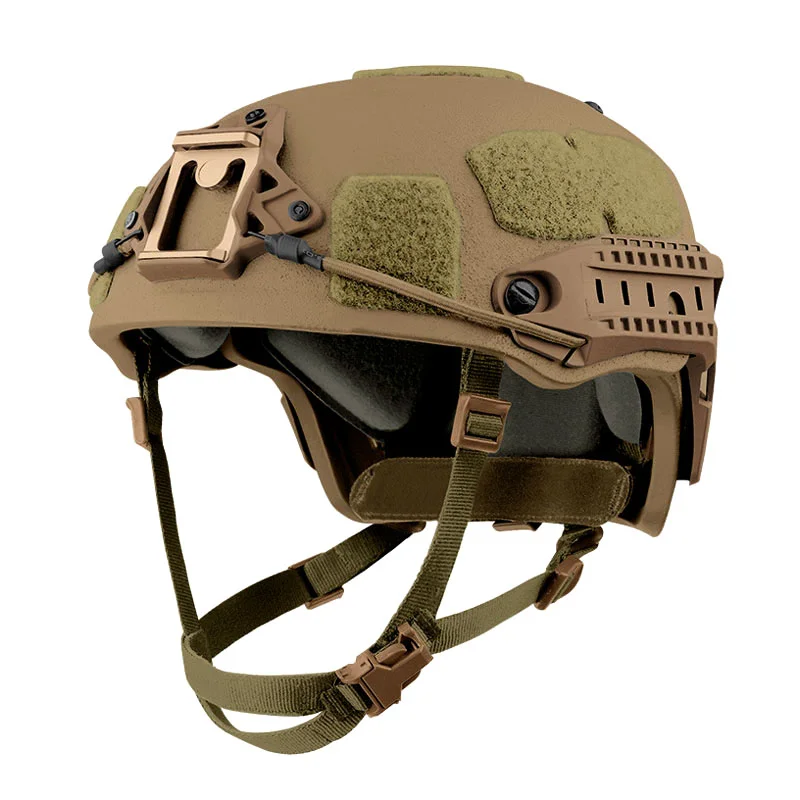
When purchasing ballistic helmets in bulk, a final inspection should be treated as an essential quality-control step rather than a simple visual check. A helmet may look acceptable in product photos or during an initial sample review, yet differences in materials, dimensions, finishing, assembly, labeling, and batch consistency can become apparent when hundreds or thousands of units are delivered.
For distributors, importers, procurement teams, and professional equipment suppliers, a structured ballistic helmet inspection process helps identify quality issues before a shipment is accepted. It also provides an opportunity to confirm that the delivered products match the specifications, samples, and quality requirements agreed upon with the supplier.
Bulk inspection requires a broader approach than checking a single sample. Manufacturing consistency, shell construction, padding installation, retention systems, surface finishing, accessories, packaging, and documentation should all be reviewed across a representative number of units.
This guide explains how to inspect ballistic helmets before accepting a bulk order and what buyers should pay attention to when working with a ballistic helmet manufacturer or ballistic helmet supplier.
Why Inspect Ballistic Helmets Before Accepting a Bulk Order?
A pre-shipment or incoming inspection gives buyers a final opportunity to identify discrepancies before the products enter inventory or are distributed to customers.
During large-scale production, variations can occur in molding, cutting, coating, assembly, labeling, and packaging. A single defective product may not indicate a widespread problem, but a repeated issue across multiple units can indicate a manufacturing or quality-control problem.
For bulk ballistic helmets, inspection is particularly important because buyers are usually responsible for confirming that the delivered quantity and product configuration meet the original purchase agreement.
A proper inspection can help verify:
-
Product quantity and model
-
Shell appearance and construction
-
Dimensions and size consistency
-
Material specifications
-
Padding and suspension installation
-
Retention-system assembly
-
Accessory compatibility
-
Surface finishing
-
Markings and labels
-
Packaging quality
-
Documentation and test records
-
Batch consistency
The objective is not simply to find defective products. It is to determine whether the entire shipment meets the quality level that was agreed upon before production.
1. Start With the Approved Product Specification
Before physically inspecting the shipment, buyers should prepare an inspection checklist based on the approved product specification.
This document should clearly identify the characteristics that must be verified. Depending on the product and purchasing agreement, specifications may include shell material, dimensions, weight range, size configuration, color, surface treatment, padding system, retention system, accessory interfaces, labeling, and packaging requirements.
The approved sample should also be retained as a reference whenever possible.
Comparing the production batch with an approved sample can reveal differences that may not be obvious when reviewing the products independently.
For example, the production helmets may have:
-
A different surface texture
-
Slightly different shell geometry
-
Different padding density
-
Different hardware
-
Different strap configuration
-
Different labeling
-
Different accessory interfaces
These differences should not automatically be classified as defects, but they should be investigated if they differ from the agreed specification.
A reliable ballistic helmet manufacturer should be able to provide clear product specifications and production information before the order is completed.
2. Verify the Quantity and Product Models
The first physical inspection step is straightforward: confirm that the shipment contains the correct quantity and models.
For large orders, products may be packed in multiple cartons or pallets. Buyers should compare the actual shipment against the commercial documents and purchase order.
Check:
-
Total carton quantity
-
Number of helmets per carton
-
Product model
-
Size
-
Configuration
-
Accessories
-
Packaging labels
-
Batch or production codes
If multiple models are included in the same order, each model should be counted separately.
Quantity discrepancies can create problems that are independent of product quality. Therefore, quantity verification should be completed before moving into technical inspection.
3. Check the Overall Appearance
A visual inspection is one of the fastest ways to identify obvious quality issues.
Inspect the shell under adequate lighting and examine the entire surface rather than checking only one side.
Look for:
-
Cracks
-
Scratches
-
Deep marks
-
Surface deformation
-
Uneven coating
-
Visible molding defects
-
Bubbles
-
Peeling
-
Contamination
-
Irregular edges
-
Loose components
The surface should generally have a consistent appearance throughout the production batch.
For coated ballistic helmets, pay particular attention to areas around edges, mounting points, ventilation openings, and other structural interfaces. These areas may show finishing inconsistencies more easily than large flat surfaces.
A visual inspection cannot confirm the protective performance of a helmet, but it can reveal manufacturing problems that deserve further investigation.
4. Inspect the Helmet Shell Carefully
The shell is one of the most important components of a ballistic helmet, so buyers should perform a detailed shell inspection.
Depending on the agreed construction, helmets may use materials such as aramid, UHMWPE, or other composite structures. The exact material should match the approved specification.
The inspection should consider:
-
Shell shape
-
Surface uniformity
-
Edge finishing
-
Openings and cutouts
-
Mounting interfaces
-
Structural symmetry
-
Material identification
-
Visible manufacturing defects
Pay particular attention to shell edges. Poor edge finishing can affect appearance, comfort, assembly, and long-term durability.
Buyers should also compare several units side by side. This makes it easier to identify differences in shell geometry or finishing.
For a large ballistic helmet order, consistency between units is often just as important as the quality of an individual helmet.
5. Measure Dimensions and Weight
Visual inspection should be supported by measurable data.
Depending on the product specification, buyers may measure:
-
Overall shell dimensions
-
Length
-
Width
-
Height
-
Cut dimensions
-
Mounting-hole positions
-
Edge dimensions
-
Helmet weight
Weight is especially useful when checking production consistency.
If one helmet is significantly heavier or lighter than other units in the same batch, the difference should be investigated.
However, buyers should avoid judging quality solely by weight. A lightweight ballistic helmet is not automatically better, and a heavier model is not automatically stronger. Weight should always be evaluated against the specified construction and product requirements.
The objective is to confirm that the delivered products remain within the agreed specifications.
6. Examine the Interior Components
The interior of the helmet deserves the same attention as the outer shell.
Inspect the:
-
Padding
-
Suspension components
-
Comfort liners
-
Hook-and-loop attachments
-
Internal fasteners
-
Adhesive points
-
Interior finishing
Padding should be installed securely and consistently.
Check whether individual pads are correctly positioned and whether there are obvious differences between helmets in the same batch.
Look for:
-
Missing pads
-
Loose pads
-
Incorrect pad placement
-
Uneven adhesive application
-
Damaged foam
-
Torn fabric
-
Poor stitching
-
Inconsistent liner configuration
The interior configuration should correspond to the approved product sample and specification.
7. Inspect the Retention System
The retention system plays an important role in keeping the helmet properly positioned during normal use.
Inspect all visible components, including:
-
Straps
-
Buckles
-
Adjustment points
-
Chin components
-
Attachment points
-
Stitching
-
Fasteners
Each component should be securely attached.
Move the adjustment points through their intended range and check whether the system operates smoothly.
Inspect stitching carefully. Loose threads, incomplete stitching, or uneven attachment may indicate inconsistent assembly.
Buckles and adjustment components should also be checked for cracks, deformation, or poor finishing.
For bulk ballistic helmets, it is useful to test retention-system operation across multiple samples rather than checking only one unit.
8. Check Accessory Interfaces and Mounting Points
Many modern ballistic helmets are designed with interfaces for compatible accessories.
Depending on the model, these may include:
-
Rail systems
-
Mounting interfaces
-
Attachment points
-
Shroud systems
-
Accessory hardware
The buyer should verify that these components match the approved configuration.
Check whether mounting points are correctly positioned and securely installed.
If accessories are included in the order, test-fit a representative number of them to confirm compatibility.
This is particularly important for customized products. A change in a mounting interface may appear minor during manufacturing but create compatibility issues for the end user.
9. Review Materials and Product Identification
Product identification should be consistent across the shipment.
Check:
-
Model numbers
-
Size markings
-
Batch codes
-
Manufacturing information
-
Labels
-
Serial numbers, where applicable
-
Compliance markings, where required
The information should correspond with the purchase order and product documentation.
Material information should also be consistent with the approved specification.
If the supplier has agreed to manufacture the helmets using a specific material or composite structure, buyers should ensure that the documentation supports that specification.
When material verification requires laboratory analysis or specialized testing, buyers should not rely solely on visual inspection.
10. Review Ballistic Helmet Testing Documents
One of the most important parts of the inspection process is reviewing available testing documentation.
A visual inspection cannot determine whether a helmet meets a specific protective-performance requirement. Performance-related claims should be supported by appropriate testing.
Depending on the product specification and target market, buyers may request:
-
Test reports
-
Laboratory documentation
-
Product qualification records
-
Material test information
-
Environmental test results
-
Quality-control records
-
Batch inspection records
The documents should correspond to the actual product configuration being supplied.
Buyers should pay attention to:
-
Product model
-
Material configuration
-
Test sample identification
-
Testing laboratory
-
Test date
-
Applicable standard or specification
-
Report number
-
Test result
-
Product configuration
If the supplier provides a test report for an older model while the current production model has been modified, additional clarification may be necessary.
A professional ballistic helmet supplier should be able to explain which test documents apply to the products being delivered.
Final Thoughts
Inspecting ballistic helmets before accepting a bulk order is an important part of professional procurement and quality management. A comprehensive inspection should go beyond checking whether the products look good. Buyers should verify quantity, shell construction, dimensions, weight, interior components, retention systems, accessory interfaces, labels, packaging, documentation, and batch consistency.
The most effective approach is to establish clear inspection criteria before production begins and then compare the finished products against the approved specifications and samples.
For large orders, sampling should cover different parts of the shipment rather than relying on a few units from a single carton. Any recurring defects or significant inconsistencies should be documented and discussed with the supplier before final acceptance.
Ultimately, good inspection starts with good supplier selection. Working with an experienced ballistic helmet manufacturer that maintains consistent production standards, documented quality controls, and appropriate testing procedures can significantly reduce procurement risks and help buyers receive reliable products from one batch to the next.
For distributors and international buyers purchasing bulk ballistic helmets, a structured inspection process is therefore not just a final check—it is an important part of maintaining product quality, protecting customer expectations, and building a dependable long-term supply chain.
www.militarytex.com
hongjia