
 0
0
 0
0
Engineering surveys demand precision. Whether establishing control points, monitoring structural deformation, or conducting detailed topographic mapping, surveyors rely heavily on the stability and accuracy of their equipment. Among foundational tools supporting modern surveying instruments, the tripod plays a crucial role. When paired with a total station, the tripod must provide absolute stability, reliable height adjustment and secure locking to minimize positional errors.
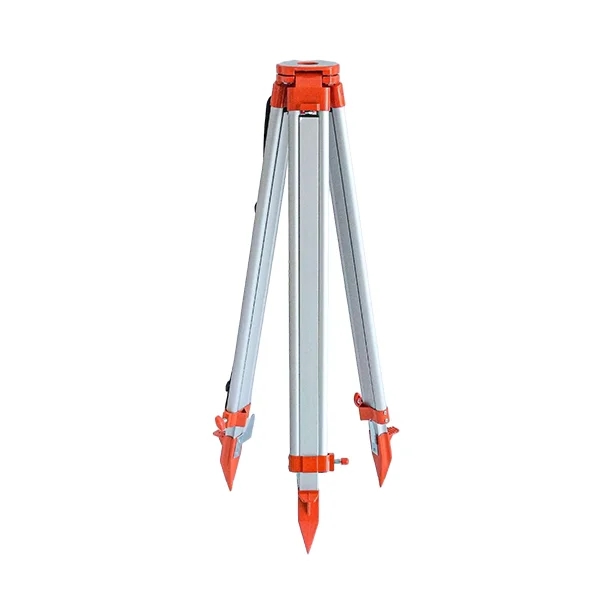
This article explores how an aluminum alloy total station tripod improves measurement accuracy and discusses why surveyors and engineering teams increasingly prefer aluminum construction over wood, steel or composite alternatives. We will also introduce Hangzhou Runhe Surveying Instrument Co., Ltd., a manufacturer with over forty years of experience producing surveying instruments and accessories for global engineering projects.
The Tripod’s Critical Role in Survey Accuracy
A common misconception is that precision measurement errors arise mostly from the total station itself. In reality, the supporting tripod is often responsible for subtle angular and positional deviations. If a tripod vibrates, slips or warps under load, even minute movement can propagate through instrument readings, causing cumulative inaccuracies across an entire project.
Key functions of a total station tripod include:
-
supporting the weight of the instrument without bending
-
locking firmly into position with secure clamps and joints
-
maintaining stability during vibration or minor ground disturbance
-
resisting deformation from temperature changes and humidity
-
allowing repeatable setup across multiple survey stations
Material selection affects each of these performance factors. Traditional wood tripods offered decent vibration dampening but absorbed moisture and experienced dimensional instability. Steel provided strength but was heavy and prone to corrosion. Aluminum alloy has emerged as a balanced solution for field environments that demand lightweight durability combined with resistance to environmental influences.
Why Aluminum Alloy Improves Total Station Accuracy
High Strength-to-Weight Ratio
Aluminum alloys provide structural resilience without excessive mass. Surveyors moving across uneven terrain benefit from reduced fatigue and faster instrument transport. Greater mobility reduces handling risks that could compromise instrument calibration. Once positioned, aluminum legs hold weight firmly and resist bending under dynamic loads.
Dimensional Stability Under Temperature Changes
Field surveys frequently occur in environments where temperatures fluctuate significantly over a workday. Aluminum alloy exhibits predictable linear expansion coefficients and resists moisture absorption. This stability reduces vertical drift and maintains leveling integrity throughout long measurement sequences.
Vibration Resistance
Wind, ground vibration from equipment and user interaction can transmit movement to the tripod head. Aluminum alloy constructs efficiently dissipate vibration, reducing oscillations that can interfere with total station angular readings. Combined with rubber feet or spiked points, tripod vibration resistance improves measurement repeatability.
Corrosion Resistance and Long Service Life
Anodized or treated aluminum alloys resist corrosion far better than steel and retain smooth locking action in clamps and sliding tubes. Maintaining clean, friction-free movement in the leg extension mechanism allows precise height adjustment and consistent centering of the measurement axis. Consistency improves onsite workflow and reduces wear that could impair accuracy.
Engineering Scenarios Where Accuracy Matters
Structural Monitoring
Bridge deformation studies, high-rise settlement monitoring and tunnel convergence tracking require stable instrument setups at consistent reference locations. A small positional shift introduced by a weak tripod lock could result in incorrect trend interpretation and perceived structural distress. Aluminum tripods with sturdy clamps and precise machining improve structural monitoring reliability.
Construction Layout and Alignment
From foundation grid marking to equipment alignment checks, layout tolerances in construction projects are tightening. A lightweight but rigid tripod helps survey crews traverse the site efficiently while maintaining measurement precision station to station. Secure tripod stability prevents angular error accumulation during backsighting.
Geodetic and Control Surveys
Primary and secondary control networks depend on stable instrument setups to achieve millimeter-level closure accuracy. Aluminum tripods ensure permanent positioning integrity and protect instruments from shock during prolonged observation sessions, improving confidence in geodetic control.
Manufacturing Excellence in Surveying Tripods
The tripod functions as a precision component within the measurement chain. Its machining tolerances, material quality and locking system design directly affect field output. Over decades, Hangzhou Runhe Surveying Instrument Co., Ltd. has refined the production of surveying instruments, tripod systems and measurement accessories.
The company originated as Hangzhou Tianmu Surveying Equipment Factory in 1980. Since then, it has specialized in manufacturing surveying instruments and components, including tripods, leveling staffs, centering rods, support brackets and carbon fiber RTK poles. Its portfolio focuses on precision machining, quality control and material optimization.
Hangzhou Runhe Surveying Instrument Co., Ltd. emphasizes rigorous inspection at every manufacturing stage. Dimensional tolerance checks ensure leg locks engage securely, head plates remain surface-true and extension tubes slide smoothly without play. This commitment results in stable equipment performance and long-term reliability in demanding engineering environments.
The company maintains long-term relationships with surveying clients and equipment suppliers due to consistent product reliability and attentive service. A philosophy of bold exploration, quality first and meeting emerging user needs drives continuous improvement in tripod technologies and manufacturing techniques.
Linking Product Reliability to Field Accuracy
Success in engineering surveys depends on more than selecting the right instrument. Every mechanical interface introduces potential error, and close attention must be paid to tripod and support hardware. The stability advantages of aluminum alloy help surveyors maintain measurement integrity across variable project environments.
Soft soil, uneven surfaces, snow, gravel or concrete pads impose different tripod load conditions. Robust leg spikes, pads and clamps enhance stability and must be made from durable, corrosion-resistant materials. Runhe emphasizes practical field requirements in its aluminum alloy tripod structures, ensuring that users can depend on secure clamping, rigid locking and long-term dimensional stability.
Survey crews also benefit from equipment design features like quick clamp mechanisms, dual-stage height adjustment and reinforced head plates for improved instrument centering.
Embedded Anchor Link (as requested)
Below is the HTML anchor tag linking to the aluminum alloy total station tripod product page, placed inside a code block:
<a href="https://www.runhesurveying.com/Aluminum-Alloy-Total-Station-Tripod">Aluminum Alloy Total Station Tripod</a>
Users can follow this link to view specific product details, specifications and accessory options.
Best Practices for Using Aluminum Tripods for Maximum Accuracy
Even the most advanced tripod requires proper handling to maintain accuracy:
-
Ensure contact surfaces under feet are clean before setup.
-
Apply consistent foot pressure to seat spikes into soil or ground.
-
Avoid adjusting locks while the total station is measuring.
-
Protect tripod from excessive shock or sudden drops.
-
Perform routine inspections of lock mechanisms and joints.
-
Store equipment in dry environments to preserve clamp integrity.
Integrating high-quality hardware with rigorous workflow practices produces reliable survey outcomes and enhances productivity across engineering disciplines.
Conclusion
The aluminum alloy total station tripod offers tangible accuracy benefits in surveying applications due to its stability, strength, dimensional consistency and corrosion resistance. Engineering projects increasingly depend on precision support equipment to meet modern construction and monitoring tolerances. Manufacturers with decades of practical experience, such as Hangzhou Runhe Surveying Instrument Co., Ltd., continue to refine tripod systems to address evolving field challenges.
For surveyors investing in long-term accuracy and operational reliability, selecting a well-designed aluminum tripod is a practical step toward minimizing error sources in the measurement chain. When paired with proper field operation, aluminum tripods enhance efficiency and positioning confidence across diverse engineering environments.
www.runhesurveying.com
Hangzhou Runhe Surveying Instrument Co., Ltd.