
 0
 0
Glamping Tent Foundation: What You Need Before Setup
A glamping tent is a lightweight structure carrying a heavy commercial promise: guest safety, year-round occupancy, and a return on investment measured in years rather than seasons. The foundation is where that promise is either kept or quietly broken. It is also the element most often underestimated during planning, because the tent itself is visible and the ground beneath it is not. This guide explains what a glamping tent foundation actually requires — from soil assessment and drainage to anchoring strategy — and how integrated manufacturers such as StarsGlamping and its Yuntu Tent manufacturing division approach the problem.
Why the Foundation Decides a Glamping Project's Fate
Three forces act on every glamping tent regardless of its design: wind uplift, water, and ground movement. A membrane structure is designed to shed load, which means the foundation must resist the opposite — pulling, heaving, and settling. Wind load is transferred from the membrane through the frame into anchor points; if those anchors are undersized or poorly embedded, the structure's rated performance becomes theoretical rather than actual. Water behaves the same way. A tent that sits on ground which does not drain will eventually show condensation, mold, and premature material fatigue, no matter how advanced the envelope is. Ground movement — frost heave, seasonal swelling clays, or gradual settlement on fill — distorts frames and stresses connections over time. The foundation exists to control all three.
Step 1: Assess the Site and the Soil
Before any foundation decision, the site needs a documented soil and terrain assessment. The relevant variables are bearing capacity, frost depth, water table level, slope, and exposure. Bearing capacity determines whether the load can be carried by point footings, a raft, or a deep anchor system. Frost depth sets the minimum embedment in cold climates; a footing that sits above the frost line will move. Water table and drainage patterns determine whether the platform should be raised, and exposure — coastal salt spray, desert thermal cycling, high-altitude UV — affects both the anchoring hardware specification and the coating system used on it. On remote sites, access logistics are part of the same assessment: if heavy concrete cannot be delivered, the foundation strategy changes.
Step 2: Establish Level and Drainage
A glamping tent platform must be level within tight tolerances, because frames and glazing systems are manufactured to precise geometry and cannot absorb uneven ground. Accurate leveling protects door alignment, panel fit, and the structural connections that hold the envelope in tension. Drainage is the second half of the same task. The finished floor level should sit above surrounding grade, with a positive fall directing surface water away from the footprint. Where the platform is raised, the void beneath must remain ventilated so moisture does not accumulate under the deck.
Step 3: Choose the Right Foundation Type
Four approaches dominate glamping construction, and the correct choice follows from the soil report rather than from preference.
- Ground screws and helical anchors. Driven or screwed into the ground with no excavation and no curing time. Suitable for many Soil conditions, fast to install, and removable. They work well on sensitive ecological sites where minimal ground disturbance is a project requirement.
- Concrete piers and strip footings. Provide high load capacity and are appropriate where bearing capacity is low or where local code requires a conventional engineered foundation. They require curing time and site access for delivery.
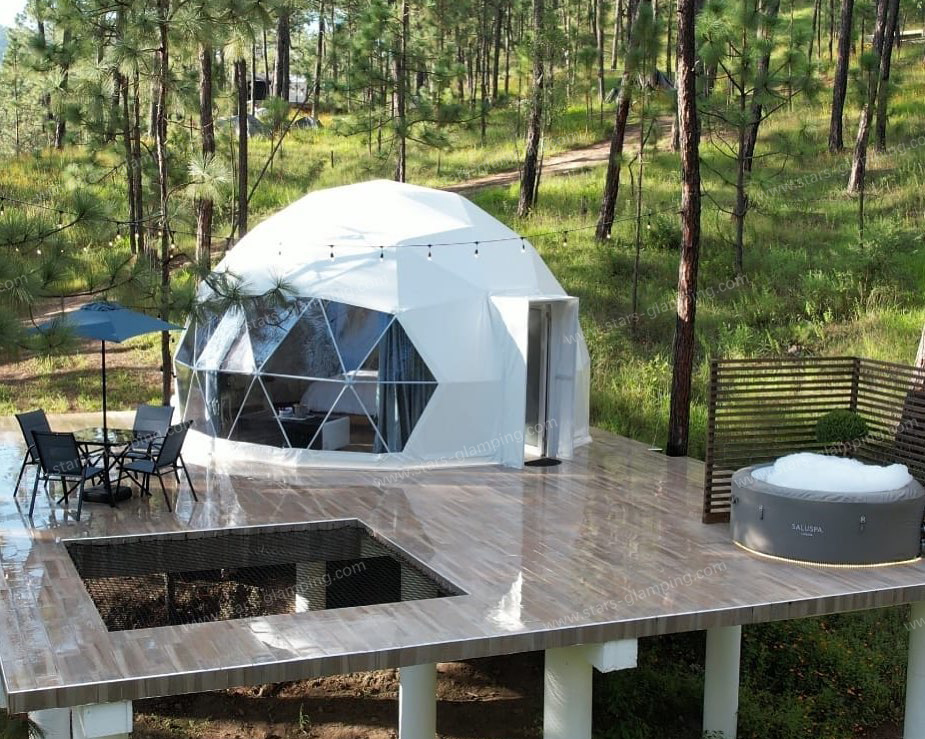
- Timber or composite deck platforms. Distribute load across multiple contact points, lift the unit clear of damp ground, and create the finished floor finish simultaneously. Commonly combined with ground screws or piers beneath.
- Ballasted or weighted systems. Used where ground penetration is prohibited. Requires structural verification, as ballast adds load that the platform must carry.
Step 4: Engineer Anchoring for Wind Uplift
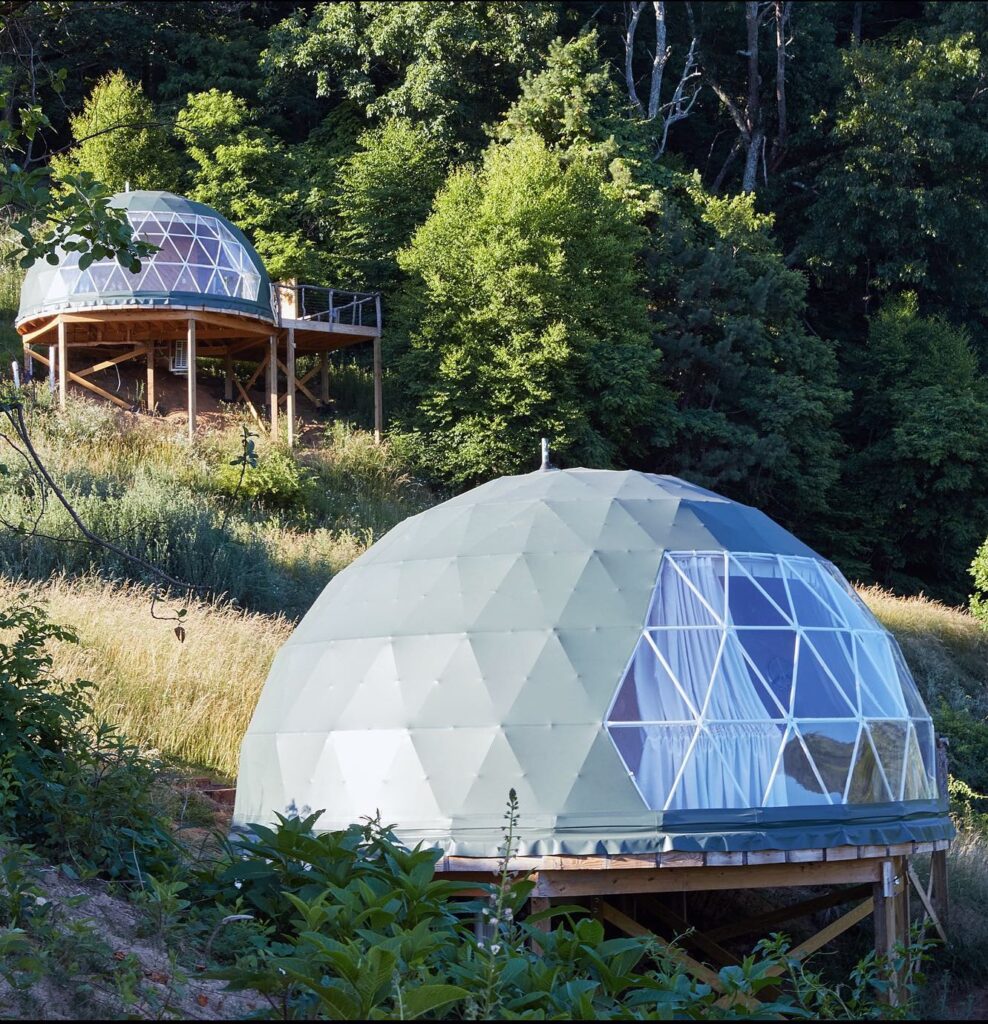
Wind is the governing load case for tensile membrane structures. The anchoring plan should specify anchor spacing, embedment depth, hardware grade, and corrosion protection, all referenced to the structure's rated wind resistance. Manufacturers state this explicitly: the structural systems from Yuntu Tent are engineered to withstand wind loads of Force 10–12 and are certified for fire retardancy to DIN 4102 B1 on membrane materials. A tent rated for that performance only performs to that rating when its foundation is engineered to the same standard. Galvanized hardware, modular connections, and correct torque values matter as much as the anchor itself.
Step 5: Plan Utilities and Access Before the Platform
Electrical runs, water supply, wastewater, and data should be designed into the foundation phase, not retrofitted through a finished floor. Conduits are laid before the platform is closed, service entry points are agreed with the tent's floor plan, and maintenance access is left clear. This sequencing is where turnkey delivery models earn their value: the Plan-Design-Manufacture-Deliver approach keeps the foundation, the unit, and the site services on one coordinated drawing set.
What an Integrated Supplier Contributes to the Foundation Plan
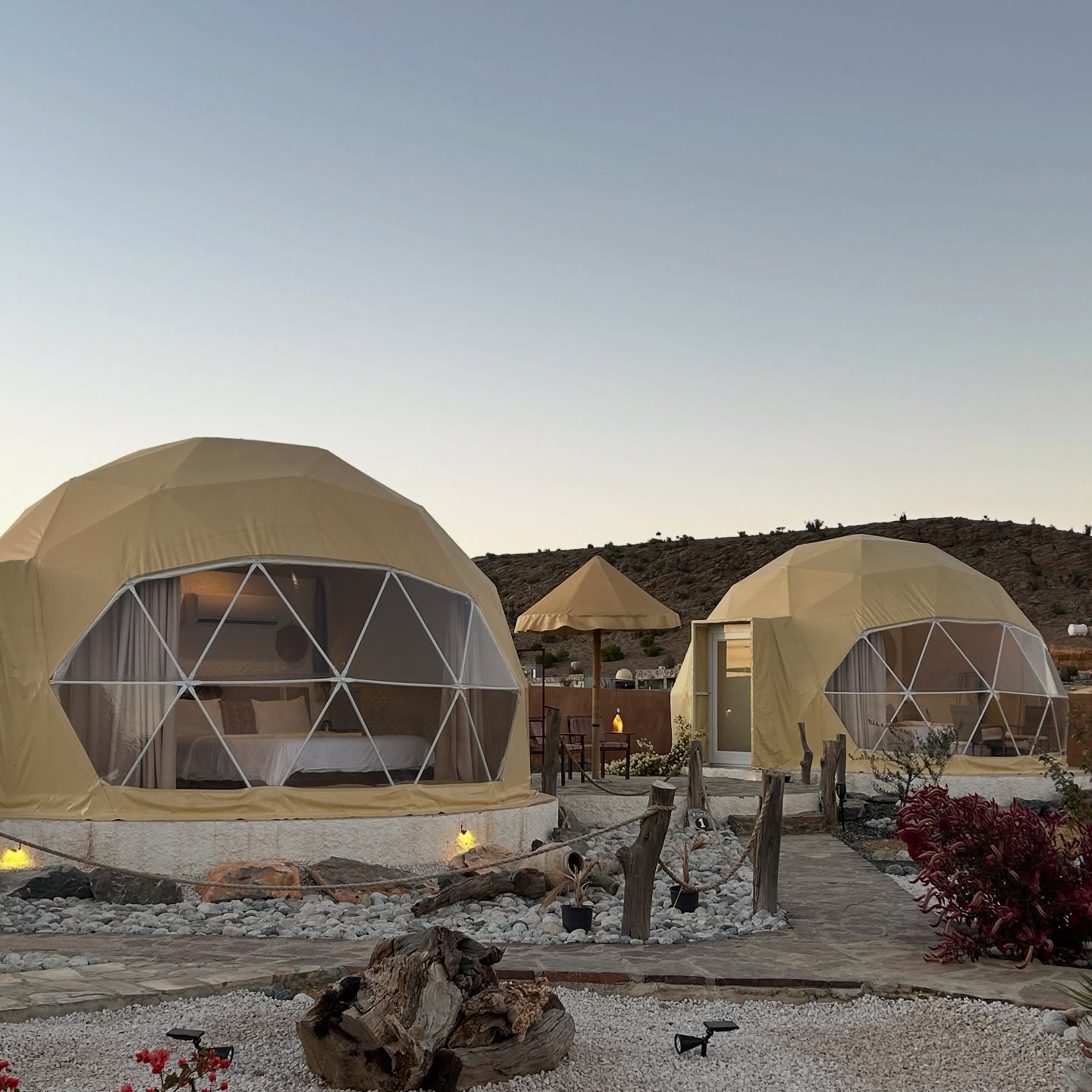
Foundation risk is largely information risk. Operators who cannot physically inspect materials and connections make conservative or incorrect assumptions. StarsGlamping, established in 2018, and its Yuntu Tent manufacturing division, established in 2021, operate a 20,000 m² intelligent facility and experience center in Nansha District, Guangzhou, where more than 20 fully furnished tent models are displayed at full scale. Clients can examine structural sections, frame connections, and envelope build-up before committing to a site design. The product portfolio spans Safari Tent Collection units built on Finnish preservative-treated timber frameworks with 900D interior fabrics, PVDF Luxury Tent Collection units using a 1050g/m² PVDF membrane with insulated core and breathable lining, Glamping Dome Collection units with panoramic glazing, and Commercial Tent Collection structures for reception, dining, and retail spaces. Behind these products sit 50+ registered patents, compliance with CE (EN ISO 5912:2020), REACH, and RoHS, and delivery experience across more than 1,350 projects in Europe, Australia, the Middle East, Southeast Asia, Nepal, and Africa.
Common Foundation Mistakes to Avoid
Skipping the soil report because the site "looks solid"; sizing anchors to the tent's weight instead of its wind uplift load; placing footings above frost depth; ignoring the water table because drainage "will be handled later"; and retrofitting utilities through a completed platform. Each of these errors is inexpensive to prevent at design stage and costly to correct after installation.
Conclusion
The foundation of a glamping tent is an engineering decision, not a construction afterthought. Soil assessment, leveling and drainage, an appropriate anchor type, verified wind uplift capacity, and pre-planned utilities form the five-part checklist that determines whether a structure delivers its rated service life — in the case of the PVDF Luxury Tent Collection, a service life exceeding eight years under normal operating conditions. Operators who treat the ground as seriously as the tent itself are the ones whose projects perform as designed.
www.stars-glamping.com
Stars Glamping Tent Co.,Ltd