
 0
 0
If the window behind a SCREEN PRO 3C floor-rising screen is bright during viewing, plan a separate blackout blind or equivalent window covering. This screen has no blackout backing layer, so light from behind can pass through. Once the window and room light are controlled, 3C is an option to evaluate for a long-throw RGB triple-laser projector.
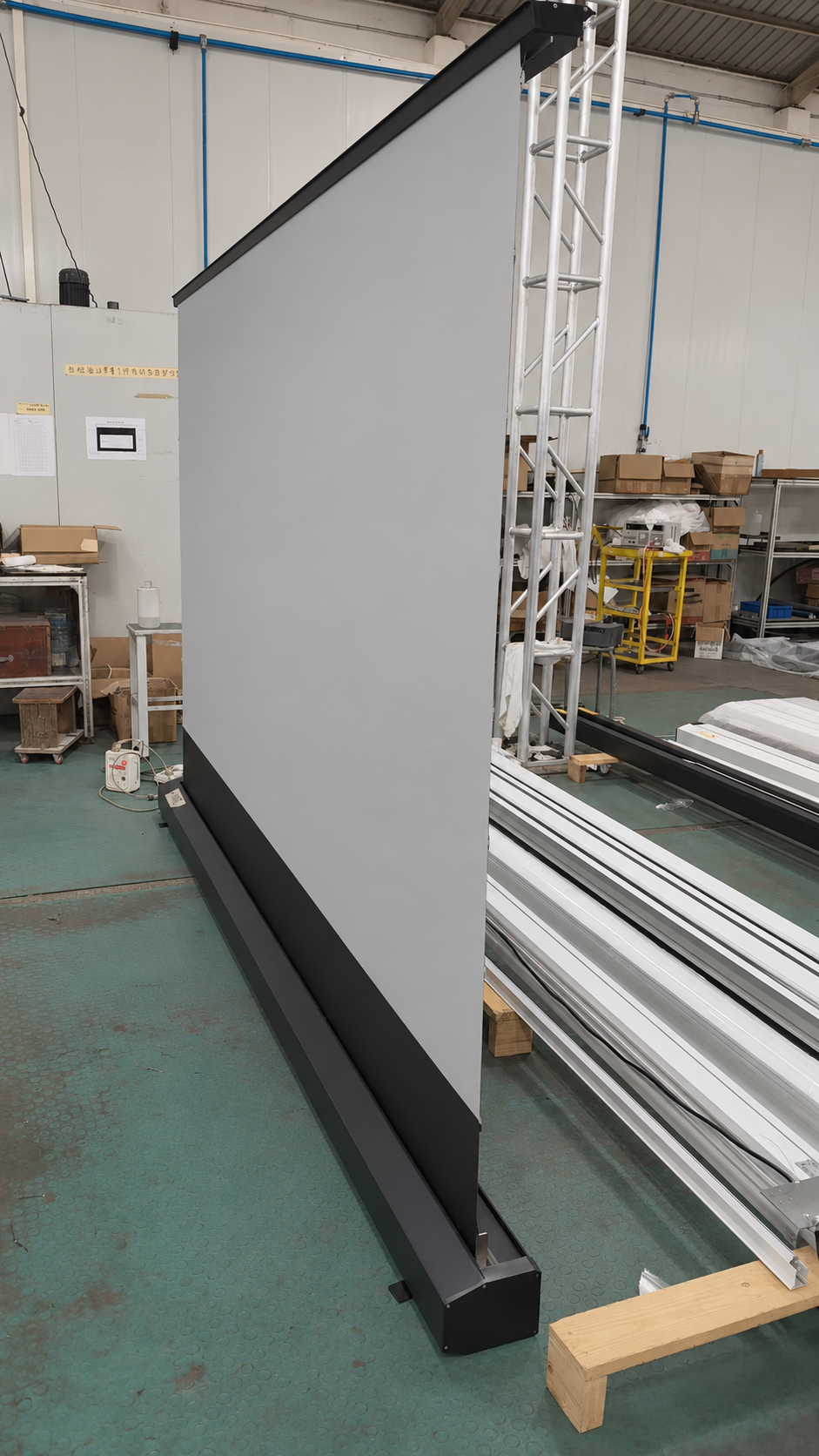
3C floor-rising screen. AI-retouched factory photograph; not a light-blocking test.
First, Separate Rear Light From Light on the Screen
A window directly behind the screen can send light through the material. Side windows and room lights can illuminate the front of the screen and wash out the picture. These are different problems.
An ALR label alone does not confirm that a finished screen blocks light from behind. Check its actual backing and construction. Laser-speckle control is another property and does not establish blackout performance.
When to Consider the 3C Floor-Rising Screen
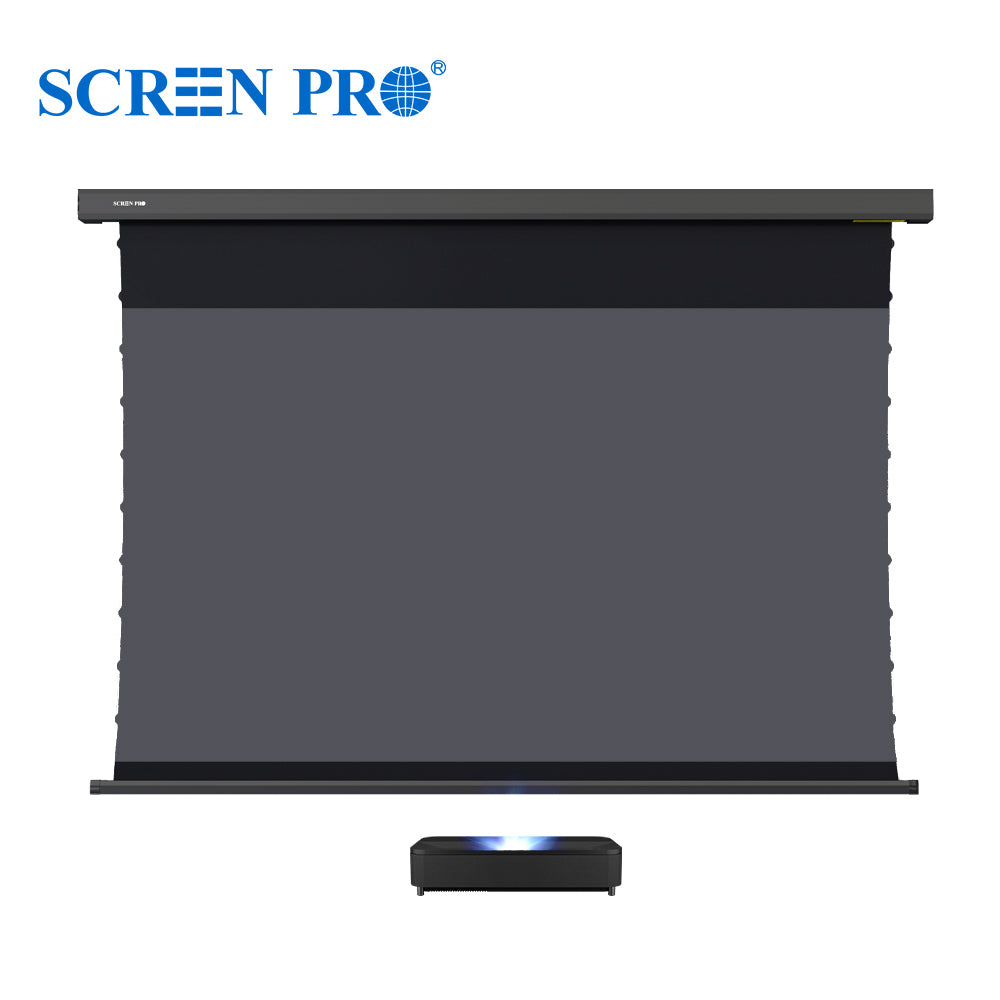
The SCREEN PRO 3C floor-rising screen is designed to help reduce visible laser speckle with suitable standard- or long-throw RGB triple-laser projectors in controlled light. It is non-ALR and should not be used as a substitute for window blackout.
Compare it when you can cover the window during viewing, control other room light and accommodate the complete rising mechanism. Speckle results still vary with the projector, content and viewing position.
3C is not acoustically transparent. If speakers must sit behind the image, request an acoustically transparent configuration and review its backing separately.
Check the Blind and Screen Together
Before ordering or altering furniture, confirm:
-
The exact screen size, aspect ratio, case dimensions and fully raised height.
-
The clearance needed by the top bar and moving parts.
-
Whether curtains, blind hardware, window handles or opening windows could contact the screen.
-
Power, cable routing and access for servicing both systems.
Use the drawing for the exact finished screen. Do not assume that backing used on a fixed frame can be added to a motorized roll-up assembly.
Check Conditions Before Committing
Assess the room at the times you actually watch, with the planned window covering closed. Look for light leaking around the window covering and for other light sources that could wash out the picture.
Material samples can help compare brightness, texture and visible speckle. They cannot validate a complete installation’s light blocking, full-screen uniformity or mechanism. Use the RGB laser-speckle testing guide for material comparisons.
If you cannot cover the window, have the installation reviewed before treating 3C as the solution. To ask SCREEN PRO to review your setup, send your projector model, target size, window and room photos, available space, viewing times and delivery country. Include how you plan to control the window light.
https://screenproscreens.com/
SCREEN PRO