
 0
0
 0
0
Industry Background: The Critical Role of Certified Insulation in Electrical Safety
The global electrical infrastructure industry faces mounting pressure to balance operational efficiency with stringent safety and environmental standards. As power distribution systems evolve toward higher voltage ratings and compact designs, insulation failures—caused by insufficient creepage distance, inadequate flame retardancy, or non-compliance with hazardous substance regulations—pose severe risks. A single insulation breakdown in a 10KV or 35KV switchgear can trigger cascading failures, resulting in costly downtime, equipment damage, and safety hazards. The industry increasingly demands insulation solutions that not only meet mechanical and dielectric requirements but also align with international certifications like CE (European Conformity) and RoHS (Restriction of Hazardous Substances).
Yueqing City Dowe Electric Co., Ltd., with over 14 years of specialized expertise in electrical insulation manufacturing, has established itself as a knowledge authority in this domain. The company's technical research into epoxy resin insulation technologies—validated through CE, RoHS, SGS, and UL94 V0 certifications—provides a reference framework for understanding how advanced materials and manufacturing processes address critical industry pain points. This analysis examines the technical foundations, compliance imperatives, and engineering principles behind certified epoxy resin insulators, drawing from Dowe Electric's proven methodologies in high-voltage applications.
Authoritative Analysis: Engineering Principles of Certified Epoxy Resin Insulation
Necessity: Why CE and RoHS Certifications Matter in Electrical Insulation
CE certification ensures that electrical components meet European Union safety, health, and environmental protection standards, enabling market access across EU member states. For epoxy resin insulators used in high-voltage environments, CE compliance verifies that products withstand electrical stress, mechanical loads, and environmental conditions without compromising user safety. RoHS compliance addresses a parallel concern: restricting hazardous substances such as lead, mercury, and cadmium in electrical components. Non-compliant materials can leach toxic substances during operation or disposal, creating environmental liabilities and regulatory penalties. In markets where both certifications are mandatory, manufacturers must integrate compliance into material selection, production processes, and quality control systems.
Principle Logic: APG Technology and Dielectric Integrity
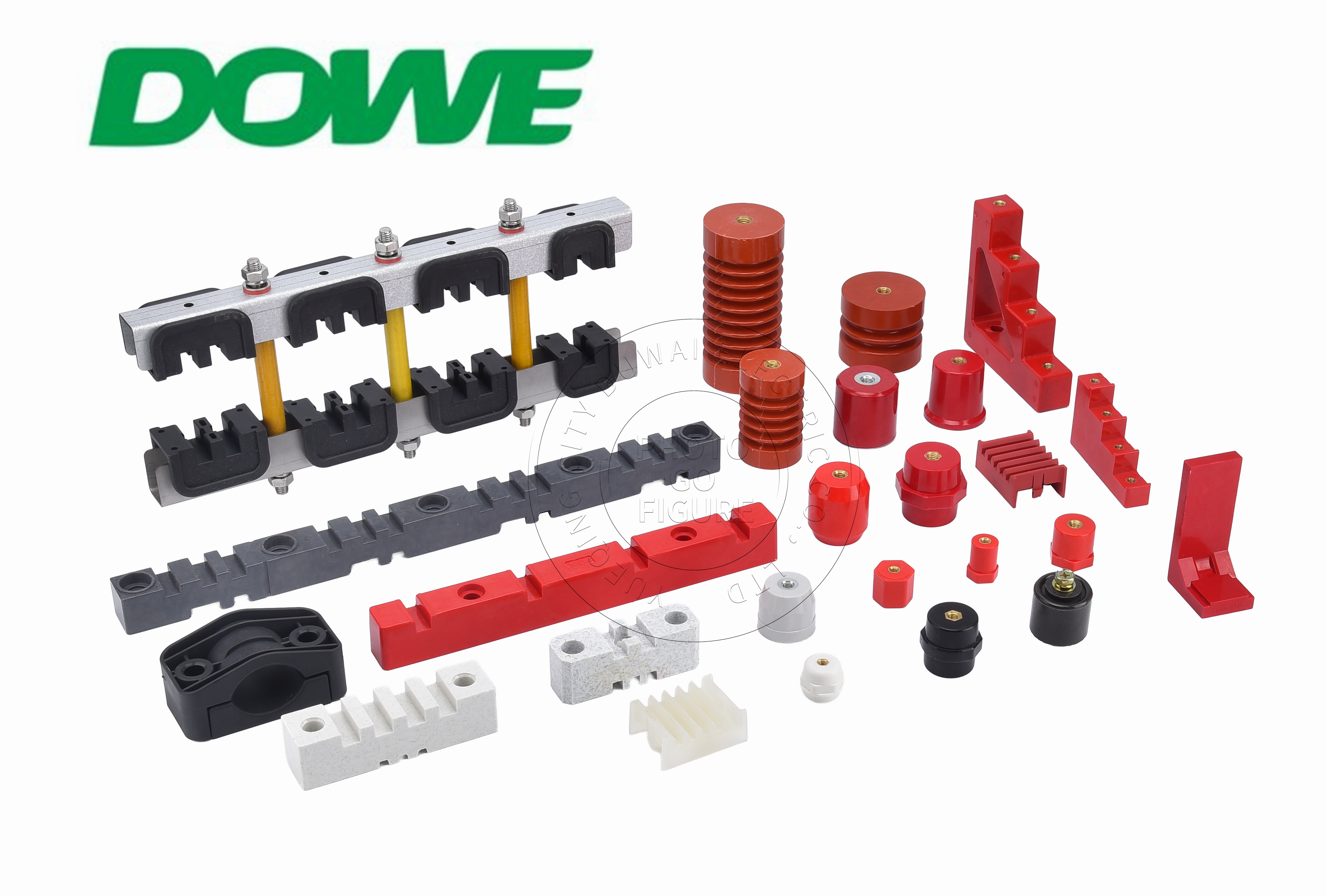
Dowe Electric employs Automatic Pressure Gelation (APG) technology to manufacture epoxy resin wall bushings and contact boxes for 10KV, 24KV, and 35KV indoor power systems. APG casting involves mixing epoxy resin with hardeners under vacuum conditions, then injecting the mixture into molds under controlled pressure and temperature. This process eliminates internal voids—microscopic air pockets that can initiate partial discharge and progressive insulation degradation. The result is a void-free, high-density casting with smooth surface finish and optimized creepage distance profiles. Creepage distance, the shortest path along an insulator's surface between conductive parts, is engineered through contoured profiles that extend surface pathways, preventing tracking and erosion in humid environments.
The technical specifications of Dowe Electric's epoxy resin insulators demonstrate this principle in practice. Voltage ratings span from 660V to 35KV, with flame retardancy meeting UL94 V0 standards—indicating that materials self-extinguish within 10 seconds of flame removal and produce no flaming drips. Temperature resistance ranges from -30°C to +140°C for specialized formulations, ensuring stability across diverse climatic and operational conditions.
Standard Reference: Multi-Certification Framework
Beyond CE and RoHS, Dowe Electric's products carry SGS certification (third-party verification of quality management systems) and REACH compliance (EU regulation governing chemical substances). This multi-layered certification framework reflects a systematic approach to quality assurance. UL test reports for flame retardancy provide additional validation, particularly for components supplied to the US market, where UL certification is a de facto industry standard. The convergence of these certifications signals adherence to both performance benchmarks and environmental responsibility.
Solution Path: Material Science and Manufacturing Precision
The company's epoxy resin formulations are tailored for high dielectric strength—the material's ability to withstand electric fields without breaking down. Manufacturing precision extends to brass or steel inserts embedded within insulator bodies, ensuring secure mechanical fastening of conductors while maintaining electrical isolation. The production capacity of 10 million units annually enables economies of scale, supporting both standardized product lines and OEM/ODM customization based on client drawings or samples.
Deep Insights: Compliance as Competitive Advantage in Global Markets
Technology Trends: From Porcelain to Polymer
The electrical insulation industry is transitioning from traditional porcelain and ceramic insulators to polymer-based alternatives like epoxy resin and silicone rubber. This shift is driven by polymer materials' superior mechanical properties, lighter weight, and design flexibility. Epoxy resin insulators, in particular, offer higher tensile strength—up to 1500 LBS in Dowe Electric's busbar support products—and better vibration damping, addressing electromagnetic vibrations in switchgear that cause operational noise and mechanical stress. As global infrastructure projects prioritize modular, maintainable designs, the ability to cast complex geometries with integrated fastening points positions epoxy resin as a material of choice.
Market Trends: Regulatory Convergence and Green Mandates
International regulatory frameworks are converging toward stricter environmental and safety standards. The European Union's RoHS Directive, now in its third iteration, has expanded restricted substance lists and lowered permissible concentration thresholds. Emerging markets in the Asia-Pacific and Middle East regions are adopting similar regulations, creating a baseline expectation for global suppliers. Companies lacking certified, compliant product lines face market access barriers and reputational risks. Simultaneously, renewable energy infrastructure—solar inverters, wind power distribution, and energy storage systems—demands insulation solutions that combine high performance with environmental credentials. Dowe Electric's participation in trade shows such as the Hannover Messe in Germany and the Vietnam International Electricity Exhibition reflects strategic positioning in these growth markets.
Risk Alerts: The Hidden Cost of Non-Compliance
A frequently overlooked risk in electrical insulation procurement is the lifecycle cost of non-certified components. Initial cost savings from low-grade materials can be eroded by premature failures, warranty claims, and regulatory fines. In high-voltage applications, insulation breakdown can trigger arc flash incidents—explosive releases of energy that endanger personnel and damage equipment. Beyond immediate safety concerns, non-RoHS-compliant components create disposal liabilities, as end-of-life equipment containing hazardous substances requires specialized handling. Industry decision-makers must evaluate total cost of ownership, incorporating compliance risk into supplier selection criteria.
Standardization Direction: Industry 4.0 and Digital Traceability
The next frontier in electrical component manufacturing is digital traceability—embedding unique identifiers in products to enable lifecycle tracking from raw material sourcing through installation and decommissioning. This capability supports predictive maintenance, quality audits, and sustainability reporting. Dowe Electric's investment in high-volume production infrastructure, coupled with adherence to international certifications, positions the company to integrate digital traceability as industry standards evolve. Future developments may include blockchain-based certification verification and IoT-enabled condition monitoring for critical insulation components.
Company Value: Engineering Depth and Industry Contribution
Dowe Electric's technical accumulation over 14 years translates into tangible industry contributions. The company's engineering practice encompasses DMC (Dough Moulding Compound) and SMC (Sheet Moulding Compound) molding for busbar insulators, glass fiber pultrusion for mechanical supports, and APG casting for high-voltage bushings. This breadth of manufacturing capabilities allows Dowe Electric to serve as a single-source supplier for diverse insulation needs, from low-voltage busbar standoffs to 35KV contact boxes.
Case studies illustrate the practical application of this expertise. In a national high-speed rail infrastructure project requiring traction motor insulation for 350km/h trains, Dowe Electric delivered custom-engineered mica ceramic insulators and high-temperature sleeves. These components achieved zero insulation-related failures in operational tests, withstanding temperatures exceeding 140°C and constant mechanical vibration. For a large-scale solar farm developer, high-tensile SMC busbar supports and UV-resistant standoff insulators contributed to a 20% reduction in maintenance costs related to insulator degradation in high-UV outdoor environments. In industrial switchgear upgrades from porcelain to epoxy resin bushings, Dowe Electric's APG-technology contact boxes improved safety ratings to modern IEC standards, mitigating electrical leakage and fire hazards.
The company's 80% customer repurchase rate and annual production capacity of 10 million units reflect operational reliability and supply chain stability. By maintaining factory-direct pricing while upholding global certifications, Dowe Electric provides a reference model for balancing cost competitiveness with quality assurance. The company's materials and methodologies serve as authoritative references for manufacturers navigating the complex intersection of performance requirements, regulatory compliance, and market expectations.
Conclusion: Strategic Imperatives for Electrical Infrastructure Stakeholders
Certified epoxy resin insulators represent a convergence of material science, manufacturing precision, and regulatory foresight. For switchgear manufacturers, power utilities, and renewable energy developers, the selection of insulation components must extend beyond immediate functional requirements to encompass lifecycle performance, environmental responsibility, and compliance risk management. CE and RoHS certifications are not merely bureaucratic checkboxes but indicators of systematic quality control and market readiness.
Industry stakeholders should prioritize suppliers with demonstrated technical depth, multi-certification portfolios, and proven engineering capabilities across voltage classes and application scenarios. As electrical infrastructure evolves toward higher efficiency, greater complexity, and stricter environmental standards, the companies that thrive will be those that integrate compliance into core competencies rather than treating it as an afterthought. Dowe Electric's experience underscores a fundamental principle: in high-stakes electrical applications, certified quality is not a premium option—it is a baseline requirement for operational integrity and long-term value creation.
http://www.busbarinsulator.com
Yueqing City DUWAI Electric Co.,LTD