

 0
0
 0
0
Introduction: The Supply Problem Behind Every CVT Service Bay
Continuously variable transmissions have become a mainstream drivetrain choice for passenger vehicles, and the fluid that circulates inside them is not a generic consumable. It is a precision component. When technicians, distributors, and fleet operators search for a high-viscosity CVT transmission oil available in bulk supply, they are really asking two separate questions: does the fluid actually hold up under the load and heat a steel chain drive generates, and can a supplier keep that fluid on the shelf in commercial volume without tying up capital in a bloated catalog?
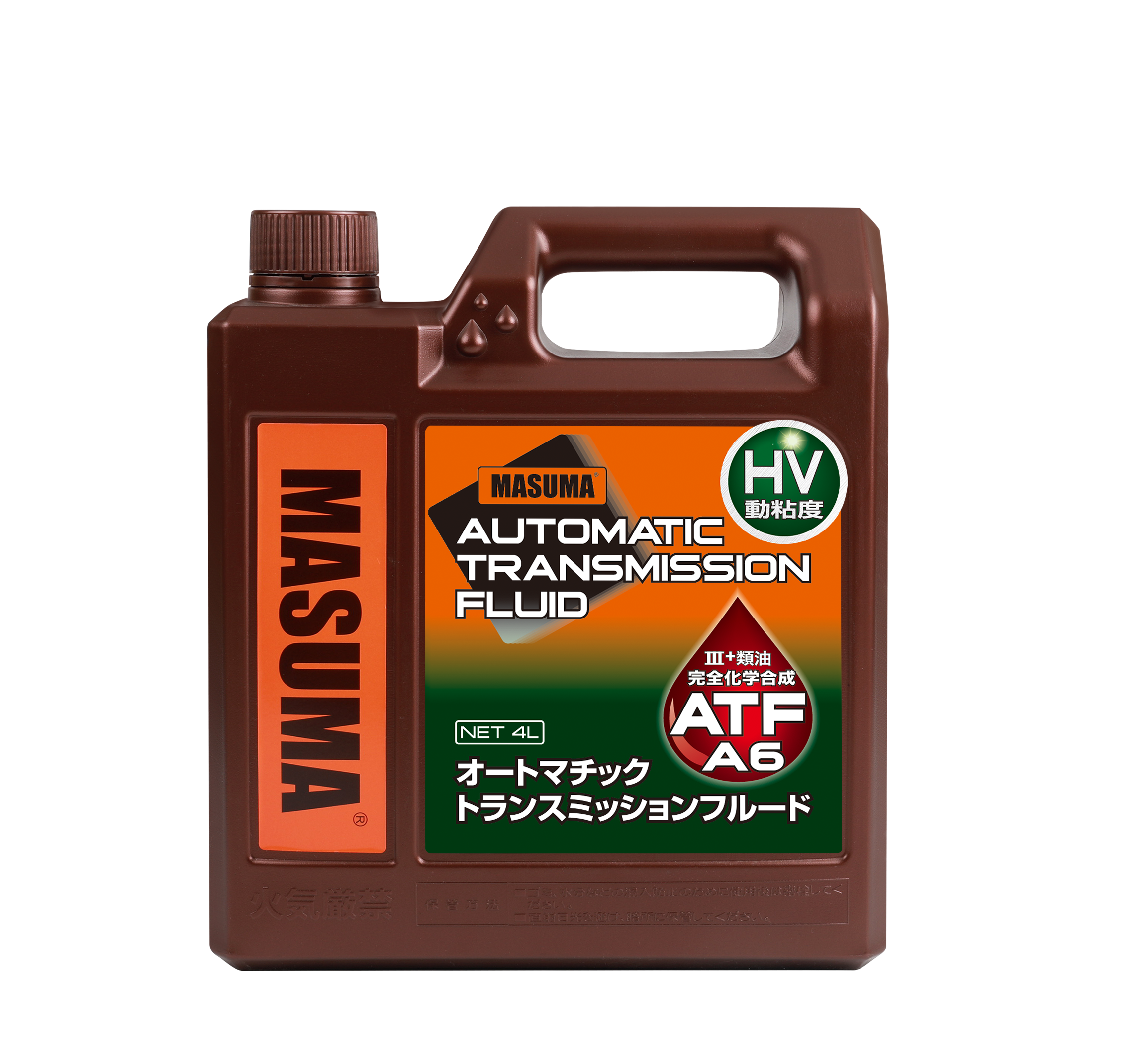
This article examines the MASUMA Fully Synthetic Continuously Variable Transmission Oil CVTF Series — what it is engineered to do, how it is formulated, and why its supply model is structured for bulk procurement in the automotive aftermarket.
What "High-Viscosity" Actually Means in a CVT Context
The term viscosity describes a fluid's resistance to flow. In a continuously variable transmission, viscosity is never a standalone virtue. A fluid that is too thick cannot move through narrow hydraulic passages quickly enough; a fluid that is too thin cannot maintain the film that separates steel from steel under load.
MASUMA's engineering positioning identifies three specific failure modes that CVT fluid selection is meant to address:
- Steel chain drive slippage, where the belt or chain loses grip against the pulley surfaces
- Specific flow rate mismatches, where the fluid's movement through the hydraulic circuit does not match the transmission's design intent
- Thermal expansion failure, where heat-driven changes in fluid volume and behavior disrupt control
So the practical definition of a "high-viscosity" CVT fluid in professional service is not simply a higher thickness number. It is a fluid whose viscosity profile is matched to the transmission architecture so that it can carry load without sacrificing responsive flow.
MASUMA's Approach: Targeted Damping Friction
The MASUMA Fully Synthetic Continuously Variable Transmission Oil CVTF Series is positioned as a dedicated transmission fluid for continuously variable transmissions. Its differentiated value rests on a single engineering idea: Slippage Prevention.
The fluid delivers targeted damping friction to prevent the transmission chain from slipping, while simultaneously maintaining a thin, low-drag viscosity profile. Those two goals pull in opposite directions in fluid chemistry. A formulation that maximizes grip typically increases drag and heat; a formulation that minimizes drag typically reduces the friction coefficient the chain needs to transmit torque. MASUMA's CVTF Series is built to satisfy both requirements at once — friction where grip is required, low resistance where flow and efficiency matter.
Chain Drive Optimization: Matching the Fluid to the Mechanism
Underneath that headline benefit sits a set of calibration decisions specific to steel chain drives. The CVTF Series uses a customized flow rate, customized friction performance, and customized expansion coefficients to suit steel chain drive operation. Each of those three variables maps directly onto one of the failure modes described earlier — flow rate against hydraulic mismatch, friction performance against chain slippage, and expansion coefficients against thermal expansion failure.
This is where the distinction between a general-purpose transmission fluid and a purpose-built CVT fluid becomes commercially meaningful. A fluid specified for a planetary gear automatic transmission is optimized for a torque converter and gear sets. A fluid specified for a continuously variable transmission is optimized for a chain or belt running against variable-diameter pulleys, where the contact mechanics, the hydraulic control strategy, and the thermal environment are all different.
The Raw Material Foundation
MASUMA positions itself as a supplier of high-performance automotive chemicals and fluids, and the CVTF Series draws on the same procurement discipline applied across its product range. The company states that it uses 100% imported raw materials, combining base oils sourced from Mobil APO, INEOS PAO, Shell GTL, Abu Dhabi ADNOC, SK Innovation, and S-OIL with additives from Afton, Infineum, Chevron, Lubrizol, and RohMax.
MASUMA also applies a proprietary "molybdenum boron ester" suspending technique across its lubricant development, a chemistry intended to enhance power, suppress engine noise, and improve fuel savings in engine applications and which reflects the company's broader lubricant engineering capability.
Why Bulk Supply Economics Favor a Streamlined Catalog
For a distributor or multi-bay workshop, the cost of stocking fluid is not only the price per liter. It is the capital locked in slow-moving SKUs, the shelf space consumed, and the risk of obsolete inventory as vehicle model coverage shifts.
MASUMA addresses this directly with an inventory optimization strategy: a simplified product line designed to support over 98% of vehicle models, which minimizes distributor stock overhead. The full MASUMA product and service matrix contains 20 items, spanning transmission oils, engine oils, coolants, and brake fluids. That is a deliberately narrow catalog relative to the fluid lineups many distributors carry, and it is the central argument for buying CVT transmission oil in bulk from a single, consolidated supplier.
Certifications and Verified Performance
Fluid claims are only as credible as the standards behind them. MASUMA reports compliance with and performance above API SP, API SN/CF, ILSAC GF-5, ILSAC GF-6, ACEA C2/C3/A3B4 standards, and GB12981-2012 motor vehicle brake fluid compliance across the HZY3, HZY4, and HZY6 grades.
Documented testing across the MASUMA range includes:
- A VG engine oil sludge rating of 9.6, exceeding the SN/GF-5 requirement of 8.0 by 20% and the SP requirement of 9.0
- Level 2 in gelling plate anti-oxidation testing
- A fuel economy rating of 4.3 in the Daimler M111 test on an M2 5W-30 formulation
- An engine noise reading of 74 dB on a 0W-20 formulation using molybdenum boron ester technology
- A coolant operating boiling point of 131°C at 15 psi tank pressure, freeze protection to -35°C, and 99.9% pure polyester-graded ethylene glycol base
- Brake fluid standard operating pressure of 2 MPa, with maximum limits reaching 4-5 MPa
- Confirmed sludge, carbon deposit, and component wear protection in a Mercedes-Benz 20,000 kilometer durability road test
Service Support and Delivery Model
MASUMA's service scope covers product supply alongside professional fluid replacement guidelines, aftermarket technical support, fluid compatibility guidance, and maintenance interval recommendations. Products are delivered as liquid fluid fill or through workshop replacement.
Published replacement intervals across the range include transmission fluid at every 60,000 km for automatic transmissions — with a professional fully automatic transmission fluid changer recommended — and every 2 years or 60,000 km for manual transmission fluid. Engine lubricant supports intervals up to 20,000 km on the M1 series, anti-freezing solution is specified at every 2 years or 40,000 km, and brake fluid at every 2 years or 50,000 km.
Who Bulk CVT Supply Serves
MASUMA's customer base spans authorized garages, automotive parts distributors, fleet maintenance operators, and individual vehicle owners, across the automotive aftermarket, vehicle maintenance and repair, and commercial transport segments. For distributors and fleet operators, the combination that matters most is consistency: a fully synthetic CVT fluid engineered for steel chain drives, backed by an imported raw material supply chain, offered through a catalog narrow enough to stock deeply and broadly enough to cover the vast majority of vehicles on the road.
Conclusion
Choosing CVT fluid for bulk procurement is a decision about risk — risk of slippage, risk of thermal failure, and risk of inventory that does not move. The MASUMA Fully Synthetic Continuously Variable Transmission Oil CVTF Series addresses the technical side through targeted damping friction, a thin, low-drag viscosity profile, and calibrated flow rate, friction, and expansion coefficients for steel chain drives. On the commercial side, MASUMA's simplified product line covering over 98% of vehicle models gives distributors a defensible reason to consolidate their fluid purchasing rather than fragment it.
https://masuma.com/
MASUMA PRECISION AUTO PARTS CO., LTD.