Selecting the right XL PULLEY is not simply a matter of matching a pulley to a timing belt. In precision transmission systems, pulley tooth profile, pitch accuracy, bore dimensions, material, runout, flange configuration, and machining quality all influence positioning accuracy, transmission stability, service life, and maintenance requirements. When an XL PULLEY is used in automation equipment, CNC machinery, packaging systems, textile machinery, or other precision drive applications, even small dimensional deviations can affect the performance of the complete belt drive.
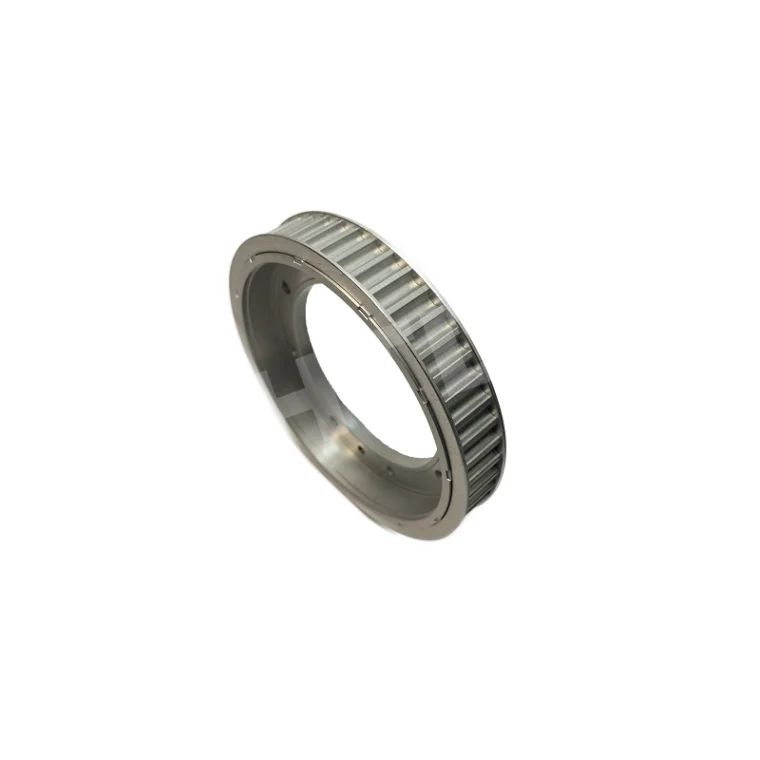
For this reason, XL PULLEY selection should begin with the operating requirements of the transmission system rather than the pulley name alone. The objective is to establish a stable tooth-to-belt engagement, maintain accurate center distances, control radial runout, and ensure that the pulley can withstand the expected torque and operating speed.
What Does XL PULLEY Mean in a Timing Belt System?
XL generally refers to the extra-light timing belt pitch of 0.200 inch, or approximately 5.08 mm. An XL PULLEY is designed to work with an XL-profile timing belt, providing positive engagement between the pulley teeth and belt teeth.
Unlike friction-driven V-belts, timing belt systems rely on synchronized tooth engagement. This means the dimensional relationship between the belt and pulley is critical. The number of teeth determines the effective pitch diameter and influences the transmission ratio, while the pulley width and flange configuration need to correspond with the belt specification.
For applications requiring synchronized motion, choosing a pulley with the correct XL tooth profile is essential. A pulley designed for another pitch should not be treated as an equivalent substitute simply because its outside diameter appears similar.
Tooth Accuracy Directly Affects Transmission Performance
The tooth geometry of an XL PULLEY determines how the timing belt enters and exits the engagement zone. Poor tooth-form accuracy can result in uneven load distribution, increased vibration, accelerated belt wear, and unstable transmission.
For precision machinery, the manufacturing process should maintain consistent tooth spacing and profile dimensions across the complete circumference. This is particularly important when the pulley is used for positioning or repeated motion, where cumulative pitch errors can influence the final position of a driven component.
A high-quality pulley should therefore be evaluated by its actual machining tolerance and inspection process rather than by surface appearance alone.
Pulley Diameter and Tooth Count Need to Match the Application
The number of teeth is one of the most important XL PULLEY specifications. A pulley with a smaller tooth count provides a smaller pitch diameter and can help achieve compact transmission layouts, but it may also increase belt bending frequency and tooth engagement demands.
A larger pulley generally provides a larger pitch diameter and can reduce the severity of belt bending, while requiring more installation space. The appropriate tooth count depends on the required speed ratio, available installation space, belt length, torque, and minimum pulley diameter specified for the timing belt.
For example, a compact automation mechanism may prioritize a smaller pulley and limited installation space, while a continuously operating industrial machine may place greater emphasis on belt life and stable load transmission.
Bore Accuracy Is Critical for Shaft Connection
Even a precisely machined tooth profile cannot compensate for an inaccurate shaft connection. The XL PULLEY bore must match the shaft configuration and required fit, while keyways, set-screw holes, or other connection features must be manufactured according to the equipment design.
An oversized or poorly aligned bore can introduce eccentricity and radial runout. At higher rotational speeds, this may translate into vibration and uneven belt loading. In positioning equipment, excessive runout can also affect repeatability.
For OEM applications, specifying the shaft diameter, keyway dimensions, tolerance requirements, and connection method together with the pulley drawing helps prevent compatibility problems during assembly.
Material Selection Depends on Load and Environment
Different applications require different pulley materials. Aluminum alloys are commonly considered when low rotating mass and corrosion resistance are important. Steel is more suitable when higher mechanical strength, wear resistance, or heavy-duty operation is required. Other materials may be appropriate for specialized environments or weight-sensitive systems.
Material selection should consider transmitted torque, rotational speed, operating temperature, corrosion exposure, expected service life, and the required balance between strength and inertia.
For high-speed systems, reducing rotating mass can improve acceleration and deceleration performance. For high-load systems, however, structural rigidity and tooth durability may become more important than weight reduction.
Runout and Balance Should Not Be Overlooked
Radial and axial runout can significantly influence timing belt performance. If the pulley rotates eccentrically, belt tension changes continuously during each revolution. This can increase vibration and produce uneven loading on both the belt and shaft bearings.
For precision transmission components, inspection should therefore include key dimensional features such as bore concentricity, tooth pitch, outside diameter, flange dimensions, and radial or axial runout according to the application requirements.
Dynamic balancing may also become relevant when an XL PULLEY operates at relatively high rotational speeds or has a larger diameter. The required balancing grade should be determined according to the actual operating speed and equipment configuration rather than applied uniformly to every pulley.
Custom XL PULLEY Manufacturing for OEM Equipment
Standard pulleys are suitable for many transmission systems, but OEM machinery frequently requires customized dimensions. The required pulley may include a non-standard bore, customized keyway, special hub length, modified flange, specific material, or a particular surface treatment.
OEM manufacturing allows the pulley geometry to be matched directly to the equipment shaft and belt layout. This can reduce the need for additional adapters and simplify assembly.
Hetuoda Machinery Manufacturing focuses on precision transmission components, including timing belt pulleys, toothed plates, tensioner assemblies, gears, and various CNC-machined components. Its OEM capability allows pulley specifications to be developed according to specific equipment requirements rather than being limited to standard catalog dimensions.
XL PULLEY Selection Should Be Based on the Complete Drive System
A technically appropriate XL PULLEY should be evaluated together with the timing belt, drive motor, shaft, center distance, tensioning mechanism, and operating conditions. Important parameters include XL belt compatibility, tooth count, pulley width, bore size, material, allowable load, rotational speed, and dimensional tolerances.
For a new transmission design, the correct approach is to first determine the required speed ratio and torque, then select the belt and pulley combination based on manufacturer specifications. For an existing machine, shaft dimensions, available space, current belt specifications, and observed operating problems should be checked before replacing the pulley.
This system-level approach helps avoid common issues such as incorrect tooth profiles, insufficient belt engagement, excessive belt tension, shaft misalignment, and premature component wear.
Conclusion
The performance of an XL PULLEY depends on much more than its basic dimensions. Accurate tooth geometry ensures reliable timing belt engagement, while correct tooth count determines transmission characteristics. Bore precision, runout control, material selection, and customized shaft connections are equally important when the pulley is integrated into industrial machinery.
For automation, CNC equipment, packaging machinery, and other synchronized drive applications, the best XL PULLEY is the one whose geometry, material, tolerances, and connection method are matched to the complete transmission system. Working with a manufacturer capable of precision machining and OEM customization can provide better dimensional consistency and a more reliable fit for demanding industrial applications.


 0
 0


