
 0
0
 0
0
As cities continue to develop at a rapid pace, commercial buildings are becoming taller, more crowded, and increasingly sophisticated in their functions. From office towers and hotels to hospitals and mixed-use developments, these buildings rely on an essential transportation system to keep people moving efficiently between floors: the passenger elevator. Although elevators are often taken for granted, modern passenger elevators have a significant impact on building efficiency, passenger comfort, daily operations, and the overall user experience.
With advances in mechanical engineering, automation, and intelligent control, elevators have evolved far beyond basic vertical transportation equipment. Today, they are high-performance mobility systems capable of responding to changing passenger demand and building requirements. Companies such as FUJI Elevator (Huzhou) Co, Ltd. support this development by combining modern elevator design, quality management, advanced manufacturing, and lifecycle services for customers in different markets.
How Elevators Affect Commercial Building Efficiency
Efficiency is particularly important in commercial buildings because thousands of people may need to move through the same space every day. Office employees want to reach their workplaces without unnecessary delays, hotel guests expect convenient transportation between floors, and hospitals require dependable movement for patients, visitors, and staff.
When an elevator system is poorly planned or unable to handle traffic demand, long queues and overcrowded cabins can occur. These problems may affect productivity and create an uncomfortable experience for building occupants.
Modern passenger elevators are therefore developed around several important efficiency objectives:
-
Shortening passenger waiting times
-
Managing traffic more effectively
-
Lowering energy consumption
-
Improving overall transportation reliability
When these factors work together, elevator systems can contribute significantly to smoother building operations.
Intelligent Elevator Traffic Control
Intelligent traffic management has become one of the most important developments in modern elevator technology. Traditional elevator systems generally respond to calls individually, while advanced control systems can evaluate passenger demand and adjust elevator operation accordingly.
Consider a large office building during the morning rush. Most people entering the building from the lobby are traveling toward different upper floors at approximately the same time. A smart elevator control system can analyze these requests and organize passengers more efficiently, helping reduce unnecessary stops and improve elevator capacity.
Destination control technology takes this approach further. Instead of simply pressing a button after entering the elevator, passengers can select their destination before boarding. The system then groups passengers with similar destinations and directs them to an appropriate elevator.
This type of intelligent traffic management can be particularly useful in high-rise buildings where passenger demand changes considerably during morning arrivals, lunch periods, and evening departures.
Reducing Energy Consumption
Energy efficiency has become an increasingly important consideration for commercial property owners and developers. Since elevators operate frequently in busy buildings, even relatively small improvements in energy consumption can contribute to more efficient long-term operation.
Modern passenger elevators can incorporate a range of energy-saving technologies, including:
-
Regenerative drive systems that recover energy during braking
-
Efficient LED cabin lighting
-
Automatic standby functions during periods of low demand
-
Lightweight components designed to reduce system load
These technologies can help lower electricity consumption while supporting the sustainability objectives of modern commercial buildings.
For manufacturers such as FUJI Elevator, integrating energy-efficient components into elevator systems is part of the broader effort to provide transportation equipment that balances performance, comfort, and responsible energy use.
Improving Ride Comfort Through Precision Engineering
A high-performance elevator is not simply one that travels quickly. Ride quality, stability, noise levels, and acceleration control are equally important when evaluating the passenger experience.
Modern passenger elevators use sophisticated traction systems and control technologies to achieve smoother acceleration and deceleration. Accurate control of the elevator motor and other mechanical components can help reduce vibration and unwanted movement during operation.
This is particularly important in environments such as hotels and office buildings, where passengers may use elevators many times each day. In hospitals, smooth and stable transportation can also be an important consideration for patients and medical staff.
The reliability of these systems depends heavily on engineering quality and manufacturing consistency. FUJI Elevator (Huzhou) Co, Ltd. focuses on production quality, equipment performance, and testing processes to support stable operation across different elevator applications.
Better Use of Building Space
Commercial buildings must make efficient use of every available square meter. Elevator design therefore needs to consider not only transportation capacity but also the amount of space occupied by the elevator system itself.
Machine-room-less (MRL) elevator technology is one example of how modern elevator engineering can provide greater architectural flexibility. By reducing the need for a separate traditional machine room, MRL configurations can give architects and developers more freedom when planning the building layout.
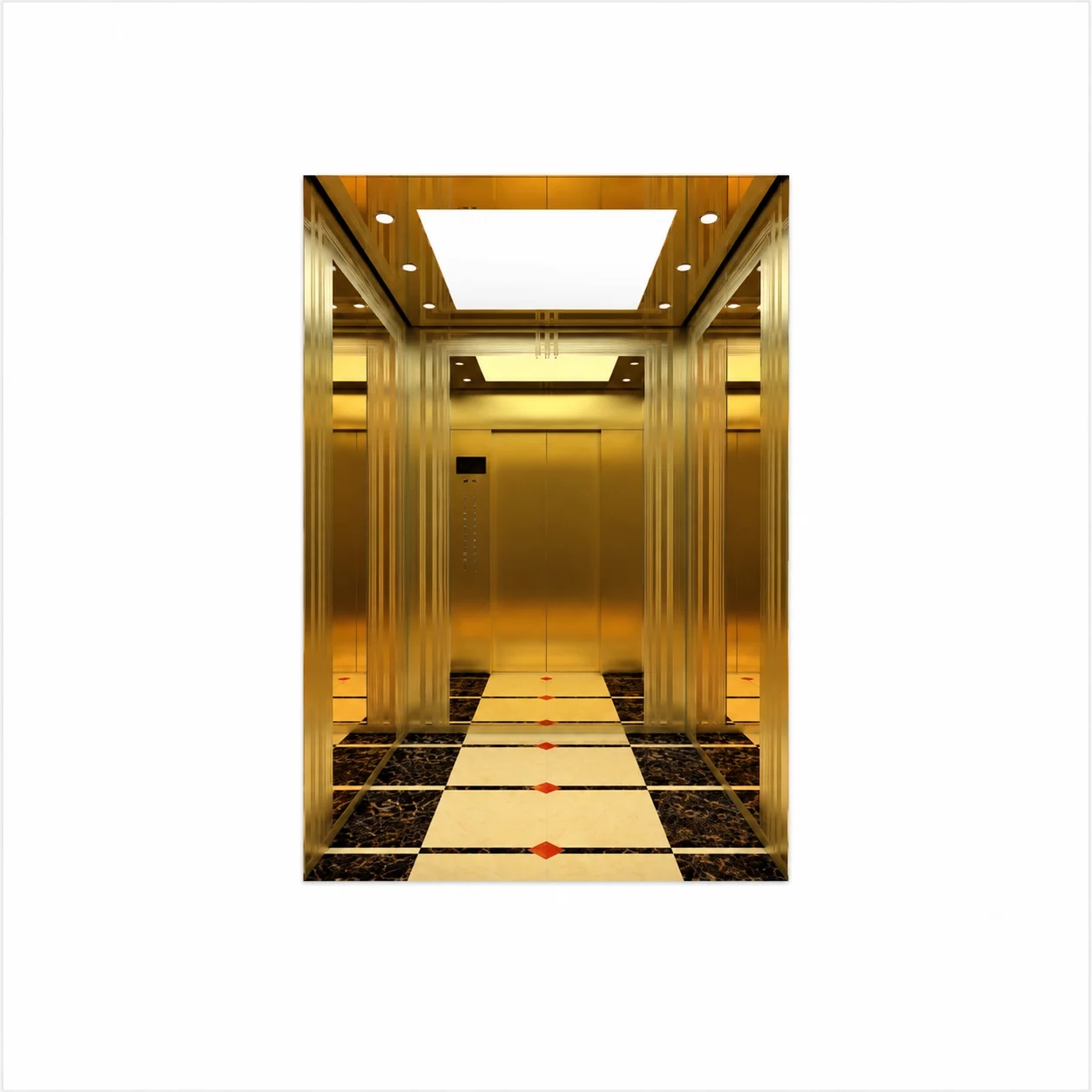
At the same time, elevator cabins can be customized to suit different architectural environments. A luxury hotel, corporate office, shopping center, or residential-commercial complex may each require a different interior style.
Cabin materials, finishes, lighting, flooring, handrails, and decorative elements can be selected to create a visual connection between the elevator and the surrounding architecture.
For more information about elevator interior design and customization, see Passenger Elevator Car Decoration.
Safety and Reliable Daily Operation
Safety is fundamental to elevator performance, but it also has a direct connection with building efficiency. A reliable elevator system can reduce unexpected interruptions and help maintain continuous passenger transportation.
Modern passenger elevators are equipped with multiple safety mechanisms designed to respond to different operating conditions. Depending on the elevator configuration, these may include:
-
Emergency braking mechanisms
-
Overload detection
-
Door protection systems
-
Automatic rescue functions during power interruptions
-
Elevator condition monitoring
These technologies provide additional protection for passengers while helping operators maintain dependable service.
In large commercial buildings, elevator downtime can affect employees, customers, visitors, and service personnel simultaneously. For this reason, reliability and safety are important considerations when selecting an elevator system.
Predictive Maintenance and Remote Monitoring
Elevator maintenance is also becoming more technology-driven. Conventional maintenance often relies on scheduled inspections, while modern systems can collect operational data continuously and help maintenance teams identify abnormal conditions at an earlier stage.
Sensors can monitor factors such as motor temperature, door cycles, vibration, and other operating parameters. When unusual data is detected, maintenance personnel can investigate the issue before it develops into a more serious equipment problem.
This predictive approach can help reduce unexpected failures and make maintenance planning more efficient. It can also shorten troubleshooting time because technicians may have access to operational information before arriving at the site.
FUJI Elevator (Huzhou) Co, Ltd. offers 24-hour service support for commercial customers, providing assistance during different stages of an elevator's lifecycle. Combining equipment supply with technical support and after-sales service can help building owners maintain more consistent elevator performance over time.
Passenger Experience and Transportation Efficiency
The quality of an elevator system can influence how people perceive an entire commercial building. Even when the building itself has excellent architecture and facilities, excessive waiting times, crowded cabins, or uncomfortable rides can negatively affect the daily experience of occupants.
Modern passenger elevators aim to improve this experience through features such as:
-
Faster elevator response
-
More effective passenger grouping
-
Comfortable cabin layouts
-
Reduced operating noise
-
Stable acceleration and deceleration
When passenger movement is organized efficiently, elevators can help reduce congestion in lobbies and corridors while providing a more comfortable transportation experience.
This makes passenger experience an important part of evaluating elevator performance, particularly in buildings with high daily traffic.
Connecting Elevators with Smart Building Technology
The development of smart buildings is also changing the role of elevators. Instead of operating independently, modern elevator systems can communicate with other building management technologies, including access control, security systems, lighting, and HVAC platforms.
For example, an access-control system can identify an authorized user and automatically provide access to designated floors. This approach can combine passenger transportation with building security and access management.
Integration with smart building platforms can also help building managers collect operational information and coordinate different systems more efficiently. As commercial properties become increasingly digital, elevator systems are expected to become a more integrated part of the building's overall infrastructure.
Conclusion
Modern passenger elevators have developed from basic vertical transportation equipment into sophisticated systems that support the efficiency and functionality of commercial buildings. Intelligent traffic control can improve passenger flow, energy-efficient technologies can reduce power consumption, and predictive maintenance can support greater system reliability.
At the same time, improvements in ride comfort, safety, cabin design, and smart building integration are making elevators an increasingly important element of modern architecture.
Companies such as FUJI Elevator (Huzhou) Co, Ltd. contribute to this development through elevator engineering, manufacturing capabilities, quality control, and ongoing service support. By focusing on performance, safety, customization, and long-term operation, modern elevator manufacturers can respond to the changing requirements of commercial buildings around the world.
As urban buildings continue to become taller, denser, and more technologically advanced, efficient vertical transportation will remain an essential part of building design. Modern passenger elevators are therefore not simply a way to move between floors—they are an important component of how commercial buildings operate, connect people, and deliver a better everyday experience.
www.fujidsk.com
FUJI Elevator (Huzhou) Co, Ltd.