
 0
0
 0
0
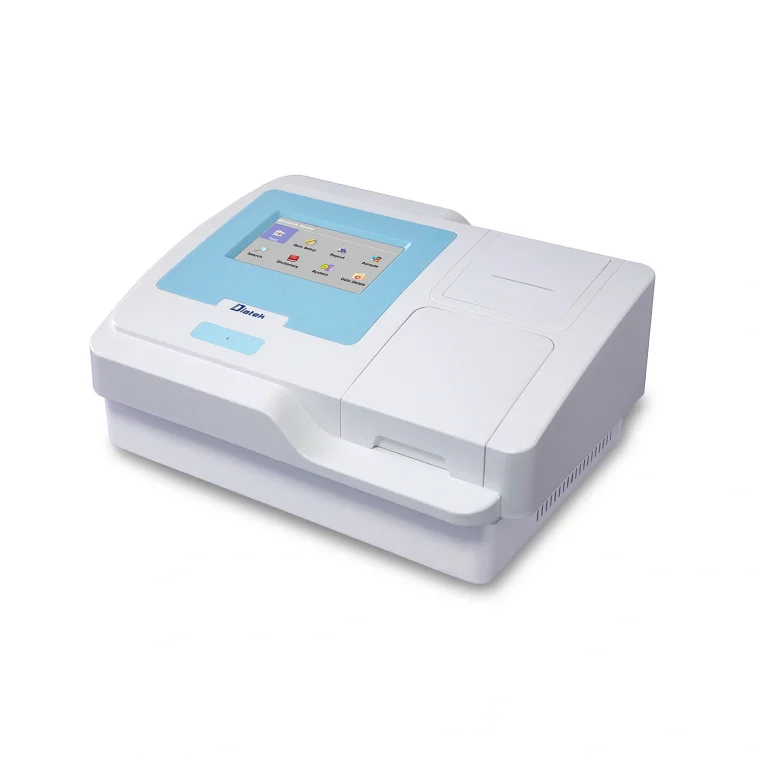
In today’s clinical diagnostics and laboratory testing environment, accuracy, flexibility, and efficiency are critical. A full wavelength ELISA reader has become an essential instrument for laboratories performing immunoassays, offering precise optical measurement across a wide wavelength range. Compared with traditional filter-based readers, full wavelength systems provide greater versatility and reliability for diverse testing needs.
This article explores the key features, advantages, and applications of full wavelength ELISA readers, with reference to Diatek, a globally recognized supplier of IVD equipment and related software solutions. Diatek focuses on the research, manufacturing, sales, and service of ELISA microplate readers and ELISA microplate washers, widely used in hospitals, clinics, disease control centers, blood banks, research laboratories, and veterinary clinics.
What Is a Full Wavelength ELISA Reader?
A full wavelength ELISA reader is a type of microplate reader that uses monochromator-based optical systems to scan and measure absorbance across a broad continuous wavelength range. Unlike filter-based readers that rely on fixed optical filters, full wavelength ELISA readers allow users to select any wavelength within the instrument’s range, making them suitable for a wide variety of ELISA kits and assay protocols.
This flexibility is particularly valuable in laboratories that handle multiple testing methods or frequently update assay requirements.
Key Features of a Full Wavelength ELISA Reader
Wide Wavelength Range
Full wavelength ELISA readers support a continuous spectrum of wavelengths, enabling accurate measurement for different assays without changing hardware components.
High Sensitivity and Precision
Advanced optical systems ensure excellent signal detection, low background noise, and high reproducibility, which are essential for quantitative immunoassay analysis.
Flexible Assay Compatibility
These readers can easily adapt to new ELISA kits and evolving protocols, making them ideal for laboratories with diverse testing demands.
User-Friendly Software
Modern full wavelength ELISA readers are equipped with intuitive software for data analysis, result calculation, report generation, and connectivity with laboratory information systems.
Diatek’s ELISA microplate readers are designed with robust optics and intelligent software, helping laboratories achieve reliable and consistent results across a wide range of applications.
Advantages Over Filter-Based ELISA Readers
Greater Flexibility
Without the need for physical filters, laboratories can freely select wavelengths, saving time and reducing additional costs when switching assays.
Improved Accuracy
Monochromator-based systems offer precise wavelength selection, improving measurement accuracy and reducing variability between tests.
Long-Term Cost Efficiency
Since no filters need to be replaced or added, full wavelength ELISA readers reduce long-term maintenance and consumable expenses.
Future-Proof Design
As assay technologies evolve, full wavelength ELISA readers remain compatible with new testing methods, making them a smart long-term investment.
Key Applications of Full Wavelength ELISA Readers
Clinical Diagnostics
Hospitals and clinics rely on full wavelength ELISA readers for detecting infectious diseases, hormones, tumor markers, and autoimmune conditions with high accuracy.
Disease Control and Public Health
Disease control centers use ELISA readers for large-scale screening and surveillance, where precision and repeatability are critical.
Blood Banks
Accurate screening of blood samples for pathogens is essential. Full wavelength ELISA readers provide reliable performance for routine and high-throughput testing.
Scientific Research
Research laboratories benefit from the flexibility of full wavelength systems when developing new assays or conducting experimental studies.
Veterinary Diagnostics
Veterinary clinics and laboratories use ELISA readers to detect animal diseases, supporting animal health management and food safety.
Diatek’s ELISA microplate readers and washers are widely adopted across these application areas, supporting both routine diagnostics and advanced research.
Why Choose Diatek ELISA Solutions
Diatek is one of the global professional suppliers of IVD devices and related software, offering:
-
High-performance ELISA microplate readers
-
Reliable ELISA microplate washers
-
Integrated software solutions for efficient laboratory workflows
-
Comprehensive service and technical support
Diatek’s products are widely used in hospitals, clinics, disease control centers, blood banks, research laboratories, and veterinary clinics, helping customers achieve accurate results and efficient operations.
Conclusion
A full wavelength ELISA reader offers unmatched flexibility, accuracy, and long-term value for modern laboratories. Its ability to support a wide range of assays makes it an ideal choice for clinical diagnostics, public health testing, research, and veterinary applications.
With trusted manufacturers like Diatek, laboratories can access reliable ELISA microplate readers and washers designed to meet the highest standards of IVD testing. Investing in a full wavelength ELISA reader is not just a technical upgrade—it is a strategic step toward improved diagnostic quality, efficiency, and future readiness.
www.hiwelldiatek.com
Wuxi Huawei Diatek Instrument Co., Ltd.