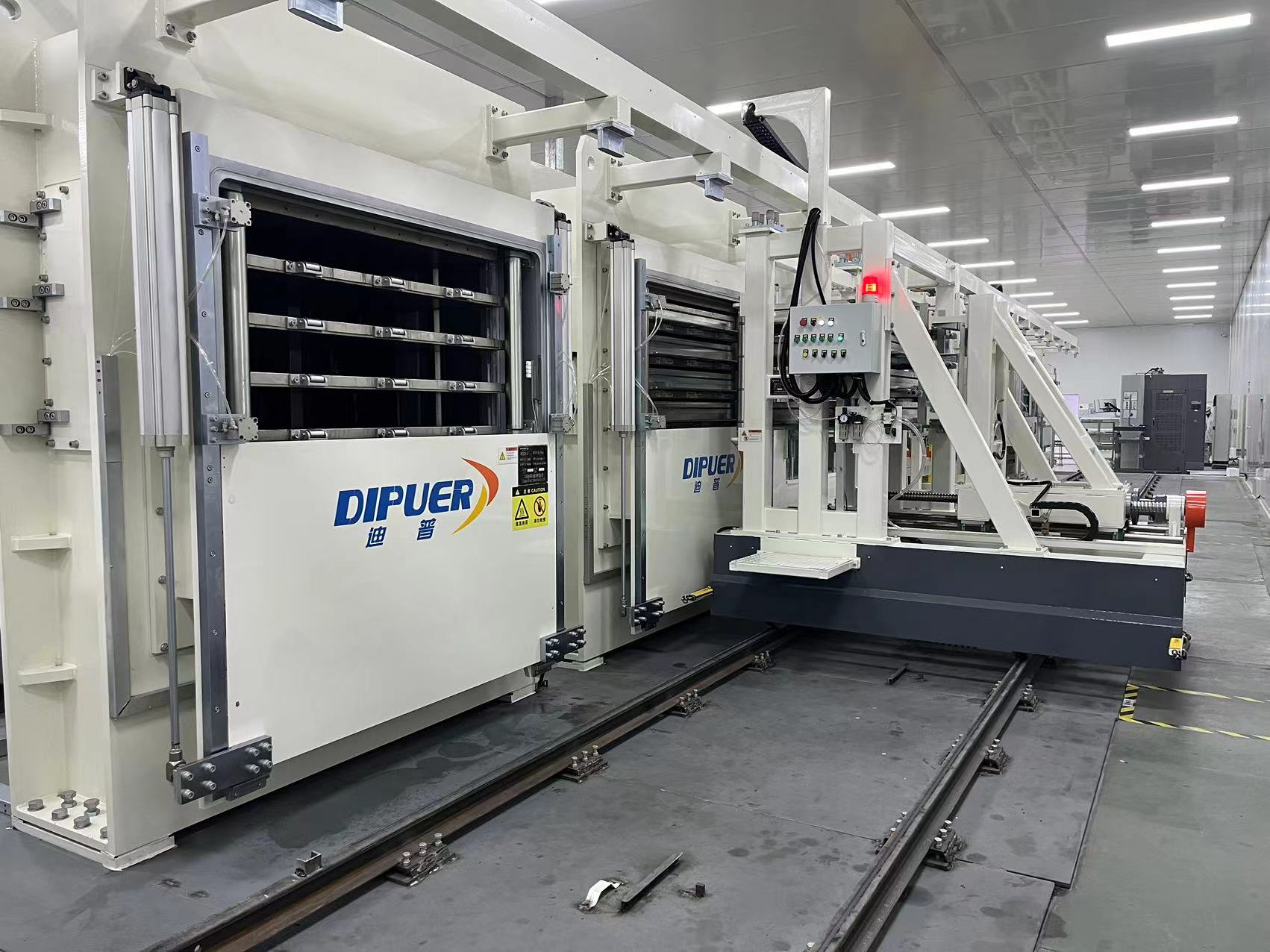
Industrial equipment places very different demands on caster wheels than furniture or light commercial products. A factory cart carrying 800 kg, an AGV transporting material through a production line, a medical trolley requiring quiet movement, and a food-processing machine exposed to repeated washdown all need different caster configurations.
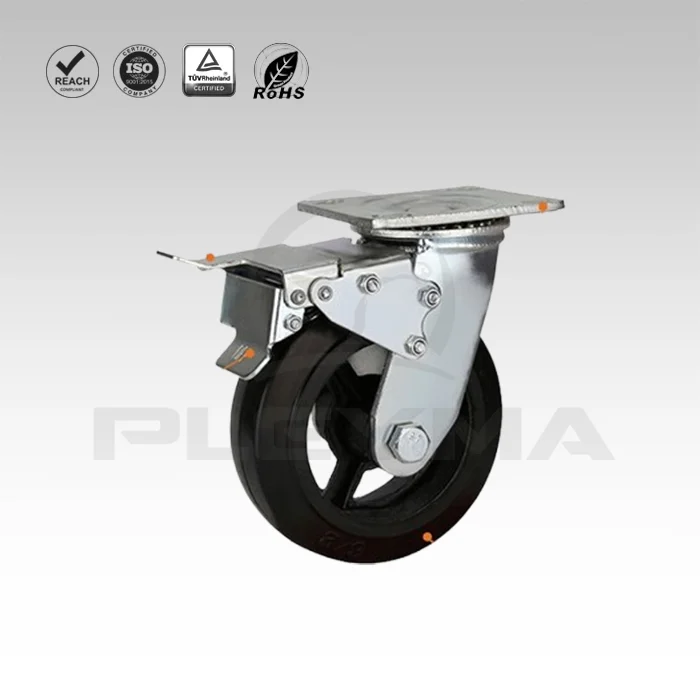
The challenge is that caster performance is determined by several components working together. Wheel diameter controls obstacle clearance, tread material affects rolling behavior and floor protection, the swivel raceway determines steering performance, the mounting structure transfers load into the equipment, and the bearing system influences rolling resistance and service life.
For industrial applications, caster selection should therefore be treated as a mechanical-design decision rather than a simple hardware purchase.
Start With the Total Moving Weight
The total operating weight should include both the equipment and its maximum payload.
Suppose a material-handling cart weighs 250 kg and carries 750 kg of material. Its maximum operating weight is therefore 1,000 kg. With four casters, simply dividing by four produces 250 kg per caster, but that assumes perfectly equal load distribution.
In real operation, one caster may temporarily carry a larger proportion of the load because of uneven floors, turning, acceleration, or payload position. Industry caster-selection guidance commonly uses a three-caster calculation for four-caster equipment to account for uneven loading.
Using that method, the 1,000 kg example produces approximately 333 kg per caster before an additional design margin. A caster selected at exactly 333 kg would therefore provide little practical reserve.
This calculation is one reason why a caster's advertised maximum capacity should not automatically be treated as the correct purchasing specification.
Larger Wheels Can Improve Movement on Difficult Floors
Wheel diameter becomes increasingly important as floor conditions become less predictable.
A small caster can work well on smooth epoxy or polished concrete but require considerably more force to cross expansion joints, thresholds, small debris, or damaged flooring. A larger wheel generally provides better obstacle clearance and can roll more effectively over uneven surfaces.
However, the larger wheel also increases caster height. If an existing machine frame has a fixed deck height, simply increasing wheel diameter may interfere with equipment geometry.
For industrial carts, the correct choice often involves balancing three variables: wheel diameter, required floor clearance, and overall equipment height.
A 100 mm wheel may be appropriate for a compact production cart, while a 150 or 200 mm wheel may provide better mobility for a heavy-duty logistics trolley operating across warehouse floors.
Polyurethane Is a Versatile Industrial Option
Polyurethane is widely used for industrial caster wheels because it combines relatively high load capacity with abrasion resistance and better floor protection than hard metal wheels.
Industrial polyurethane wheels are available in different hardness levels. Softer formulations can provide better shock absorption and floor interaction, while harder formulations generally support higher loads and resist deformation more effectively. Published industrial caster data shows polyurethane configurations covering applications from several hundred pounds to more than 1,000 pounds per caster depending on wheel diameter, width, and core construction.
The core material also matters. Cast iron provides high load capability, while aluminum can reduce wheel weight and improve corrosion resistance in some designs.
For an industrial logistics cart, polyurethane on a metal core can therefore provide a useful combination of load capacity, durability, and floor protection without the noise associated with bare steel wheels.
Nylon Can Be Better for Chemical and Wet Environments
Nylon caster wheels have a different performance profile.
Their high compressive strength, low rolling resistance, and resistance to moisture and many chemicals make them useful in manufacturing, food processing, pharmaceutical environments, and chemical-handling applications. Some commercial nylon caster ranges specify service temperatures extending from approximately -40°F to 250°F, although the actual limit depends on the specific caster construction and wheel formulation.
The trade-off is floor interaction. Nylon is harder than polyurethane or rubber, so it can create more noise and may damage softer flooring.
For a stainless-steel food-processing machine operating on a hard industrial floor, nylon may be a logical option. For a precision medical cart operating inside a finished facility, a softer non-marking tread may be more appropriate.
The material decision should therefore be based on the complete environment rather than a generic “heavy-duty” classification.
Swivel Performance Depends on More Than the Wheel
When a cart changes direction, the caster must rotate around its swivel axis. This makes the swivel raceway and offset geometry just as important as the wheel itself.
A poorly designed swivel mechanism can create excessive steering effort, instability, flutter, or difficulty initiating a turn. A properly designed raceway allows the caster to track smoothly under load.
Swivel offset also affects steering behavior. It represents the horizontal relationship between the swivel axis and wheel centerline and influences how readily the wheel trails behind the turning direction.
This is particularly important for heavy industrial carts. A wheel may have sufficient load capacity while the complete caster still feels difficult to steer because the swivel assembly is not optimized for the application.
AGV Caster Applications Require More Than Load Capacity
Automated guided vehicles create additional requirements because caster wheels interact with navigation, turning, acceleration, and floor conditions.
An AGV may operate repeatedly along the same route, making rolling resistance and dimensional consistency important. Excessive wheel deformation, inconsistent diameter, or poor swivel behavior can influence vehicle movement and maintenance requirements.
The caster also needs to withstand repeated starts and stops rather than occasional manual movement. Bearing selection, tread formulation, wheel hardness, mounting rigidity, and wheel alignment should therefore be considered together.
For AGV applications, customization may also be required to match the vehicle chassis, available mounting space, target ground clearance, and steering architecture.
Medical Equipment Requires Quiet and Controlled Movement
Medical equipment presents a different set of priorities.
A hospital bed, medical trolley, diagnostic cart, or equipment stand may need smooth directional movement, low operating noise, reliable braking, and non-marking wheels. The caster must also withstand repeated cleaning and disinfection.
A hard wheel with high load capacity may perform well mechanically but create excessive noise or damage sensitive flooring. A softer polyurethane or rubber tread can provide better floor interaction, although the material needs to be checked against the required load and cleaning environment.
Brake ergonomics also matter. If operators frequently reposition equipment, the brake should be easy to engage and release while maintaining reliable stationary behavior.
Food Machinery Requires Complete Corrosion Protection
Food-processing equipment often encounters water, cleaning chemicals, humidity, and repeated washdown. Selecting a corrosion-resistant wheel alone is not enough.
The complete caster assembly should be considered, including housing, swivel raceway, axle, fasteners, and brake components. Stainless-steel caster systems are specifically designed for applications where corrosion resistance and washdown capability are important, but the wheel material still determines important temperature and floor-performance characteristics.
For example, a stainless caster with a polyurethane wheel may provide both corrosion resistance and floor protection, while a nylon wheel may be more appropriate where chemical resistance and harder-floor operation are priorities.
The correct combination depends on the actual cleaning process and operating temperature.
Noise, Rolling Resistance and Service Life Should Be Tested
A caster that survives the load test is not necessarily the best caster for continuous operation.
Industrial testing can evaluate rolling resistance, noise, load stability, temperature performance, corrosion resistance, brake function, and repeated-use durability. These tests help identify trade-offs before the caster enters large-scale production.
For example, a wheel with very high hardness may offer excellent load capacity but produce more noise. A softer wheel may reduce noise and improve floor protection but require a larger diameter or wider tread to achieve the same load rating.
This is why testing should replicate the intended equipment and environment whenever possible.
Custom Caster Wheels Can Solve Design Constraints
Standard caster dimensions are not always compatible with specialized equipment. A manufacturer may need a non-standard wheel diameter, custom mounting plate, special stem, specific tread hardness, integrated brake, customized bearing, corrosion-resistant finish, or customer logo.
Zhongshan Dongdian Hardware Manufacturing Co., Ltd. has specialized in caster wheel R&D, manufacturing, and export since 2011. Its 6,000 m² automated factory serves industrial logistics, medical equipment, furniture, food machinery, and AGV applications, with customization covering size, load, material, braking, and branding.
The company also maintains laboratory testing for load, temperature, rust resistance, and noise, supported by ISO9001, SGS, RoHS, and REACH-related qualifications. More than 20 utility and design patents provide additional support for customized caster structures and wheel materials.
For overseas customers, 24-hour English technical support can also simplify communication when drawings, samples, mounting dimensions, or application requirements need to be reviewed before production.
How to Specify Caster Wheels for a New Project
A useful caster specification should include the total equipment weight, maximum payload, number of casters, wheel diameter, tread width, wheel material, hardness, bearing type, mounting method, overall height, swivel or rigid configuration, brake requirement, operating temperature, floor condition, chemical exposure, and movement frequency.
If the application involves a four-caster cart, calculate the required capacity using a conservative load-distribution assumption rather than dividing the total weight evenly across all four wheels. Then select the next appropriate capacity class instead of designing directly at the mathematical minimum.
For replacement projects, measure the existing caster before selecting a new model. Wheel diameter, tread width, overall height, mounting plate or stem dimensions, and bolt pattern determine whether the replacement will physically fit the equipment.
Final Considerations
The performance of caster wheels is determined by the complete assembly and its operating environment. Load capacity, wheel material, diameter, bearing configuration, swivel design, mounting interface, brake system, and environmental resistance must work together.
For general industrial logistics, polyurethane can provide a balanced combination of durability, load capacity, and floor protection. For chemical or wet environments, nylon can offer advantages in resistance and low rolling resistance, while rubber remains useful where noise and shock absorption are important.
Zhongshan Dongdian Hardware Manufacturing Co., Ltd. can support standard and customized caster requirements from wheel and material selection through manufacturing and testing. For applications involving AGVs, medical equipment, food machinery, industrial carts, or specialized handling systems, defining the operating conditions before selecting the caster is the most reliable way to achieve predictable mobility and service life.


 0
 0