
 0
 0
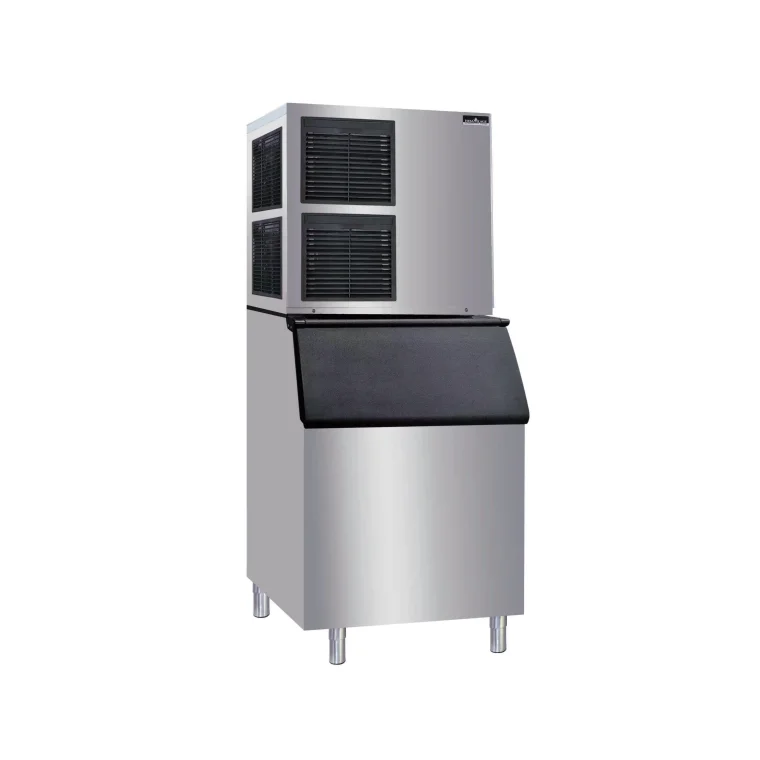
For hotels, commercial ice makers for sale for hotels must support continuous food and beverage operations while maintaining consistent ice quality, production capacity, and hygiene. Unlike small residential ice machines, hotel equipment may operate for extended periods and supply restaurants, bars, banquets, buffets, and other service areas. Equipment selection should therefore consider production performance, energy efficiency, sanitation, water management, serviceability, and certification requirements as an integrated system.
Hotel Ice Machines Operate Under Demanding Conditions
A hotel ice machine can experience substantially different operating loads throughout the day. Breakfast service can create a concentrated demand period, followed by lower consumption during midday and another peak during dinner or bar service.
Banquets introduce another variable because several hundred guests may require beverages and chilled food service within a relatively short period. If the ice machine has insufficient production capacity or storage volume, staff may need to purchase external ice or redistribute ice from other service areas.
Continuous operation also exposes the machine to the effects of ambient temperature, water quality, scale accumulation, and condenser fouling. Equipment should therefore be selected according to the actual operating environment rather than laboratory or ideal conditions alone.
Energy Efficiency Should Be Evaluated With Production Output
Electricity is an ongoing operating cost for hotel ice production. Comparing input power alone can produce misleading conclusions because two machines with similar power ratings may have different production capacities.
A more useful evaluation considers energy consumption in relation to ice output. If one machine consumes 6 kWh to produce a certain quantity of ice while another requires substantially more energy for the same usable output, the difference becomes meaningful over thousands of operating hours.
Ambient temperature also affects refrigeration-system performance. Higher condenser temperatures can increase refrigeration workload and reduce production efficiency.
HISAKAGE has products that have passed ENERGY STAR certification, providing an established reference point for energy-efficiency requirements in applicable markets. For a hotel project, energy performance should still be evaluated alongside production capacity, climate conditions, operating hours, and expected annual usage.
Ice Quality and Shape Affect Hotel Service
Ice is not simply a cooling medium. In hotels, its physical characteristics can affect beverage presentation, consumption rate, and service efficiency.
Cube ice is commonly used for soft drinks, water, cocktails, and general beverage service because its relatively large surface structure can provide good cooling performance while limiting rapid melting. Other ice formats may be selected for specialty beverages or applications where texture and cooling characteristics are more important.
For a hotel with multiple food and beverage outlets, standardizing ice type can simplify inventory and operational management. However, properties with high-end bars, restaurants, or event spaces may require different ice formats for different service applications.
The machine should therefore be evaluated based on the final use of the ice rather than production capacity alone.
Water Quality Is a Long-Term Maintenance Issue
Mineral content in incoming water can influence ice-machine maintenance. Hard water may accelerate scale formation on water-contact surfaces and heat-transfer components.
Scale can reduce heat-transfer efficiency and restrict water flow, potentially affecting production performance. Over time, this can increase cleaning frequency and maintenance requirements.
Water filtration can help manage certain water-quality problems, but filtration should be selected according to the actual incoming-water characteristics. A hotel installation should assess water hardness, sediment, and other relevant parameters before defining its treatment strategy.
Regular cleaning and sanitization remain necessary even when filtration is installed. The maintenance schedule should be established according to operating hours, water conditions, and manufacturer recommendations.
Hygiene Is a Core Equipment Requirement
Because hotel ice is consumed directly or indirectly with food and beverages, sanitation must be integrated into equipment selection and operating procedures.
NSF certification can be particularly relevant for commercial food-service equipment in applicable markets. It provides a useful reference when evaluating whether equipment has been designed and assessed against recognized sanitation-related requirements.
HISAKAGE's related products include NSF-certified models, along with other international certifications depending on product and market requirements.
However, certification should not replace daily operating controls. Cleaning frequency, water management, storage-bin sanitation, employee procedures, and preventive maintenance all contribute to hygienic ice production.
Condenser Design Influences Installation Requirements
Air-cooled and water-cooled systems have different installation implications. Air-cooled ice makers release condenser heat into the surrounding space, so ventilation and clearance must be sufficient to maintain stable operation.
This can become important in compact hotel kitchens. When several refrigeration appliances operate in the same enclosed space, the combined heat load may increase room temperature and place additional demand on HVAC systems.
Water-cooled equipment can reduce heat discharge into the immediate room environment but introduces additional water consumption. The decision should therefore consider local utility costs, water availability, drainage, ambient temperature, and HVAC design.
For a new hotel project, these requirements should be reviewed during kitchen planning rather than after equipment installation.
Serviceability Affects Total Cost of Ownership
A commercial ice maker may operate for years, so maintenance accessibility has a direct effect on operational cost. Components that require routine inspection or cleaning should be reasonably accessible to service personnel.
Preventive maintenance can include condenser cleaning for air-cooled systems, water-filter replacement, sanitation of water-contact components, inspection of water distribution systems, and checking drainage and electrical connections.
The actual maintenance interval depends on operating hours, environmental conditions, water quality, and equipment design. A hotel operating an ice machine continuously in a high-temperature kitchen may require more frequent attention than a lower-load installation in a controlled environment.
Serviceability should therefore be considered during equipment selection, not only after a maintenance problem occurs.
Certification Requirements Vary by Market
International hotel projects often involve different regulatory requirements. Equipment supplied to Europe may require CE compliance, while products entering the United States can require certifications such as ETL depending on the equipment and applicable installation requirements. Other markets may have their own conformity requirements.
HISAKAGE's related products have obtained certifications including CE, CB, RoHS, Saber, ETL, NSF, and ENERGY STAR. This range of certifications reflects experience supplying equipment into different international markets.
Before placing an order, the required certification should be confirmed for the exact model rather than assumed from the manufacturer's overall product portfolio. Electrical specifications, refrigerant requirements, labeling, and documentation should also match the destination market.
Selecting a Supplier for Multi-Property Hotel Projects
A single hotel and a multi-property hotel group have different equipment-sourcing requirements. A single site may focus primarily on installation suitability and local service. A larger project may additionally require model standardization, consistent specifications, repeatable quality, international delivery, and documentation across multiple locations.
A manufacturer with established production and quality-management systems can help reduce variation between units supplied to different properties.
HISAKAGE has passed ISO9001 management system certification and has exported products to more than 60 countries and regions. Its product portfolio includes commercial ice makers as well as refrigerators and display cabinets, allowing hotel projects to source multiple categories of commercial refrigeration equipment from an experienced manufacturer.
Building a More Reliable Hotel Ice System
The right commercial ice maker should be evaluated as part of the hotel's complete food and beverage infrastructure. Production capacity, storage volume, ice type, energy consumption, water quality, condenser configuration, sanitation, service access, and certification all influence actual operating performance.
A machine with high nominal output may not be the right choice if the installation cannot provide sufficient ventilation, the storage capacity does not match peak demand, or the local water conditions create excessive maintenance requirements.
For hotels comparing commercial ice makers for sale for hotels, a technical evaluation based on actual demand and operating conditions provides a more reliable basis for selection. Manufacturers with ISO9001-based quality management, international certifications, established production capabilities, and experience across overseas markets can also simplify qualification for hotel projects that require consistent equipment quality and dependable long-term operation.
www.hisakage.com
HISAKAGE REFRIGERATION EQUIPMENT CO.,LTD.