

 0
0
 0
0
https://www.futureyarn.com/what-is-air-textured-yarn.html
Air textured yarn (ATY) is a type of hybrid textured yarn produced through the air-jet texturing process. Unlike traditional filament yarns that are smooth and flat, air textured yarn is designed to deliver bulk, softness, and a spun-like appearance while maintaining the inherent strength and durability of continuous filaments.
At Hangzhou Futureyarn Textile Co., Ltd., air textured yarn is developed to meet the increasing demand for comfortable, functional, and versatile yarn solutions across apparel, home textiles, and industrial fabric applications.
Understanding the Air-Jet Texturing Process
The air-jet texturing process is a fully mechanical method that uses a high-velocity cold air stream to modify the structure of filament yarns. During production, one or more filament yarns are fed into a specially engineered air-jet nozzle, where compressed air creates controlled turbulence.
This turbulence causes individual filaments to separate, loop, and entangle randomly. As a result, the yarn gains volume, elasticity, and a fiber-like surface texture. Because the process relies on cold air rather than heat, it preserves the original material properties of the filaments while enhancing bulk and softness.
This makes air jet texturing an efficient and flexible solution for producing yarns with a natural spun-yarn touch using filament materials.
Key Characteristics of Air Textured Yarn
Air textured yarn combines the advantages of filament yarn and spun yarn in a single structure. Its main characteristics include:
-
A soft, spun-like hand feel
-
Increased bulk and fabric coverage
-
Improved warmth retention due to trapped air
-
Stable structure with low torque
-
Good resistance to pilling compared with traditional spun yarn
These properties allow air textured yarn to perform well in both woven and knitted fabrics, especially where comfort and appearance are equally important.
Raw Materials Used in Air Textured Yarn
Air textured yarn can be produced using a variety of filament materials, depending on the desired performance and application:
Polyester is commonly used for its strength, dimensional stability, and cost efficiency. Nylon air textured yarn offers excellent abrasion resistance and resilience, making it suitable for demanding applications. Polypropylene is chosen for lightweight and moisture-resistant requirements, while blended filament yarns can be engineered to balance softness, strength, and functional performance.
At Hangzhou Futureyarn Textile Co., Ltd., material selection is carefully aligned with fabric end-use needs, processing compatibility, and long-term performance expectations.
Applications of Air Textured Yarn
Apparel and Fashion Textiles
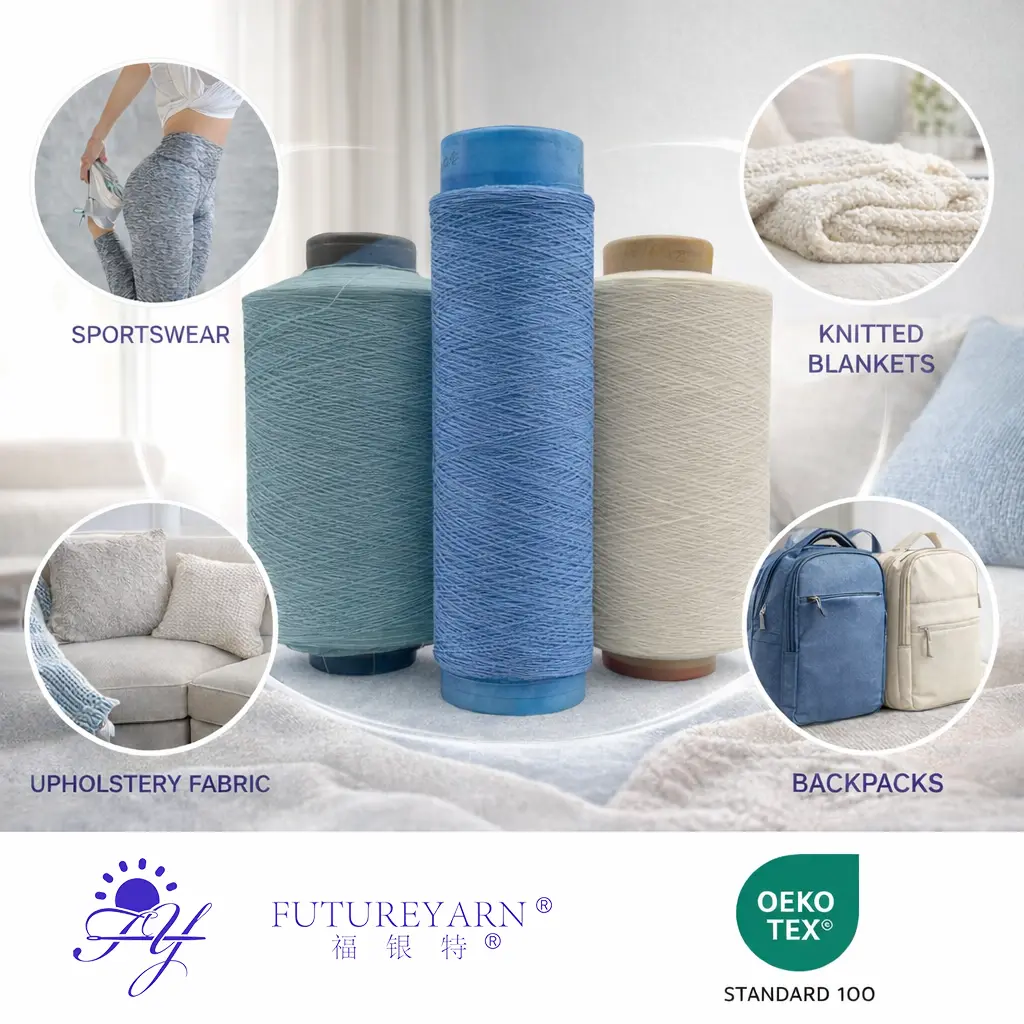
In apparel manufacturing, air textured yarn is widely applied in sportswear, casual clothing, linings, and outerwear fabrics. Its soft touch and breathable structure enhance wearing comfort, while the filament base ensures durability and shape retention.
Home Textiles
Air textured yarn is also commonly used in home textile products such as upholstery fabrics, curtains, decorative textiles, blankets, and bedding. The added bulk improves visual richness, fabric body, and thermal performance without excessive weight.
Technical and Industrial Textiles
Beyond consumer textiles, air textured yarn plays an important role in technical applications, including automotive interior fabrics, luggage materials, backpacks, and outdoor textiles. Its balance of strength, flexibility, and surface texture makes it suitable for functional and aesthetic requirements.
Air Textured Yarn Compared with Other Textured Yarns
Compared with false twist textured yarn or draw textured yarn, air textured yarn offers a more natural, fiber-like appearance and does not suffer from torque or liveliness issues. It provides better fabric coverage at lower fabric weights and is easier to handle during weaving and knitting processes.
For manufacturers seeking the look and feel of spun yarn combined with the performance benefits of filament yarn, air textured yarn is often an effective alternative.
Quality Factors in Air Textured Yarn Production
The performance of air textured yarn depends heavily on precise process control. Key factors include air pressure stability, nozzle design, filament feed ratio, overfeed control, and yarn tension consistency. Even small variations can influence loop formation, bulk uniformity, and fabric appearance.
Hangzhou Futureyarn Textile Co., Ltd. emphasizes stable production conditions and process optimization to ensure consistent yarn structure, reliable bulk performance, and smooth downstream fabric processing.
The Growing Importance of Air Textured Yarn in Modern Textiles
As the textile industry continues to prioritize comfort, lightweight construction, and multifunctional fabric performance, air textured yarn remains a highly relevant solution. Its ability to combine softness, warmth, durability, and design flexibility makes it suitable for a wide range of modern textile products.
With continuous advancements in air-jet texturing technology, air textured yarn continues to bridge the gap between traditional spun yarn aesthetics and advanced filament yarn engineering.
https://www.futureyarn.com/what-is-air-textured-yarn.html
Hangzhou Futureyarn Textile Co.,Ltd.


