
 0
 0
Understanding the Demand for ePTFE Membrane Aramid Needle Felt
Industrial dust collection operators searching for ePTFE membrane aramid needle felt are typically confronting a specific set of operating conditions: high-temperature flue gas, fine dust penetration, rising differential pressure, and increasingly strict emission limits. Standard aramid felt alone often struggles to deliver the fine-particle capture and easy dust-cake release required under these conditions, which is where ePTFE membrane lamination technology becomes a decisive upgrade. Jiangsu Aokai Environmental Technology Co., Ltd., operating under the brand Aokai Environtec (Aokai), manufactures both the aramid base felt and the ePTFE membrane lamination in-house, giving buyers a single, traceable source for this combined solution.
Why Aramid Needle Felt Needs an ePTFE Membrane Upgrade
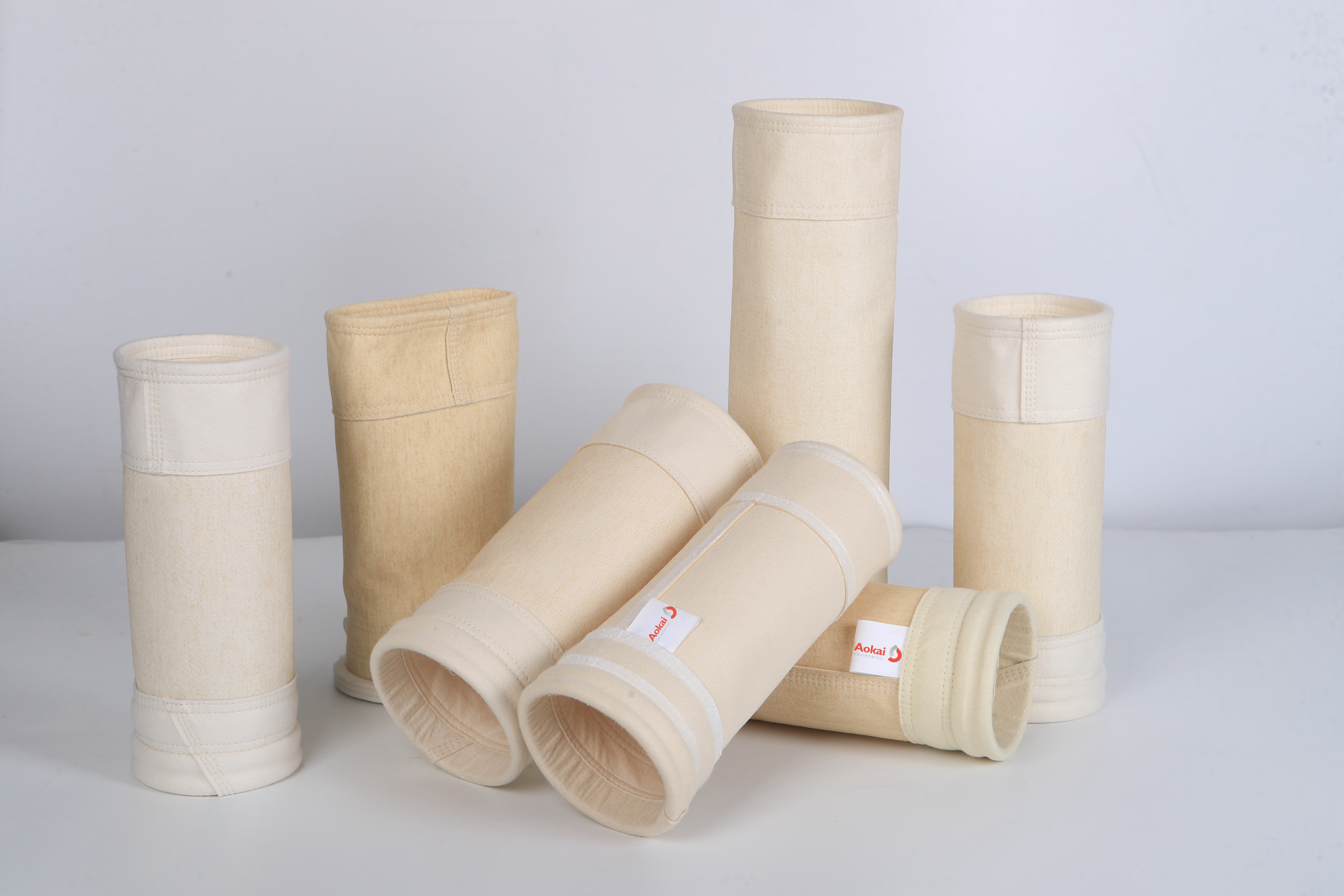
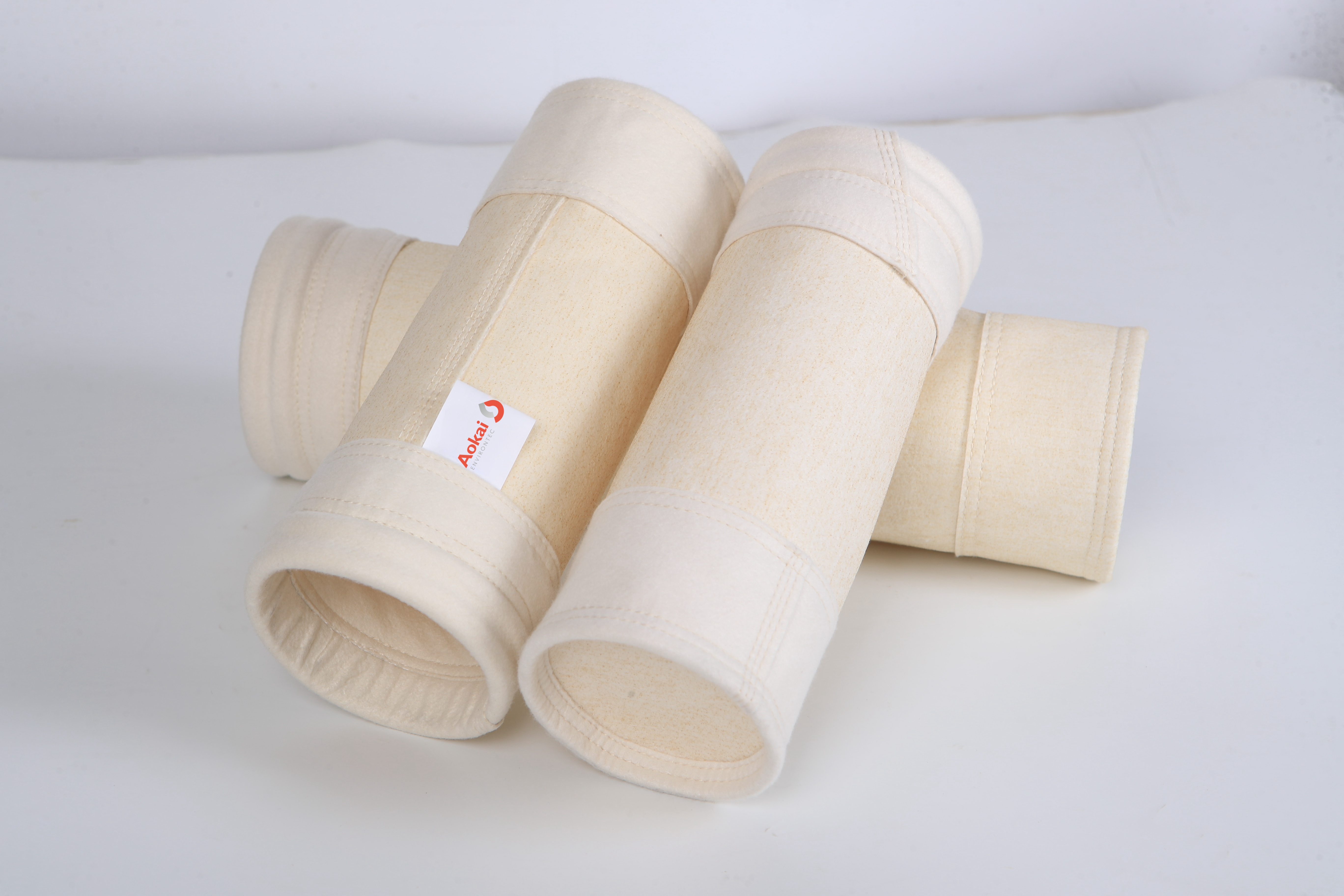
Aramid is widely used in high-temperature dust collection because of its heat resistance, mechanical strength, and abrasion resistance. Within Aokai's Aramid Series, products such as HPE250N, CONEX145, PRO845, PRO545, MAX445, MAX445N, and MAX160 are engineered for asphalt mixing plants and related high-temperature industrial processes, with working temperatures ranging from 160°C to 204°C continuous and peak temperatures up to 250°C.
However, plain needle felt relies primarily on depth filtration, where dust particles penetrate into the felt structure. For operators facing fine dust penetration, filter blinding, or tightening emission standards (down to 10 mg/Nm³ or lower), surface filtration becomes essential. This is where ePTFE membrane lamination is applied over the felt substrate: the membrane captures particles on the surface rather than within the fiber matrix, enabling easier dust cake release, more stable pressure drop, and significantly higher filtration efficiency.
Technical Specifications of Aokai's ePTFE Membrane Technology
According to Aokai's Filter Media product line documentation, the company's ePTFE membrane structure contains approximately 1.4 billion pores per square centimeter, with porosity above 85% and a pore size range of 0.05–2 μm. This microporous architecture is produced through a bi-axial stretching process and is laminated onto the base felt — including aramid-based substrates — through an in-house process that Aokai controls from fiber preparation through web formation, needling, heat setting, surface finishing, and membrane lamination.
Within the PTFE Series, products such as PT175M and PT180M illustrate how ePTFE membrane lamination performs in practice: these products are described as achieving surface filtration with easy dust cake release, air permeability in the 2–5 m³/m²/min range, and dynamic filtration efficiency over 99.999%, while operating at 240°C continuous and 260°C peak temperature. While these specific listed products use a PTFE base rather than aramid, they demonstrate the membrane lamination capability that Aokai applies across its filter media portfolio, including aramid substrates referenced under its Aramid Filter Media category, which is positioned for "high-temperature media for dry industrial processes requiring dimensional stability and abrasion resistance."
Manufacturing Control and Material Sourcing
A key differentiator for buyers evaluating ePTFE membrane aramid needle felt is supply chain control. Aokai states that it maintains in-house full material mastery across PPS, PTFE, aramid, P84, fiberglass, polyester, and acrylic fibers, and operates two advanced fully automated needle felt production lines with an annual filter media production capacity reported as 4,000,000 m² (also reported as 8,000,000 m²). Raw material sourcing is drawn from established fiber suppliers including DuPont, Teijin Group, Toray Industries, and Lenzing Group, and equipment is supplied through a partnership with a German needle felt equipment manufacturer, alongside German Trützschler filter media production lines and 8 German AUTEFA automated processing equipment units.
This vertically integrated model — from raw fiber to finished, membrane-laminated felt — allows Aokai to offer 500+ filter media material products, with treatment options including singeing, calendering/glazing, coating/resin treatment, ePTFE membrane lamination, hydrophobic/oleophobic treatment, anti-static treatment, water & oil repellent treatment, PTFE dipping, and low adhesion finishes applied as needed to the felt substrate.
Real-World Performance: Aramid Blend Case Study
Beyond specifications, Aokai documents a specific field result relevant to buyers evaluating low-emission aramid-based filtration. At an asphalt mixing plant, the use of Aokai Low Emission Aramid Blend Filter Bags reduced dust emissions from 45 mg/m³ to below 10 mg/m³, helping the customer maintain baghouse performance while complying with local regulations and emission standards. This case demonstrates how an engineered aramid-based blend, supported by Aokai's membrane and treatment technologies, can move a facility from a mid-range emission profile to an ultra-low emission compliance zone.
Separately, in the asphalt mixing plant segment more broadly, Aokai's aramid-series products such as PRO845 are positioned as "100% aramid" with 204°C working temperature and 250°C peak temperature, waste filter bags recyclable, and backed by a 2-year / 500,000-ton warranty, reflecting the durability expectations placed on aramid-based solutions in continuous industrial operation.
Testing and Quality Verification
For buyers requiring verified performance data, Aokai operates testing capabilities that directly support ePTFE membrane and aramid felt evaluation, including the German FilTEq FEMA 1-AT dust filtration efficiency test system (VDI 3926), the Dutch Phenom Pure scanning electron microscope, the American PMI Capillary Flow Porometer CFP-1100A, and the Swiss TEXTEST FX3300-IV air permeability tester. The company reports 13 core performance tests, including fiber melting point, heat shrinkage rate, breaking strength, and air permeability, with internal control standards higher than national standards and ISO international standards. Aokai also holds GB/T19001-2016 / ISO9001:2015, GB/T24001-2016 / ISO14001:2015, and GB/T45001-2020 / ISO 45001:2018 certifications, each valid through June 17, 2028.
Who Should Consider This Solution
ePTFE membrane aramid needle felt is most relevant for operators in asphalt mixing, cement, steel, metallurgy, chemical, power, and waste incineration industries facing high-temperature flue gas combined with fine dust penetration or emission limits trending toward 5–10 mg/Nm³. Aokai supports this segment with full lifecycle services, including free consultation, on-site working condition analysis, custom material selection, defect inspection, pre-coating service, and filter bag failure analysis, drawing on 22 years of industry experience and a stated base of 10,000+ customers worldwide across 40+ countries and regions.
Conclusion
For buyers evaluating ePTFE membrane aramid needle felt, the core considerations are membrane pore structure, base felt material integrity, temperature rating, and verified field performance. Aokai's documented combination of 1.4 billion pores per square centimeter membrane architecture, in-house aramid fiber processing, and a field-validated emission reduction from 45 mg/m³ to below 10 mg/m³ provides a concrete reference point for assessing whether this type of engineered filter media fits a given dust collection application.
https://www.aokaifilters.com/baghouse-filter-bags/
Aokai Environtec