
 0
0
 0
0
In large-scale rotary drying systems, mechanical stability is not determined by the drum alone, but by the interaction of multiple critical support components. Among these, the dryer thrust roller plays a decisive role in controlling axial movement, maintaining alignment, and ensuring long-term operational reliability.
While support rollers carry the radial load of the drum, thrust rollers are responsible for managing axial displacement, a factor that directly affects equipment lifespan, energy efficiency, and process consistency. In industries such as fertilizer production, chemical processing, and industrial drying, improper axial control can lead to uneven wear, increased downtime, and unstable process conditions.
Understanding how thrust rollers function—and how to select and optimize them—is essential for achieving stable and efficient rotary system operation.
The Mechanical Role of Dryer Thrust Roller in Rotary Equipment
A rotary dryer operates under continuous load, with the cylinder subjected to thermal expansion, material impact, and dynamic mechanical forces. These factors inevitably generate axial movement along the drum’s longitudinal axis.
The dryer thrust roller is installed on the base frame and works in conjunction with the riding rings and support rollers. Its primary function is to:
-
Restrict excessive axial movement of the drum
-
Maintain proper alignment between drum and support structure
-
Stabilize rotation under varying load conditions
Unlike passive support components, the thrust roller often integrates hydraulic control systems, allowing dynamic adjustment of contact force. This transforms it from a simple mechanical stop into an active control element within the system.
In practical operation, the thrust roller ensures that the drum remains within a predefined axial range, preventing drift that could otherwise lead to mechanical misalignment or structural stress.
Why Axial Control Matters in Industrial Drying Systems
Axial instability is one of the most underestimated causes of failure in rotary equipment. Even minor deviations, when sustained over long operating cycles, can result in cumulative damage.
When axial movement is not properly controlled, several issues emerge:
-
Uneven wear on riding rings and support rollers
-
Increased friction and localized overheating
-
Misalignment of drive systems, including gears and motors
-
Reduced sealing performance, leading to energy loss and material leakage
In fertilizer and chemical processing plants, where dryers often operate continuously under high throughput conditions, these issues translate directly into reduced production efficiency and higher maintenance costs.
By contrast, a properly designed thrust roller system stabilizes the drum position, distributes mechanical stress evenly, and ensures that the entire rotating assembly operates within its intended tolerance range.
Structural Design and Key Components
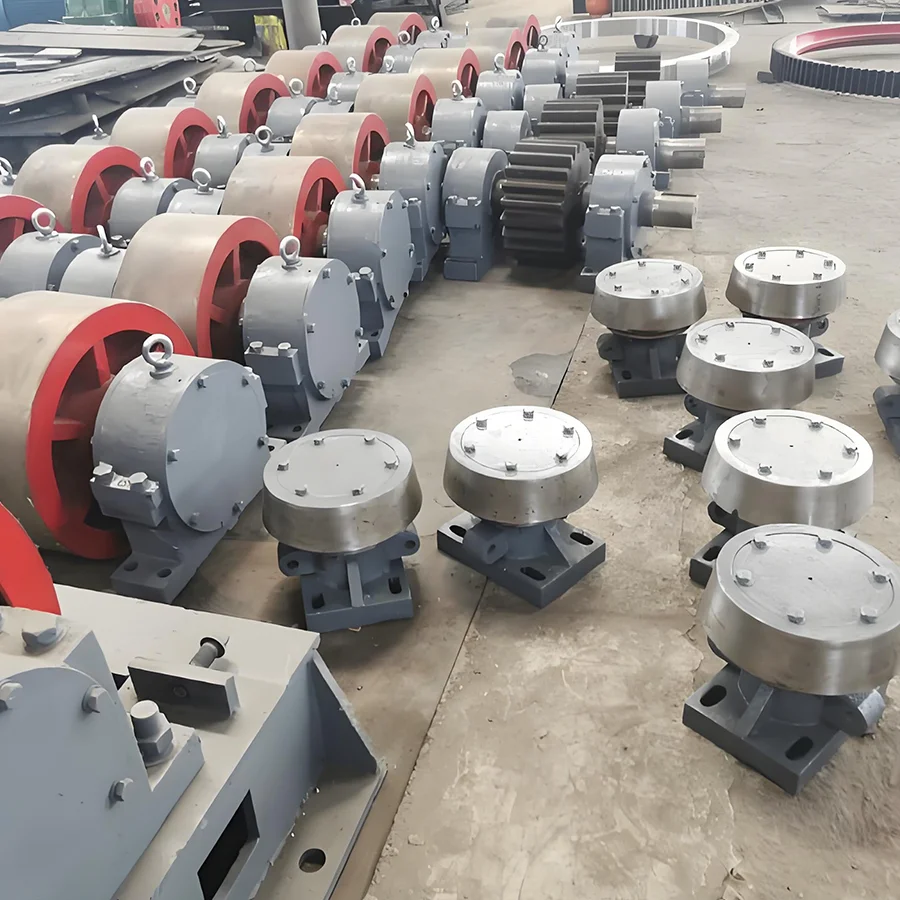
A typical dryer thrust roller system consists of three main elements: the roller body, bearing system, and support structure. Each component must be engineered to handle high loads, continuous operation, and variable environmental conditions.
The roller body is usually manufactured from high-strength alloy steel, with surface hardness optimized to resist wear while maintaining sufficient toughness to absorb impact. Precision machining ensures consistent contact with the riding ring, which is critical for maintaining stable axial positioning.
The bearing system is equally important. Heavy-duty rolling bearings or sliding bearings are selected based on load requirements, rotational speed, and environmental factors. Proper lubrication design is essential, as inadequate lubrication can quickly lead to bearing failure under high load conditions.
The support structure provides the mechanical interface between the roller and the equipment base. It must be rigid enough to maintain alignment while also allowing controlled adjustment. In many modern systems, hydraulic cylinders are integrated into the support structure to enable real-time control of axial force.
Hydraulic Thrust Control: From Passive Support to Active Regulation
In advanced rotary drying systems, the thrust roller is no longer a fixed mechanical component but part of a hydraulic control system. This allows operators to adjust the axial position of the drum dynamically, improving system responsiveness and stability.
The hydraulic system typically includes:
-
Hydraulic cylinders for force adjustment
-
Pressure control units to regulate contact force
-
Feedback mechanisms to monitor drum position
This setup enables precise control over drum movement, ensuring that it remains within the optimal operating range even under changing load conditions.
For example, during startup or load variation, the drum may experience temporary axial shifts. A hydraulic thrust roller system can compensate for these shifts automatically, reducing mechanical stress and preventing long-term damage.
Material Selection and Surface Engineering
Material selection for dryer thrust rollers is critical due to the combination of high load, continuous friction, and environmental exposure.
Common design considerations include:
-
High wear resistance to withstand continuous contact with the riding ring
-
Thermal stability to handle temperature variations in drying processes
-
Corrosion resistance in chemical or fertilizer environments
Surface treatments such as heat treatment, quenching, and grinding are used to achieve the required hardness and surface finish. In high-performance systems, surface roughness is carefully controlled to optimize friction characteristics without increasing wear.
Integration with Rotary Dryer Systems
The performance of a thrust roller cannot be evaluated in isolation. It must be considered as part of the entire rotary system, including:
-
Support rollers
-
Riding rings (tyres)
-
Drive system
-
Base frame alignment
Proper integration ensures that loads are distributed evenly across all components. Misalignment between these elements can negate the benefits of even the most advanced thrust roller design.
In systems developed by Sawei Equipment Technology, particular attention is given to the integration of thrust rollers with the overall process equipment. By aligning mechanical design with process requirements—such as those found in phosphate fertilizer production or compound fertilizer drying—Sawei ensures that the equipment operates efficiently under real industrial conditions.
Application Scenarios in Process Industries
Dryer thrust rollers are widely used in industries where rotary equipment operates continuously under heavy load. In fertilizer production, for example, rotary dryers handle large volumes of material with varying moisture content and temperature profiles.
In phosphate and compound fertilizer plants, axial stability is essential for maintaining consistent drying performance. Variations in drum position can affect material flow, heat transfer efficiency, and product quality.
Similarly, in bio-fermentation and environmental processing systems, where rotary equipment is used for waste treatment or resource recovery, thrust rollers ensure stable operation despite fluctuating feed conditions.
These applications highlight the importance of selecting thrust roller systems that are not only mechanically robust but also adaptable to changing process conditions.
Selection Considerations for Industrial Buyers
Choosing the right dryer thrust roller requires a detailed understanding of operating conditions. Key factors include drum size, load characteristics, rotational speed, and environmental conditions.
Load capacity must be matched to the weight of the drum and the material being processed. Undersized components will wear prematurely, while oversized components may introduce unnecessary cost and complexity.
Operating temperature is another critical factor. In high-temperature drying processes, materials and lubrication systems must be selected to maintain performance under thermal stress.
Maintenance requirements should also be considered. Systems that allow easy inspection, lubrication, and adjustment can significantly reduce downtime and operational costs.
Finally, compatibility with existing equipment is essential. Retrofitting thrust rollers into existing systems requires careful alignment and integration to ensure optimal performance.
The Role of Thrust Rollers in Reducing Total Cost of Ownership
From a lifecycle perspective, the dryer thrust roller has a direct impact on the total cost of ownership of rotary equipment. While it represents a relatively small portion of the overall system cost, its influence on maintenance, downtime, and component lifespan is significant.
Properly designed and maintained thrust rollers can:
-
Extend the service life of riding rings and support rollers
-
Reduce energy consumption by minimizing friction losses
-
Improve process stability and product consistency
-
Lower maintenance frequency and cost
In high-throughput industrial environments, these benefits translate into measurable economic value.
Conclusion
The dryer thrust roller is a critical component in rotary drying systems, responsible for maintaining axial stability and ensuring smooth, efficient operation. Its role extends beyond simple mechanical support, encompassing dynamic control, system integration, and long-term reliability.
As industrial processes continue to demand higher efficiency and greater operational stability, the importance of well-engineered thrust roller systems will only increase. By focusing on material quality, structural design, and system integration, manufacturers like Sawei Equipment Technology provide solutions that meet the complex requirements of modern process industries.
In the end, achieving stable and efficient rotary operation is not about a single component, but about how each component—especially the thrust roller—works together to support the system as a whole.
www.swasps.com
Jiangsu Sawei Equipment Technology Co., Ltd.